openelab.de
 openelab.com










































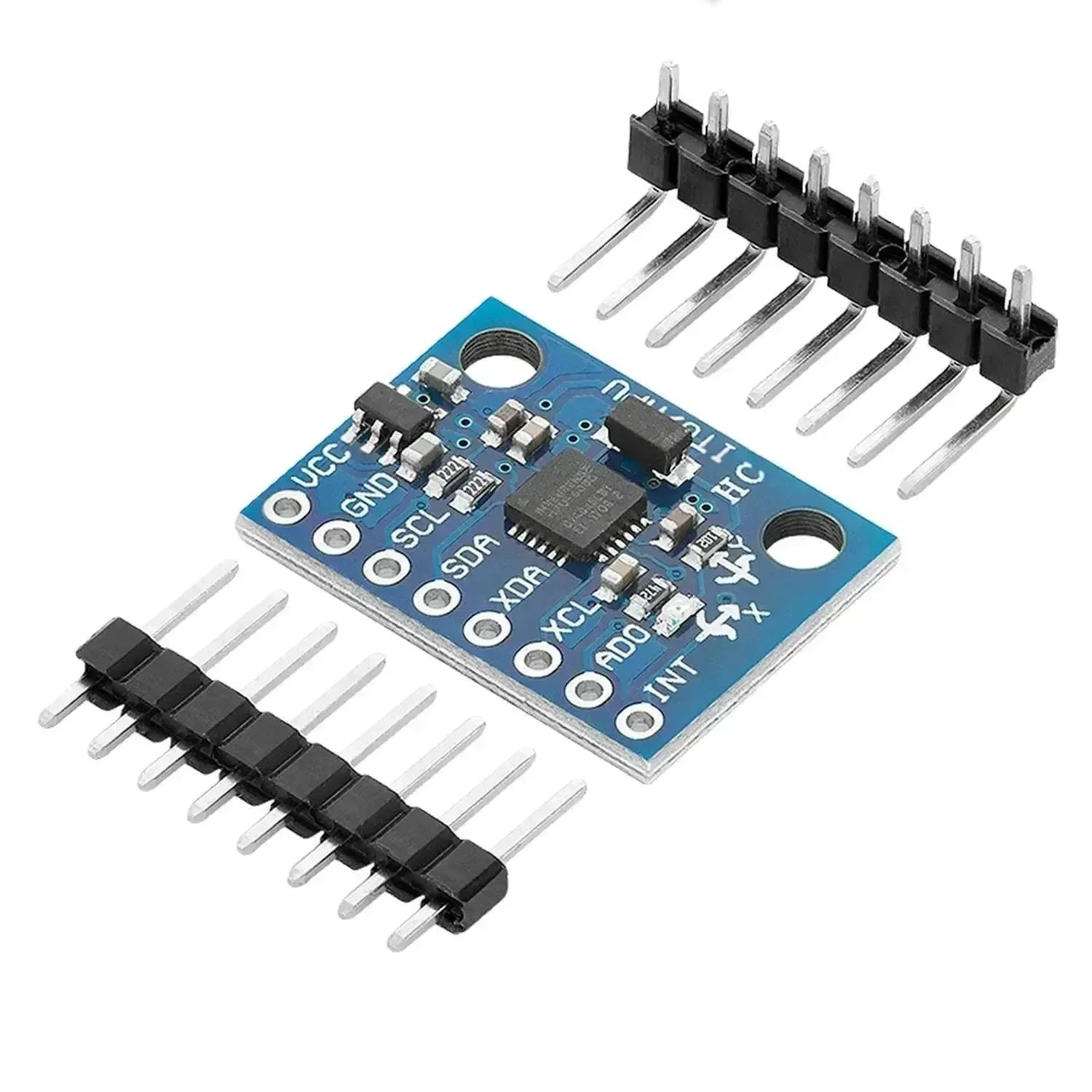


GY-521 MPU-6050 | 6-Axis Gyro Accelerometer IMU Module
GY-521 MPU-6050 | 6-Axis Gyro Accelerometer IMU Module
GY-521 MPU-6050 - 6-Axis Gyroscope and Accelerometer IMU Module for Motion Sensing
The GY-521 MPU-6050 module is a compact 6-axis inertial measurement unit that combines a 3-axis gyroscope and a 3-axis accelerometer with an onboard temperature sensor and Digital Motion Processor. It is a practical choice for robotics, gesture control, balance platforms, motion logging, tilt detection, and learning projects that need reliable orientation and acceleration data over a simple I2C connection.
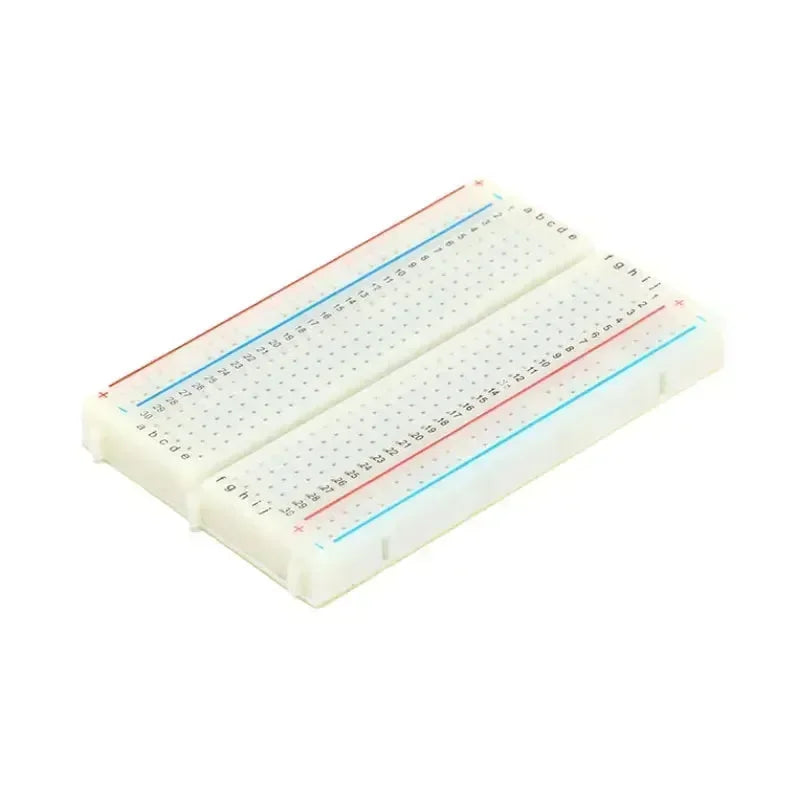
Because the module communicates over I2C, it only needs SDA and SCL plus power and ground for most microcontroller builds. The AD0 pin lets you select between common I2C addresses 0x68 and 0x69, making it easier to place two MPU-6050 devices on the same bus. It pairs well with boards such as the ELAB Nano V3, the UNO R3 Prototype Expansion Board, and quick wiring setups built on an MB 102 Breadboard Kit.
Inside the MPU-6050, configurable full-scale ranges allow the accelerometer to measure up to +/-16g and the gyroscope to measure up to +/-2000 degrees per second, while the 1024-byte FIFO and DMP can reduce the host processor workload in more advanced designs. For exact register definitions, electrical limits, and performance details, refer to the official TDK InvenSense MPU-6050 datasheet and register map before finalizing production hardware.
Technical Specifications
| Parameter | Value |
|---|---|
| SKU | TB-GY521 |
| Module Type | GY-521 MPU-6050 IMU module |
| Sensor IC | MPU-6050 |
| Motion Axes | 3-axis accelerometer + 3-axis gyroscope |
| Additional Sensor | On-chip temperature sensor |
| Accelerometer Ranges | +/-2g, +/-4g, +/-8g, +/-16g |
| Gyroscope Ranges | +/-250, +/-500, +/-1000, +/-2000 degrees/s |
| Digital Interface | I2C primary interface |
| I2C Addresses | 0x68 when AD0 is low; 0x69 when AD0 is high |
| FIFO | 1024-byte FIFO buffer |
| Digital Motion Processor | Integrated DMP for motion-processing offload |
| Auxiliary Bus | Auxiliary I2C bus for external sensors supported by MPU-6050 |
| Sensor Supply Range | 2.375V-3.46V at IC level; confirm breakout-board VCC pin before wiring |
| Logic Compatibility | Use host logic levels compatible with the breakout board and pull-up configuration |
| Typical Applications | Robot balancing, gesture sensing, vibration logging, tilt detection, attitude estimation |
Board Layout & Label Guide
- VCC - Power input for the GY-521 breakout. Confirm the exact board voltage support before connecting to 5V or 3.3V rails.
- GND - Common ground shared with the host microcontroller.
- SCL - I2C clock line connected to the host controller's I2C clock pin.
- SDA - I2C data line connected to the host controller's I2C data pin.
- AD0 - I2C address-select pin. Low selects 0x68; high selects 0x69.
- INT - Interrupt output for data-ready, FIFO, or motion events depending on firmware configuration.
- XDA / XCL - Auxiliary I2C data and clock pins for external sensors supported by the MPU-6050.
- MPU-6050 IC - Main motion-sensing chip; mount the board securely to reduce vibration artifacts.
- Axis Orientation - Confirm board silkscreen orientation in software before interpreting roll, pitch, and yaw.
- Calibration Note - Perform offset calibration after mounting, since tilt, vibration, and temperature can affect raw readings.
Application Scenarios
1. Arduino Raw Accelerometer and Gyroscope Readout
This Arduino example wakes the MPU-6050, reads raw accelerometer and gyroscope registers over I2C, and prints values for first-time wiring checks.
#include <Wire.h>

const int MPU_ADDR = 0x68;

void setup() {
  Serial.begin(115200);
  Wire.begin();

  Wire.beginTransmission(MPU_ADDR);
  Wire.write(0x6B);
  Wire.write(0);
  Wire.endTransmission(true);
}

void loop() {
  Wire.beginTransmission(MPU_ADDR);
  Wire.write(0x3B);
  Wire.endTransmission(false);
  Wire.requestFrom(MPU_ADDR, 14, true);

  int16_t ax = Wire.read() << 8 | Wire.read();
  int16_t ay = Wire.read() << 8 | Wire.read();
  int16_t az = Wire.read() << 8 | Wire.read();
  int16_t temp = Wire.read() << 8 | Wire.read();
  int16_t gx = Wire.read() << 8 | Wire.read();
  int16_t gy = Wire.read() << 8 | Wire.read();
  int16_t gz = Wire.read() << 8 | Wire.read();

  Serial.print("AX=");
  Serial.print(ax);
  Serial.print(" AY=");
  Serial.print(ay);
  Serial.print(" AZ=");
  Serial.print(az);
  Serial.print(" GX=");
  Serial.print(gx);
  Serial.print(" GY=");
  Serial.print(gy);
  Serial.print(" GZ=");
  Serial.println(gz);
  delay(200);
}
2. Tilt Angle Estimate on Arduino
This example converts accelerometer readings into approximate roll and pitch angles for tilt switches, dashboard displays, and simple leveling tools.
#include <Wire.h>
#include <math.h>

const int MPU_ADDR = 0x68;

int16_t readWord() {
  return Wire.read() << 8 | Wire.read();
}

void setup() {
  Serial.begin(115200);
  Wire.begin();
  Wire.beginTransmission(MPU_ADDR);
  Wire.write(0x6B);
  Wire.write(0);
  Wire.endTransmission(true);
}

void loop() {
  Wire.beginTransmission(MPU_ADDR);
  Wire.write(0x3B);
  Wire.endTransmission(false);
  Wire.requestFrom(MPU_ADDR, 6, true);

  float ax = readWord() / 16384.0;
  float ay = readWord() / 16384.0;
  float az = readWord() / 16384.0;

  float roll = atan2(ay, az) * 57.2958;
  float pitch = atan2(-ax, sqrt(ay * ay + az * az)) * 57.2958;

  Serial.print("Roll=");
  Serial.print(roll);
  Serial.print(" Pitch=");
  Serial.println(pitch);
  delay(250);
}
3. Raspberry Pi Python Motion Logger
This Python script uses SMBus to log raw motion samples from the MPU-6050 into a CSV file for later analysis.
import time
from smbus2 import SMBus

ADDR = 0x68

def read_word(bus, reg):
    high = bus.read_byte_data(ADDR, reg)
    low = bus.read_byte_data(ADDR, reg + 1)
    value = (high << 8) | low
    return value - 65536 if value > 32767 else value

with SMBus(1) as bus:
    bus.write_byte_data(ADDR, 0x6B, 0)
    with open("mpu6050_log.csv", "a", encoding="utf-8") as log:
        while True:
            ax = read_word(bus, 0x3B)
            ay = read_word(bus, 0x3D)
            az = read_word(bus, 0x3F)
            gx = read_word(bus, 0x43)
            gy = read_word(bus, 0x45)
            gz = read_word(bus, 0x47)
            log.write(f"{time.time():.0f},{ax},{ay},{az},{gx},{gy},{gz}\n")
            log.flush()
            time.sleep(0.1)
4. MicroPython I2C Scanner
Use this quick MicroPython check on RP2040 or ESP32 boards to confirm whether the module appears at address 0x68 or 0x69.
from machine import Pin, I2C

i2c = I2C(0, scl=Pin(17), sda=Pin(16), freq=400000)
devices = i2c.scan()

for device in devices:
    print(hex(device))
5. Shake Detection with Arduino
This sketch turns on an LED when acceleration magnitude changes sharply, useful for simple gesture, alarm, or impact-detection demos.
#include <Wire.h>

const int MPU_ADDR = 0x68;
const int ledPin = 13;

int16_t readWord() {
  return Wire.read() << 8 | Wire.read();
}

void setup() {
  pinMode(ledPin, OUTPUT);
  Wire.begin();
  Wire.beginTransmission(MPU_ADDR);
  Wire.write(0x6B);
  Wire.write(0);
  Wire.endTransmission(true);
}

void loop() {
  Wire.beginTransmission(MPU_ADDR);
  Wire.write(0x3B);
  Wire.endTransmission(false);
  Wire.requestFrom(MPU_ADDR, 6, true);

  long ax = readWord();
  long ay = readWord();
  long az = readWord();
  long magnitude = abs(ax) + abs(ay) + abs(az);

  digitalWrite(ledPin, magnitude > 45000 ? HIGH : LOW);
  delay(50);
}
6. Temperature Register Readout
The MPU-6050 includes an internal temperature sensor that can help with diagnostics and drift observation during long motion tests.
#include <Wire.h>

const int MPU_ADDR = 0x68;

void setup() {
  Serial.begin(115200);
  Wire.begin();
  Wire.beginTransmission(MPU_ADDR);
  Wire.write(0x6B);
  Wire.write(0);
  Wire.endTransmission(true);
}

void loop() {
  Wire.beginTransmission(MPU_ADDR);
  Wire.write(0x41);
  Wire.endTransmission(false);
  Wire.requestFrom(MPU_ADDR, 2, true);

  int16_t rawTemp = Wire.read() << 8 | Wire.read();
  float tempC = rawTemp / 340.0 + 36.53;

  Serial.print("Temperature C: ");
  Serial.println(tempC);
  delay(1000);
}
Packing List
- 1 x GY-521 MPU-6050 6-Axis IMU Module
FAQ
Q: What does the GY-521 MPU-6050 measure?
A: It measures 3-axis acceleration and 3-axis angular velocity, and also includes an internal temperature sensor.
Q: Is this a 6-axis or 9-axis IMU?
A: It is a 6-axis IMU. It does not include a built-in magnetometer, though the MPU-6050 supports an auxiliary I2C bus for external sensors.
Q: What I2C address should I use?
A: Use 0x68 when AD0 is low and 0x69 when AD0 is high.
Q: Can it calculate roll and pitch?
A: Yes. Roll and pitch can be estimated from accelerometer data, and smoother attitude estimates can be produced by combining gyro and accelerometer readings.
Q: Does the module need calibration?
A: Yes. Offset calibration is recommended after the board is mounted in the final orientation.
Q: Can I use it with Arduino?
A: Yes. It communicates over I2C and is commonly used with Arduino-compatible boards and libraries.
Q: Why are my readings noisy?
A: Check mounting rigidity, power stability, I2C pull-ups, sample rate, and nearby vibration sources. Software filtering may also be needed.
Q: What should I check if the module is not detected?
A: Verify VCC, GND, SDA, SCL, I2C address, AD0 state, pull-ups, and whether your host logic voltage is compatible with the breakout.
1. General Shipping Information
- We provide reliable shipping services with a tracking number for each order.
- Shipping addresses must be entered in English and should not contain special symbols, so that the courier system can recognize your location correctly.
- Please make sure your shipping address is accurate before placing your order. We ship strictly according to the address provided at checkout.
- In-stock orders are usually dispatched within 1 business day after order confirmation.
- Estimated delivery times refer to the period after dispatch and do not include order processing time, weekends, public holidays, customs inspection, or force majeure delays.
- If you need to cancel or modify your order, please contact us before the order is marked as “Shipped”. Once shipped, the order cannot be canceled or changed.
🚀 Need Faster Shipping?
If you require expedited shipping, please contact our customer support team at info@openelab.io for a customized quote based on your destination.
2. Shipping Rates & Options
Shipping rates are calculated based on order value, destination, and available shipping methods. The final available options will be displayed at checkout.
2.1 Germany Domestic Shipping
| Shipping Method | Order Value | Cost | Est. Delivery |
|---|---|---|---|
| Deutsche Post | €0.00 - €50.00 | €4.95 | 2-4 Business Days |
| Deutsche Post | Over €50.00 | Free | 2-4 Business Days |
|
DHL Paket (Faster Delivery) |
€0.00 - €50.00 | €6.95 | 1-3 Business Days |
|
DHL Paket (Faster Delivery) |
€50.00 - €100.00 | €2.00 | 1-3 Business Days |
|
DHL Paket (Faster Delivery) |
Over €100.00 | Free | 1-3 Business Days |
2.2 Selected EU Countries / Regions
Available EU shipping destinations are shown at checkout based on your shipping address. For orders shipped to selected EU countries or regions outside Germany, we use FedEx Regional Economy.
| Shipping Method | Order Value | Cost | Est. Delivery |
|---|---|---|---|
| FedEx Regional Economy | €0.00 - €100.00 | €7.95 | 3-5 Business Days |
| FedEx Regional Economy | Over €100.00 | Free | 3-5 Business Days |
EU orders may be fulfilled from our Munich warehouse or, when applicable, from our Shenzhen warehouse depending on inventory availability. For EU member states, OpenELAB covers applicable import duties and taxes under DDP service where required.
2.3 United States
| Region | Shipping Method | Order Value | Cost | Est. Delivery |
|---|---|---|---|---|
|
Continental U.S. (50 States) |
USPS Ground Advantage | €0.00 - €45.00 | €4.95 | 3-7 Business Days |
| USPS Ground Advantage | Over €45.00 | Free | 3-7 Business Days | |
| USPS Priority Mail | €0.00 - €45.00 | €16.95 | 1-4 Business Days | |
| USPS Priority Mail | Over €45.00 | €14.95 | 1-4 Business Days | |
|
Non-Continental U.S. (AK, HI, PR, etc.) |
USPS Ground Advantage | €0.00 - €60.00 | €6.95 | 5-9 Business Days |
| USPS Ground Advantage | Over €60.00 | Free | 5-9 Business Days |
Non-Continental U.S. regions include Alaska, American Samoa, Guam, Hawaii, the Marshall Islands, the Northern Mariana Islands, Palau, Puerto Rico, the U.S. Virgin Islands, and U.S. Armed Forces addresses.
2.4 International Destinations Outside the EU
For selected international destinations outside the EU, including Switzerland, the United Kingdom, and Norway, shipping rates are as follows:
| Order Amount | Shipping Cost |
|---|---|
| €0.00 - €300.00 | €19.95 |
| Over €300.00 | Free |
For non-EU destinations, import duties, taxes, and customs fees may be charged by the destination country and are the responsibility of the recipient.
3. Warehouses & Fulfillment
Our products may be stored in our Munich, Arlington, and Shenzhen warehouses. The actual shipping warehouse depends on product availability and destination.
3.1 Munich Warehouse
For products stored in our Munich warehouse, we use Deutsche Post or DHL Paket for domestic deliveries within Germany. For selected EU destinations outside Germany, we use FedEx Regional Economy.
3.2 Arlington Warehouse
For products stored in our Arlington warehouse, we use USPS or UPS for deliveries within the United States.
3.3 Shenzhen Warehouse
For pre-order items or products fulfilled directly from our Shenzhen warehouse, we arrange reliable international shipping based on destination and inventory status. For EU member states, OpenELAB covers applicable import duties and taxes under DDP service where required.
4. Inventory, Pre-orders & Split Shipments
- Inventory Status: Please check the product page for real-time stock information. If an item is out of stock in our local warehouses, it may be marked as “Pre-order”.
- Pre-order Fulfillment: Pre-order items may be shipped directly from Shenzhen or restocked to a local warehouse first before final delivery.
- Split Shipments: If your order contains both in-stock and pre-order items, we may ship them separately. No additional shipping fee will be charged for split shipments caused by our fulfillment arrangement.
5. Customs, Taxes & Delivery Issues
5.1 Customs and Taxes
For EU Member States:
Whether shipped from Germany or China, OpenELAB covers applicable import duties and taxes under DDP service where required. Customers in EU member states should not be charged additional import duties or VAT upon delivery.
For destinations outside the European Union, such as Switzerland, Norway, and the United Kingdom, import duties, taxes, and customs fees may be charged by local authorities upon delivery. These fees are the responsibility of the recipient.
5.2 Damaged, Delayed, or Lost Parcels
Please inspect your parcel upon delivery where possible. If you notice visible damage, please report it to the courier and contact us as soon as possible. This does not affect your statutory consumer rights.
If your parcel is delayed, lost, returned to sender, or the tracking information has not updated for an unusual period of time, please contact us at info@openelab.io. We will assist you in checking the shipment status with the courier.
5.3 Incorrect Address or Failed Delivery
If a parcel cannot be delivered due to an incorrect or incomplete address provided by the customer, refusal of delivery, or failure to collect the parcel, additional shipping or return costs may apply.
6. VAT
For orders within the EU, VAT is collected at checkout according to the applicable destination rules. No additional VAT should be collected upon delivery for EU member state orders covered under our DDP shipping arrangement.