openelab.de
 openelab.com









































What is the Grove Interface?
The Grove interface is a standardized electronic module connection method. Simply put, it’s like a “plug for electronic building blocks.” In traditional electronics learning, many people get confused by complex jumper wires and pinouts. Grove integrates all power and signal lines into a single 4-pin connector. This way, users only need one small cable to plug in a sensor or actuator, and it works—no need to figure out “which wire is power, which is signal.” This greatly lowers the learning curve and makes electronics development as easy as building LEGO.

What is the Grove System?
Grove is not just an interface—it’s a complete modular electronics ecosystem. It includes:
- Control cores (such as Arduino, Raspberry Pi expansion boards)
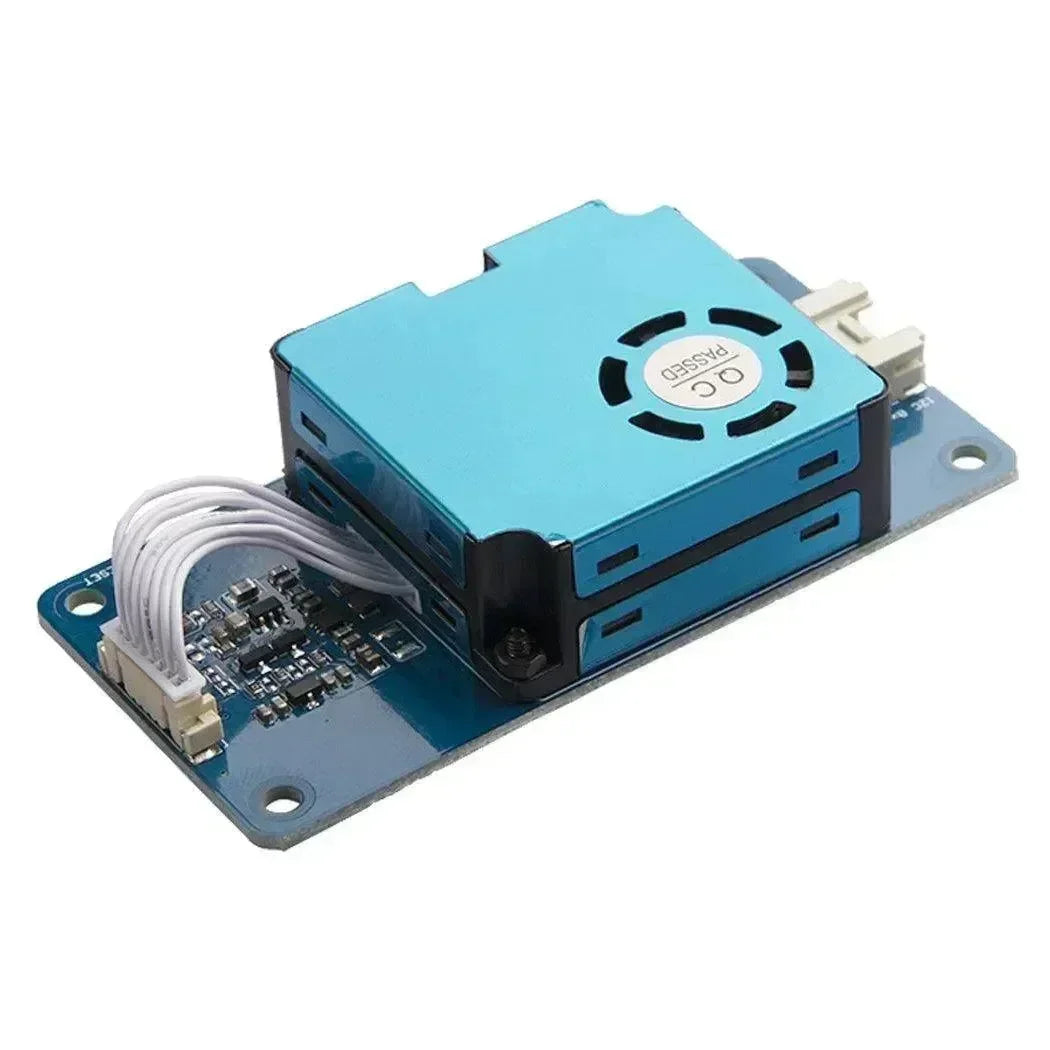
- Various sensor modules (detecting temperature, humidity, light, soil moisture, air quality…)
- Various actuator modules (relays, motors, LEDs, buzzers, water pumps…)
- Standardized connection cables
Users can simply combine the desired functional modules like puzzle pieces to quickly build a smart system. For example, if you want to make a “smart flowerpot,” just use Grove’s “soil moisture sensor + relay + water pump,” and you can complete the hardware setup in under 5 minutes.

What is a Grove Connector?
Grove connectors are the small cables that link these modules together. Their advantages include:
- Foolproof design: The cable has a keyed connector that only fits one way.
- Stable and durable: Compared to loose jumper wires, Grove connectors have a longer plug-in lifespan.
- Simplified operation: Every module uses a unified 4-pin interface, so users don’t need to memorize complex pin numbers.
For customers, the biggest value is “less hassle.” You don’t need to check circuit diagrams—just plug in the cable and it works.
What is the Purpose of Grove?
Simply put, Grove’s purpose is to make electronics development faster, easier, and more reliable.
- For students: No longer intimidated by complex circuits, they can focus on learning programming and logic.
- For teachers: More efficient classroom demonstrations, without repeatedly troubleshooting wiring errors.
- For engineers: Quickly validate a concept prototype without needing to design a PCB first.
- For companies: Shorten product development cycles and get a working prototype in the shortest time.

What’s the Difference Between Grove and Gravity?
There are other modular systems on the market, such as DFRobot’s Gravity. Comparison between the two:
- Grove: 4-pin interface, wide functional coverage (analog, digital, I²C, UART), large module ecosystem.
- Gravity: 3-pin interface, more lightweight, suitable for simple projects.
| Aspect | Grove | Gravity |
|---|---|---|
| Interface Type | Common 4-Pin JST-PH (VCC / GND / SIG1 / SIG2) | Mostly 3-Pin (VCC / GND / Signal) or similar structures |
| Supported Signal Types | Supports analog, digital, I²C, UART, and other signal types | Mainly digital/analog; limited I²C support |
| Module Ecosystem | Rich variety of modules covering sensors, actuators, communication, display, etc. | Fewer modules, focused on basic sensors/actuators |
| Compatibility / Expandability | Well-standardized interface, strong interchangeability; compatible with Arduino / Raspberry Pi / Seeed platforms | Simpler and more lightweight interface; expandability may be limited |
| Application Scenarios | Education / Makers / Rapid Prototyping / STEM Projects | Simpler projects / Cost-sensitive / Resource-constrained environments |
Grove Application Scenarios
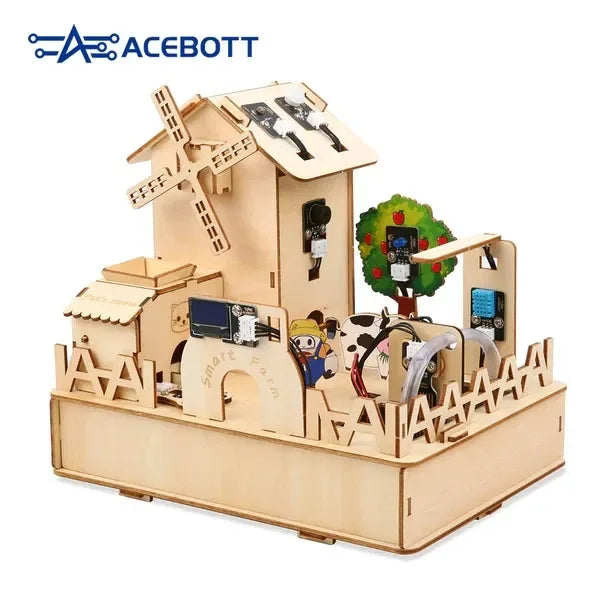
- Smart agriculture: Soil moisture + light sensor + water pump to create an automatic watering flowerpot.
- Smart home: Temperature and humidity sensor + air quality sensor + air conditioner control for automatic environment adjustment.
- STEM education: Students complete projects by combining modules, quickly grasping IoT concepts.
- Rapid prototyping: Companies use Grove modules to test feasibility before developing new products.
Future Development and Ecosystem Value
The Grove system is not just a “teaching toy.” With the rise of IoT and smart hardware, it’s becoming an industrial-grade tool for rapid validation and educational outreach. Many companies use Grove for proof of concept in early R&D stages because it greatly reduces development cost and time. For educational institutions, Grove is a tool for training future engineers.
📝 Summary: The greatest value of the Grove system lies in lowering the barrier + improving efficiency. It transforms “complex electronic engineering” into an experience “as simple as building LEGO,” allowing students, makers, engineers, and companies to quickly enter the world of electronics development.