openelab.de
 openelab.com

































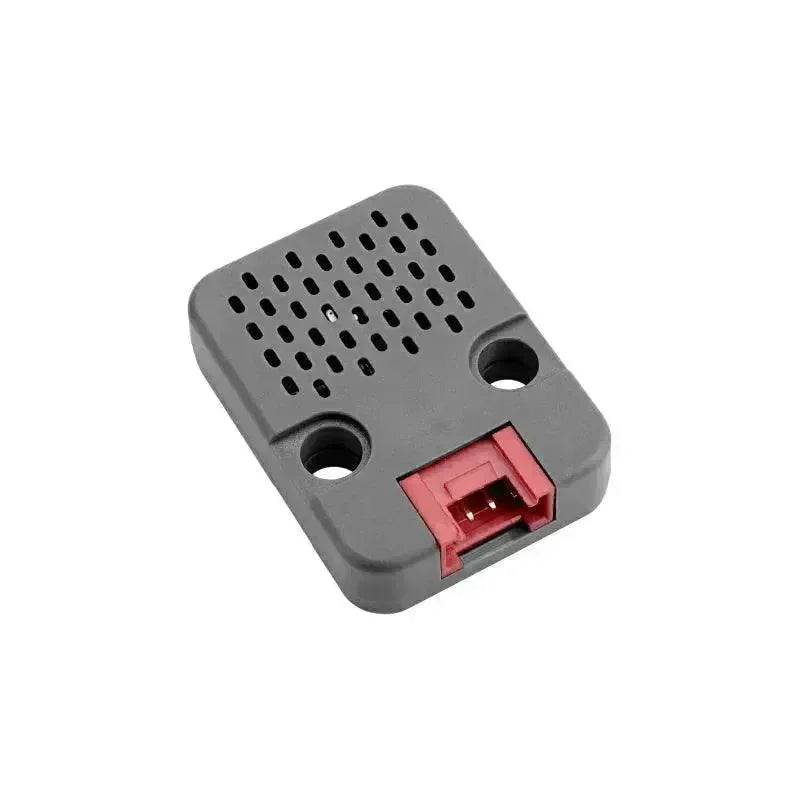






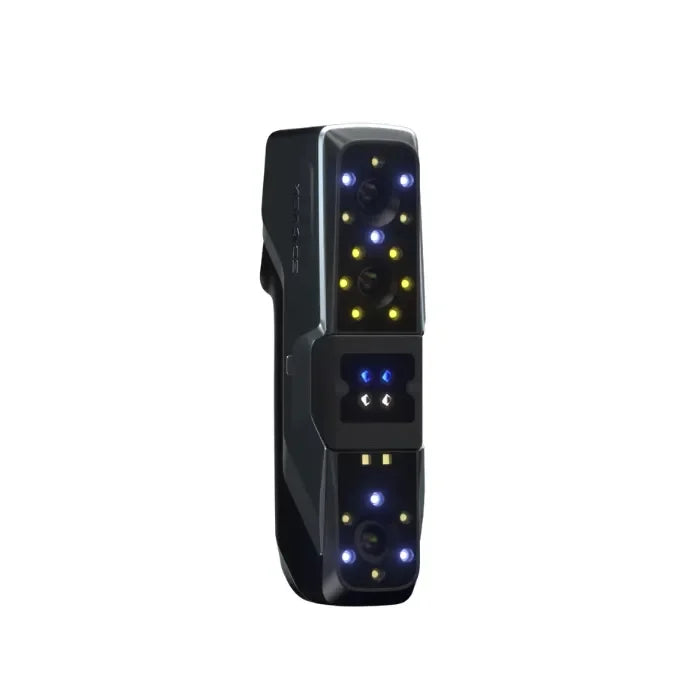
Orbbec Gemini 435Le and Intel RealSense D455 can both sit in a long-range robot vision stack, but they are built for two pretty different deployment mindsets.
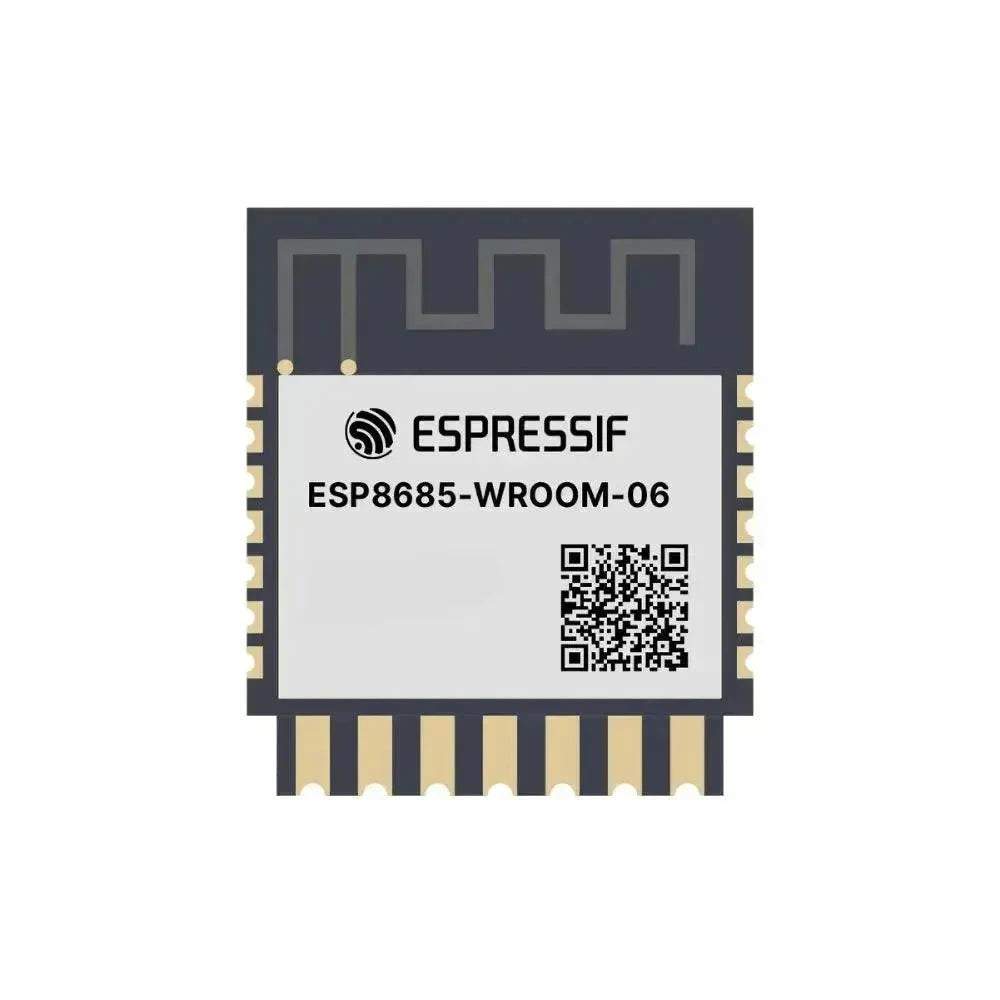
RealSense D455 is the familiar long-range RealSense option. Many robotics teams know it because it gives you a 95 mm baseline, integrated IMU, global-shutter depth and RGB, and a workflow that fits neatly into existing RealSense SDK and ROS habits. Gemini 435Le is coming from a more industrial direction. It keeps the same 95 mm baseline idea, but pushes much harder into Ethernet, PoE, IP67 protection, M12 connectors, EMI resistance, and scene-tuned depth presets for industrial robots.
So the real question is not only which one sees farther. The more useful question is whether your project still wants a USB depth camera, or whether it has already become an industrial deployment problem.
For the direct product pages, start with Orbbec Gemini 435Le on OpenELAB and Intel RealSense D455 on OpenELAB.
Quick answer
Choose Orbbec Gemini 435Le if your robot needs industrial wiring, PoE, IP67 protection, longer cable runs, and a camera that behaves more like a machine component than a developer peripheral.
Choose Intel RealSense D455 if your stack already depends on RealSense SDK 2.0, you want a familiar long-range stereo camera with IMU, and USB deployment is still acceptable.
For many new industrial robot or AMR deployments, Gemini 435Le is the stronger direction. For an existing RealSense-based workflow, D455 is still easier to keep moving.
Start with the deployment conditions
D455 makes sense when the camera still lives in a fairly classic robotics workflow. It is capable, familiar, and much easier to drop into a stack that already understands RealSense.
Gemini 435Le starts to make sense when the environment gets more serious:
- factory or warehouse deployment
- long cable routing
- water and dust exposure
- vibration and electrical noise
- multiple synchronized cameras
- forklifts, AMRs, robotic arms, and larger industrial machines
That is the big divide in this comparison. A lot of teams are not only comparing depth quality. They are really comparing how much trouble the camera will cause or save during deployment.
Specs that matter
| Category | Orbbec Gemini 435Le | Intel RealSense D455 |
|---|---|---|
| Depth technology | Stereo Vision | Stereoscopic |
| Baseline | 95 mm | 95 mm |
| Working range | 0.31 m to 20 m+ | 0.6 m to 6 m |
| Ideal range | 0.31 m to 10 m | 0.6 m to 6 m |
| Depth FoV | 90 deg x 65 deg | 87 deg x 58 deg |
| Depth resolution | Up to 1280 x 800 @ 10 fps | Up to 1280 x 720 @ 90 fps |
| RGB | Global shutter RGB | Global shutter RGB |
| IMU | Supported | Integrated IMU |
| Interface | Gigabit Ethernet with PoE, M12 X-coded and A-coded | USB-C 3.1 Gen 1 |
| Protection | IP67 | Standard camera peripheral form factor |
| Typical role | Industrial stereo vision for robots | Long-range RealSense robot camera |
Why Gemini 435Le is a strong D455 alternative
Gemini 435Le becomes very attractive when the camera has to survive outside the lab.
That is really the main story here.
Orbbec is positioning 435Le for robots that need long-range perception in harsh or noisy environments. It is not just "a better D455." It is a camera built around industrial installation:
- Gigabit Ethernet with PoE
- M12 industrial connectors
- IP67-rated housing
- EMI resistance
- vibration and shock tolerance
- scene-configurable depth presets
- multi-camera sync with unified timestamps
This matters a lot more than it maybe sounds. A robot can look fine in a prototype and then become a headache once cabling, connectors, moisture, vibration, and maintenance show up. Gemini 435Le is designed for exactly that stage.
If you want more nearby context inside the same family, Orbbec Gemini 335Le on OpenELAB is the closest smaller industrial reference, and the Gemini 335Le launch article on OpenELAB helps explain why Orbbec pushed Ethernet and ruggedization harder in this series.
Where D455 still stays strong
D455 is still a very good camera, and it still earns its place for a reason.
It remains attractive because:
- it is widely understood in robotics
- RealSense SDK 2.0 is familiar to many teams
- the D400 family already has lots of ROS examples and prior deployments
- it gives you long-range stereo plus IMU in a compact USB form
That combination is hard to dismiss, especially when a working robot already depends on it.
So the trade-off here is not "old versus new." It is more like "workflow continuity versus industrial maturity."
When Gemini 435Le is the better choice
Choose Orbbec Gemini 435Le if:
- the robot needs PoE or Ethernet instead of USB
- IP67 protection matters
- cable security matters
- the environment includes vibration, dust, moisture, or EMI
- you want longer official range headroom
- the project is new enough that you are not locked into RealSense
For AMRs, forklifts, industrial robotic arms, and warehouse automation, this is often the stronger route.
What Gemini 435Le is not best at
Gemini 435Le is not the lightest or simplest choice for a compact dev setup. If your whole system still works happily with USB and does not need industrial connectors or rugged housing, it can be more camera than you actually need.
When D455 is still the better choice
Choose Intel RealSense D455 if:
- your current stack already depends on RealSense SDK 2.0
- your calibration and filters are already tuned around D455
- you want long-range stereo with IMU in a familiar USB workflow
- migration cost is currently more painful than hardware limitations
D455 is often the "keep what already works" answer.
What D455 is not best at
D455 is not the strongest choice when the robot needs PoE-first deployment, industrial connector security, IP67 protection, or long cable runs through a noisy factory or warehouse environment.
Final recommendation
Gemini 435Le is a strong Intel RealSense D455 alternative when the project is moving into industrial deployment.
If the camera is becoming part of the machine, Gemini 435Le makes a lot of sense. Its Ethernet, PoE, IP67 housing, industrial connectors, and longer official range give it a much more deployment-ready feel. D455 still makes sense when the real value is staying inside a familiar RealSense ecosystem and keeping the current stack stable.
FAQ
Is Gemini 435Le a direct replacement for D455?
Not exactly. It can replace D455 in many robot perception tasks, but the interface, deployment model, and SDK assumptions are different enough that it should be treated as a migration.
Which one is better for AMRs?
For many new AMR deployments, Gemini 435Le is more attractive because of PoE, Ethernet, IP67, and better industrial installation logic. D455 still works well when the stack is already RealSense-based.
Do both cameras have IMU?
Yes. D455 has integrated IMU, and Gemini 435Le also supports IMU. The bigger difference is not whether they have motion data, but how they fit into the robot deployment.
Should I also compare Gemini 335Le?
Yes. If you want the same industrial Ethernet direction in a smaller and slightly different performance position, Gemini 335Le is the next model to check.