openelab.de
 openelab.com


































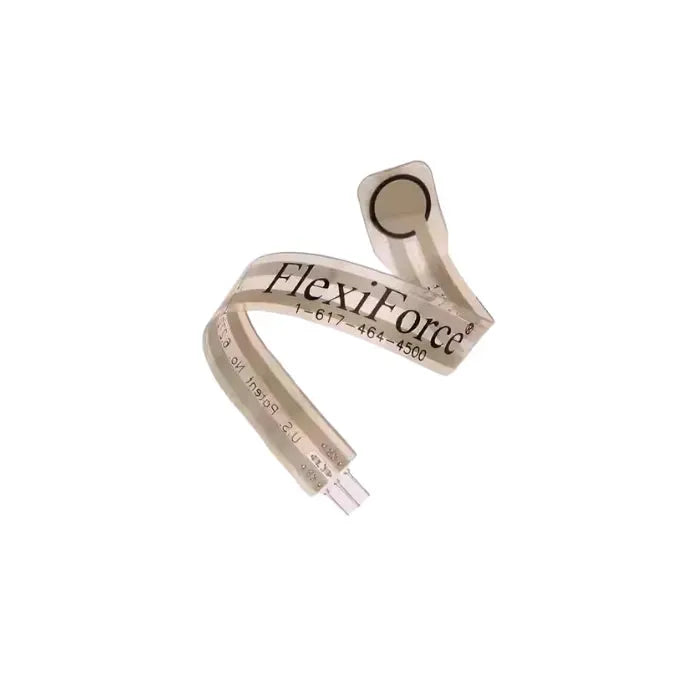













1. 🧭 Understanding the Basic Structure of Thin‑Film Pressure Sensors
A thin‑film pressure sensor is a precision device that measures pressure using an ultra‑thin functional layer—commonly polysilicon, metal alloys, or silicon nitride—deposited onto a rigid substrate such as silicon, glass, or ceramic.
These thin layers typically range from a few nanometers to several micrometers, enabling the sensor to detect extremely small mechanical changes with high accuracy.
✨ Why It Matters
Thin‑film technology provides:
🔹 High sensitivity
🔹 Compact form factor
🔹 Excellent long‑term stability
🔹 Fast response time
🔹 High repeatability & low drift
These strengths make thin‑film sensors ideal for engineering, medical devices, robotics, and industrial automation.
2. 🔬 How Thin‑Film Pressure Sensors Work
Thin‑film pressure sensors convert mechanical pressure into a measurable electrical signal through a sequence of physical interactions between the thin‑film layer and the substrate.
2.1 🧩 Step 1 — Mechanical Deformation
When external pressure is applied:
▪️ The thin‑film layer bends, stretches, or compresses
▪️ The deformation is extremely small—often micro‑ or nano‑scale
▪️ The substrate provides mechanical stability
This deformation is the initial trigger of the sensing process.
2.2 ⚡ Step 2 — Resistance Change via Piezoresistive Effect
The thin‑film material exhibits the piezoresistive effect, meaning:
➤ Mechanical strain → change in electrical resistance ➤ Even tiny pressure variations cause measurable resistance shifts ➤ The relationship is highly predictable and linear
This is the core sensing mechanism.
2.3 📡 Step 3 — Electrical Signal Output
The sensor electronics convert resistance changes into:
🔸 Voltage signals
🔸 Current signals
🔸 Digital output values
The output is directly proportional to the applied pressure.
3. 🧠 Why Thin‑Film Technology Is So Effective
Thin‑film pressure sensors combine precision engineering with advanced material science, resulting in exceptional performance.
3.1 🎯 High Sensitivity
The ultra‑thin sensing layer enables:
▪️ Micro‑pressure detection
▪️ High resolution
▪️ Rapid response
3.2 🛡️ High Stability & Reliability
Thin‑film layers are deposited using advanced processes:
🔹 Sputtering
🔹 Chemical Vapor Deposition (CVD)
🔹 Atomic Layer Deposition (ALD)
These methods ensure:
▪️ Uniform film thickness
▪️ Strong adhesion
▪️ Chemical stability
▪️ Long operational life
3.3 ⚙️ Excellent Linearity
Thin‑film sensors offer:
➤ Predictable electrical behavior ➤ Easy calibration ➤ High measurement accuracy
Ideal for closed‑loop control systems.
3.4 🧱 Strong Substrate Bonding
The sensing layer is tightly bonded to the substrate, providing:
▪️ Vibration resistance
▪️ Minimal signal drift
▪️ Long‑term durability
▪️ Stable performance in harsh environments
3.5 🌡️ Wide Operating Range
Thin‑film sensors maintain accuracy across:
🔸 High temperatures
🔸 Low temperatures
🔸 Rapid temperature changes
🔸 Industrial environments with vibration or humidity
4. 🧩 Structural Components of a Thin‑Film Pressure Sensor
| Component | Function |
|---|---|
| Substrate | Provides mechanical support (silicon, glass, ceramic) |
| Thin‑film sensing layer | Converts pressure into resistance changes |
| Electrodes | Transmit electrical signals |
| Protective coatings | Shield against moisture, chemicals, abrasion |
This multi‑layer architecture ensures precision, durability, and long‑term stability.
5. 🛠️ Where Thin‑Film Pressure Sensors Are Used
Thin‑film pressure sensors are widely adopted due to their accuracy, compact size, and robustness.
5.1 🚗 Automotive
▪️ Tire pressure monitoring (TPMS)
▪️ Engine control & fuel injection
▪️ Airbag deployment sensors
▪️ Brake pressure monitoring
5.2 🏥 Medical Devices
▪️ Respiratory monitoring
▪️ Infusion pumps
▪️ Blood pressure measurement
▪️ Surgical force‑feedback instruments
5.3 🤖 Robotics & Automation
▪️ Tactile sensing
▪️ Force feedback
▪️ Precision gripping
▪️ Human‑robot interaction (HRI)
5.4 📱 Consumer Electronics
▪️ Touch interfaces
▪️ Smart devices
▪️ Wearable health trackers
▪️ Pressure‑sensitive buttons
5.5 🏭 Industrial Applications
▪️ Pneumatic & hydraulic systems
▪️ Process control
▪️ Industrial automation
▪️ Pressure mapping & load distribution
6. 🧾 Conclusion
A thin‑film pressure sensor operates using an ultra‑thin deposited layer that changes electrical resistance when pressure is applied. This elegant mechanism delivers:
🔍 High sensitivity
⚙️ Fast response
🧱 Long‑term durability
📏 Excellent accuracy
🌍 Versatility across industries
Thin‑film technology has become a cornerstone of modern sensing systems, especially in fields where precision, reliability, and miniaturization are essential.