openelab.de
 openelab.com























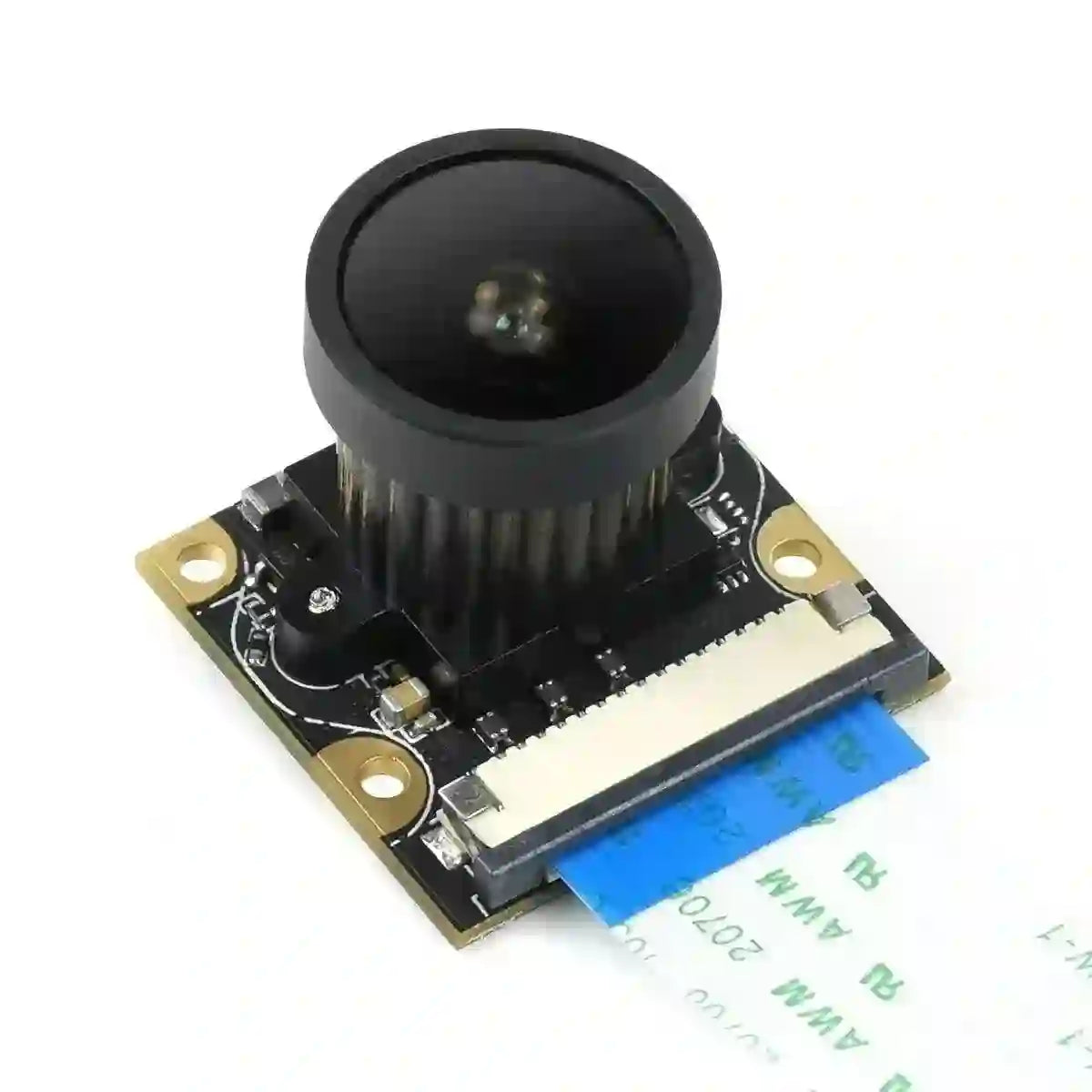
















The rapid advancements in artificial intelligence, autonomous driving, and robotics continuously demand more sophisticated sensing technologies. In this evolving landscape, depth cameras have emerged as critical components, enabling machines to perceive their environment with a crucial third dimension – depth. For those new to the field, a depth camera measures the precise distance between itself and objects in its field of view, fundamentally transforming how robots interact with the physical world.
While traditional 2D RGB cameras capture vivid visual data, they inherently lack precise distance information, forcing systems to infer depth rather than directly measure it. This limitation is a significant hurdle for sophisticated tasks requiring spatial awareness. In contrast, depth cameras provide explicit distance data, which, when combined with X and Y coordinates, allows for the calculation of accurate 3D spatial positions for every point in a scene.

The Enduring Challenges of Traditional 3D Vision
Current mainstream depth camera technologies – including structured light, indirect Time-of-Flight (iToF), and stereo vision – each present a unique set of compromises:
- Stereo Vision's Sensitivity: RGB stereo cameras heavily rely on image feature matching. Their performance can severely degrade in low-light, overexposed conditions, or scenes lacking sufficient texture for reliable feature extraction.
- Structured Light's Limitations: While offering high-precision close-range 3D reconstruction, structured light is vulnerable to ambient light interference. Its projected patterns can be washed out in bright environments, rendering it ineffective at longer distances (typically beyond 5 meters) or outdoors.
- iToF's Noise Issues: iToF technology provides fast ranging, but its signal is prone to multipath reflections, often leading to high data noise and reduced robustness, hindering consistent perception.
Beyond these individual sensor challenges, many advanced robotic applications resort to a "sensor stacking" approach, combining LiDAR, cameras, and Inertial Measurement Units (IMUs). However, this multi-sensor integration introduces its own host of problems: complex driver development, arduous data fusion, painstaking calibration, and difficult deployment. The resulting bulky, complex systems are often ill-suited for mass production, creating significant barriers to scalable robotics development.

Introducing the RoboSense AC1: A New Era of Active Camera Technology
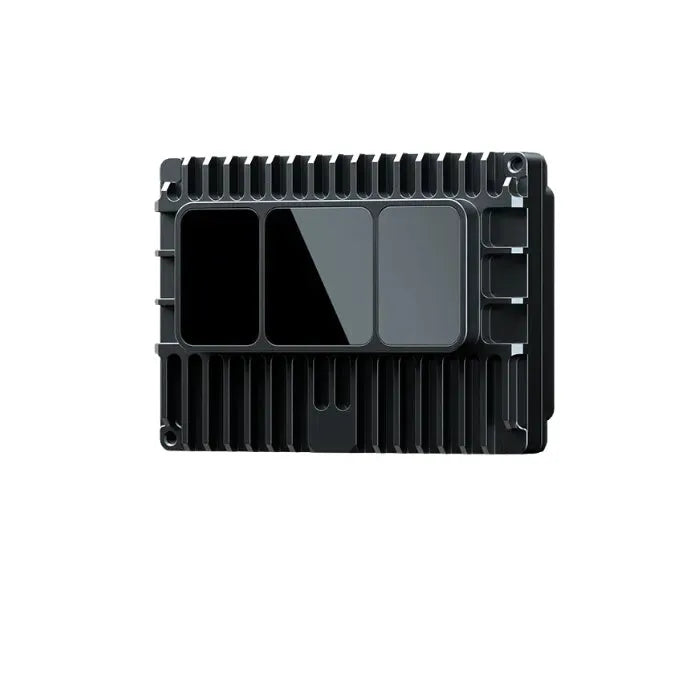
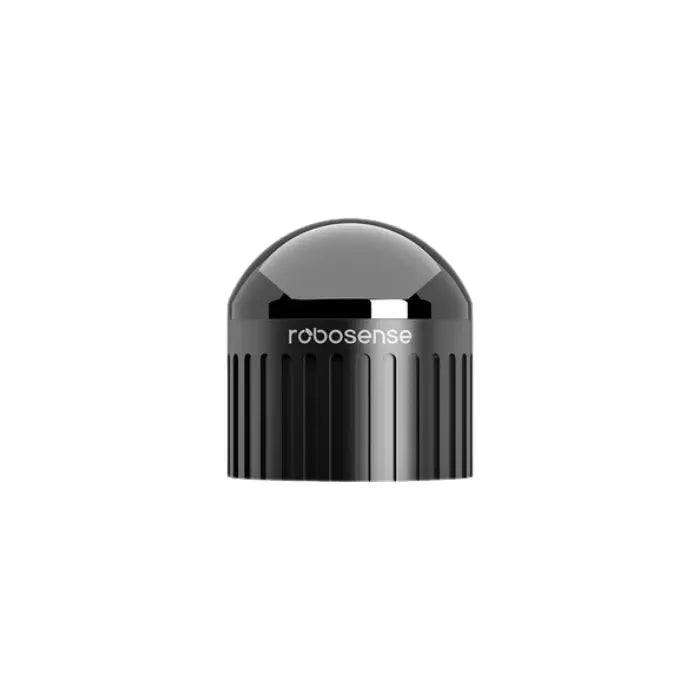
In response to these persistent challenges and the accelerating demands of intelligent robotics, RoboSense officially launched its groundbreaking Active Camera, the AC1, along with its comprehensive AI-Ready ecosystem. The AC1 represents a disruptive, one-stop solution for robot perception development, fundamentally rethinking how machines "see."
The RoboSense AC1 is engineered to provide hardware-level fused information encompassing depth, color, and motion posture. This innovative approach liberates robot perception configurations from the traditional, cumbersome method of stacking disparate sensors. The result is a simple, efficient, and commercially viable solution built for mass production. Complementing this hardware breakthrough, the AI-Ready ecosystem equips developers with essential software tools and open-source algorithms, dramatically improving development efficiency and shortening project cycles.

The True Eye of the Robot: AC1's Core Innovation & Superior Performance
The AC1 is more than just an incremental upgrade; it represents a qualitative leap in 3D perception capabilities. RoboSense's deep innovation at the hardware level, rooted in its mass-produced full-stack LiDAR chip technology, enables the AC1 to achieve spatiotemporal synchronous fusion of depth, color, and motion posture information. This active collection of data transcends passive reception, offering unprecedented environmental understanding.
Why Choose RoboSense AC1?
Key Technical Specifications & Advantages of the RoboSense AC1:
- Hardware-Level Multi-Modal Fusion: The AC1 uniquely fuses LiDAR depth, RGB color, and IMU data at the hardware level. This means synchronized outputs of precise depth, vibrant color imagery, and accurate motion posture, eliminating data asynchronous issues and cumulative calibration errors common in multi-sensor systems. For dynamic tasks like obstacle avoidance, robots gain real-time, high-precision point clouds and semantic images, simultaneously perceiving an object's position, shape, and movement.
- Ultra-Precise Depth Sensing: Achieves an impressive 3cm (1σ) accuracy, delivering pinpoint 3D spatial data critical for advanced SLAM and autonomous navigation. This accuracy remains stable across its operating range.
- Extended Ranging Capability: Offers a maximum ranging distance of 70 meters, a significant 600% increase compared to many traditional 3D cameras, allowing robots to perceive further and plan more effectively.
- Expansive Field of View (FoV): Features a wide Depth FOV of 120° × 60° and an RGB FOV of 144° × 78°. This combined ultra-wide fused FoV is 70% larger than traditional 3D cameras, ensuring comprehensive scene awareness and robust object tracking.

- Unrivaled Environmental Robustness: The AC1 operates reliably under challenging conditions, including 100kLux of direct sunlight. Its ranging performance is unaffected by varying light, ensuring consistent data whether in bright daylight or complete darkness. This capability grants robots "all-weather, all-terrain" visual freedom, empowering operation across diverse indoor and outdoor scenarios.
- Compact & Rugged Design: Engineered as a lightweight, solid-state module, the AC1 is only 1/3 the size of traditional multi-sensor setups. It's built to withstand extreme temperatures from -20°C to 60°C, making it robust enough for various mobile and industrial platforms.
-
Cost-Effective Solution: With its highly integrated design, the AC1 boasts a single-device cost that is 40% lower than assembling separate cameras and LiDAR units, paving the way for wider commercial adoption and mass production.
The AI-Ready Ecosystem: Empowering Developers, Accelerating Commercialization
The RoboSense AC1's innovation extends beyond hardware. Its indispensable AI-Ready ecosystem is designed to fundamentally reshape the development cycle and accelerate the commercialization of intelligent robots.

This comprehensive ecosystem includes:
- AC Studio: A one-stop tool suite providing an open-source SDK with drivers, node data collection, data calibration tools, data fusion interfaces, and cross-compilation environments. This allows developers to transition from spending months "reinventing the wheel" on basic software tasks to rapidly "building with blocks," significantly shortening deployment times.
- Open-Source Algorithms: AC Studio offers core algorithms for critical functions such as localization, SLAM (Simultaneous Localization and Mapping), 3D Gaussian splatting (for efficient point cloud reconstruction), object detection and recognition, semantic segmentation, and multi-modal point cloud and vision fusion. This empowers developers to bypass foundational algorithm development and directly engage in scenario-based and function-oriented secondary development.
- WIKI & Datasets: A comprehensive WIKI serves as a developer documentation hub for the Active Camera and its ecosystem. Additionally, curated datasets for various scenarios will be gradually released for free, providing valuable training data for AI models.
This robust AI-Ready ecosystem facilitates a rapid software iteration model, driving productization and commercialization. RoboSense's rich AI DNA, backed by decades of experience in AI models, databases, and supercomputing centers, positions it as one of the few companies integrating advanced sensor capabilities with robust AI algorithms and hardware R&D.
Broadening Horizons: Versatile Applications of the RoboSense AC1
The RoboSense AC1, with its hardware-level fusion and powerful AI-Ready ecosystem, is poised to unlock a vast array of applications requiring precise depth, color, and motion posture information.
- Robotics Navigation & SLAM: Facilitates precise SLAM and autonomous navigation for AGVs, service robots, and humanoid robots, even in complex, dynamic environments.
- Advanced AI & Vision Systems: Supports advanced localization, robust obstacle detection, and sophisticated object recognition tasks.
- Indoor & Outdoor Versatility: Its sunlight-proof performance ensures reliable operation across diverse indoor and challenging outdoor scenarios.
- Digital Twin Environments & 3D Modeling: The precise 3D data output by AC1 is ideal for constructing digital twins, 3D scanning, environmental monitoring, and stockpile monitoring.
-
Specific Industrial & Consumer Robotics:
- Autonomous Vehicles: Enhances perception for safer and more reliable self-driving systems.
- Industrial Robots: Improves precision for tasks like assembly, quality inspection, and logistics.
- Home Robots: Enables smarter navigation, interaction, and task execution in complex domestic environments.
- Smart Lawnmowers: Traditionally, precise boundary identification and obstacle avoidance in varying weather conditions are major pain points. An AC1-equipped smart lawnmower can accurately identify complex terrain, detect lawn boundaries with centimeter-level precision, and sensitively avoid obstacles like toys or decorations. Its robustness ensures stable operation even in rainy or foggy weather, dynamically optimizing routes for efficient, uniform coverage.
- Humanoid Robots: The compact size and hardware-fused data are particularly beneficial for humanoids where deployment space is limited and complex sensor calibration is a challenge.

Leading experts recognize AC1's transformative potential. Li Yuexuan, an algorithm engineer at the National and Local Joint Engineering Research Center for Humanoid Robots, noted: "The space available for deploying sensors on existing humanoid robots is limited, calibrating and aligning different sensors separately is troublesome, and there is a lack of easy-to-use multi-sensor fusion algorithms. AC1 saves deployment space, can directly fuse algorithms for images, point clouds, and IMU, and achieves excellent SLAM, perception, and localization results."
Yang Guodong, co-founder of Lingbao CASBOT and head of the Motion Intelligence R&D Center, added: "Our perception and hardware teams are very satisfied with AC1. It not only eliminates the tedious work of calibrating and aligning different sensors separately but also reduces the number of hardware components, saving internal space, which is very friendly for the design of compact humanoid robots."
Conclusion: Paving the Way for Truly Intelligent Robots
The RoboSense AC1 fundamentally breaks through the limitations of traditional 3D cameras, offering superior performance that meets the demanding perception needs of modern intelligent robots. It empowers safe obstacle avoidance, high-fidelity mapping, and precise hand-eye coordination for both indoor and outdoor operations, significantly enhancing efficiency and safety across various applications.
As a global leader in robotics technology platforms, RoboSense, through the AC1 LiDAR Depth Camera and its AI-Ready ecosystem, is setting a new standard for perception in the intelligent robotics industry. By providing a comprehensive, closed-loop fusion solution from hardware to algorithms, RoboSense drastically lowers the R&D barrier for robot developers. Its high cost-effectiveness and ease of use democratize advanced perception capabilities, enabling businesses of all sizes to rapidly develop cutting-edge robotic products.

The AC1 signifies a pivotal shift in robot vision – from "passive imaging" to "active perception." It's not merely a replacement for existing 3D cameras but a robust solution to the compatibility and application limitations of complex multi-vision sensor stacks. It embodies a new technological philosophy: deep integration of hardware and algorithms to empower robots with perception that genuinely transcends human senses, propelling us toward spatial intelligence.
For developers, the AC1's AI-Ready ecosystem transforms them from tool users into innovation leaders. For the industry, this marks an efficiency revolution and the dawn of the next evolution of intelligent robots. As the Active Camera product line expands, RoboSense will continue to drive the evolution of robotic perception technology. When more robots are equipped with vision systems that truly "surpass the human eye," the digitalization and intellectualization of the physical world will transition from science fiction to a tangible, ubiquitous reality.
References
- https://www.robosense.ai/en/rslidar/AC1
- https://mp.weixin.qq.com/s/-jHwfS9TguuiLT8GyNDZnw?scene=1
Disclaimer: This content is shared with friendly intentions. If any rights are infringed, please notify us promptly, and we will remove it immediately.