










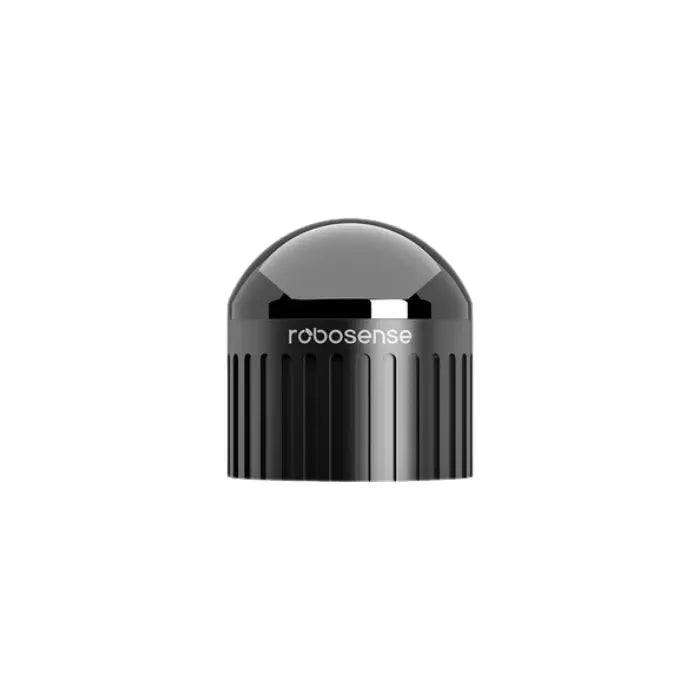













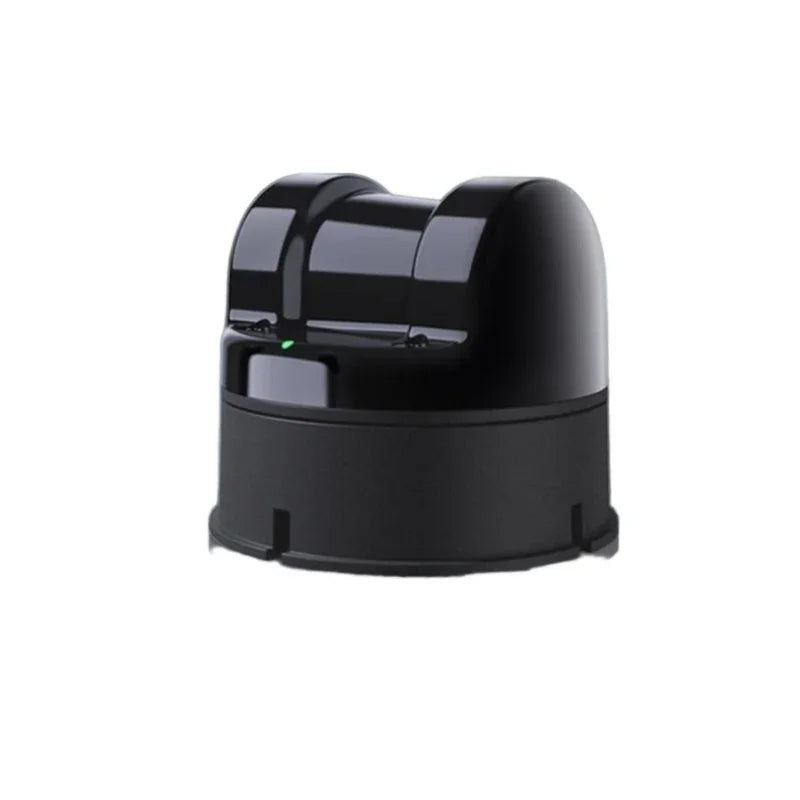












Shenzhen, China – Recently, RoboSense, a leading innovator in LiDAR technology, announced the global debut of Fairy, the world's first high-precision, mid-to-long-range digital LiDAR. This groundbreaking sensor redefines intelligent perception for a wide array of autonomous devices, including drones and mobile robots, through its exceptional million-level point frequency, millimeter-level accuracy, and ultra-lightweight design. Fairy is poised to accelerate the commercialization of critical applications such as unmanned logistics, intelligent inspection, and advanced mobile robotics across various industries worldwide.

A Digital Revolution in LiDAR Architecture
Fairy represents a significant technological leap in 360-degree mechanical LiDAR. Departing from conventional architectures, Fairy pioneers a fully digital design. It integrates a new generation of advanced Vertical-Cavity Surface-Emitting Laser (VCSEL) transmitter chips with high-photon-detection-efficiency Single-Photon Avalanche Diode (SPAD-SoC) receiver chips. This streamlined signal processing and transmission pipeline facilitates superior point cloud data acquisition and high-fidelity output. The innovative digital architecture not only enhances imaging quality but also substantially reduces power consumption and system costs, providing a robust foundation for broad-scale commercial deployment, particularly for integrators and OEMs aiming for cost-effective and scalable autonomous solutions globally.

Unparalleled Performance for Demanding Applications
Fairy is available in two configurations: a 96-line version offering 1.37 million points per second, and a 48-line version delivering 685,000 points per second. This represents an approximate 170% increase in point cloud density compared to traditional LiDAR solutions. Coupled with an impressive angular resolution of 0.25° × 0.33°, Fairy can swiftly identify even small obstacles and precisely reconstruct complex 3D environments.
Furthermore, Fairy achieves an industry-leading measurement accuracy of 0.5 cm (1σ) under typical conditions (e.g., 30°C outdoors, 0.5-70m ranging). This exceptional precision is crucial for highly accurate positioning and navigation systems, making it ideal for applications requiring sub-centimeter level accuracy for mapping, surveying, and robotic manipulation. The high-fidelity point clouds generated by Fairy are also ideally suited for advanced mapping, sophisticated algorithm fusion, and various other data-intensive applications, significantly enhancing data reliability for international engineering projects.
With a maximum detection range of 150 meters, an integrated Inertial Measurement Unit (IMU), and a 360° × 32° field of view, Fairy adeptly balances the requirements for long-range detection with comprehensive omnidirectional perception. This comprehensive data capture makes it highly adaptable for diverse global operational environments, from urban logistics hubs in Europe to agricultural automation in North America, and industrial inspections in Asia.
Compact, Lightweight Design for Enhanced Versatility
Weighing less than 350 grams and boasting compact dimensions of only Φ75 × H70 mm, Fairy stands as the lightest mid-to-long-range digital LiDAR in the industry. This remarkable portability dramatically reduces the payload burden on unmanned aerial vehicles (UAVs) and mobile robots, simplifying installation and operation for engineers and field technicians worldwide. Its small footprint and minimal power consumption (as highlighted on the product page) also contribute to longer operational durations for battery-powered platforms, a critical factor for drone delivery and last-mile logistics solutions.
The Evolving Landscape of Autonomous Perception
In the nascent stages of autonomous driving development, mechanical rotating LiDAR emerged as the prevalent choice for most self-driving solutions. Notably, after 2010, Velodyne, a pioneer in automotive LiDAR, garnered substantial orders from industry giants like Google, Cruise, Apple, and Uber, cementing mechanical LiDAR's role as a de facto standard for early autonomous vehicles.
While the increasing adoption of smart driving features in passenger vehicles has led to a rise in aesthetically integrated forward-facing LiDARs, mechanical rotating LiDAR continues to be the preferred sensor for L4-level autonomous driving solutions in many industry sectors due to its comprehensive coverage and proven reliability. Fairy's digital architecture offers a future-proof solution that marries the benefits of mechanical 360° scanning with the advantages of digital signal processing.
Real-World Applications and Industry Impact
Fairy has already been successfully integrated into Neolix's unmanned vehicles, demonstrating its immediate applicability and robustness in real-world scenarios, particularly in unmanned last-mile delivery and autonomous shuttles. Beyond logistics, its compact form factor and minimal weight (under 350g) open doors for Fairy's deployment in a wide range of fields, including:
-
Drone-based surveying and mapping: Enabling highly accurate 3D model generation for construction, agriculture, and environmental monitoring across vast territories.

-
Autonomous yard robots and AGVs (Automated Guided Vehicles): Improving efficiency and safety in industrial warehouses, ports, and manufacturing facilities.


-
Advanced cleaning robots: Enhancing navigation and obstacle avoidance in complex indoor and outdoor environments.

-
Security and surveillance systems: Providing robust 3D perception in challenging lighting conditions.

- Infrastructure inspection: Facilitating automated monitoring of bridges, pipelines, and power lines.
These diverse application scenarios underscore Fairy's versatility and its potential to drive automation across various global markets, from smart cities initiatives in Asia to automated logistics networks in North America and advanced agricultural solutions in Europe.
It is worth noting that current mechanical LiDAR solutions on the market are also undergoing significant integration, aiming for higher levels of component consolidation. For example, Hesai's OT128 incorporates a chip-based architecture, similar to its AT128, integrating transmitting and receiving modules onto separate boards. This approach substantially streamlines the manufacturing process and reduces the physical size of the LiDAR unit. Official data indicates that the OT128 has achieved a remarkable increase in production efficiency compared to traditional 360° mechanical LiDAR, with a 66% reduction in component count, a 95% reduction in core production process time, and an automation rate exceeding 90% for core processes.
The introduction of RoboSense's Fairy not only addresses a critical market need for high-precision, mid-to-long-range digital LiDAR but also promises to deliver a qualitative upgrade to the intelligent perception capabilities of autonomous equipment. This advancement is poised to drive significant efficiency and safety improvements across global sectors such as smart logistics, intelligent inspection, and beyond, fostering innovation for engineers and businesses worldwide.
References: