openelab.de
 openelab.com




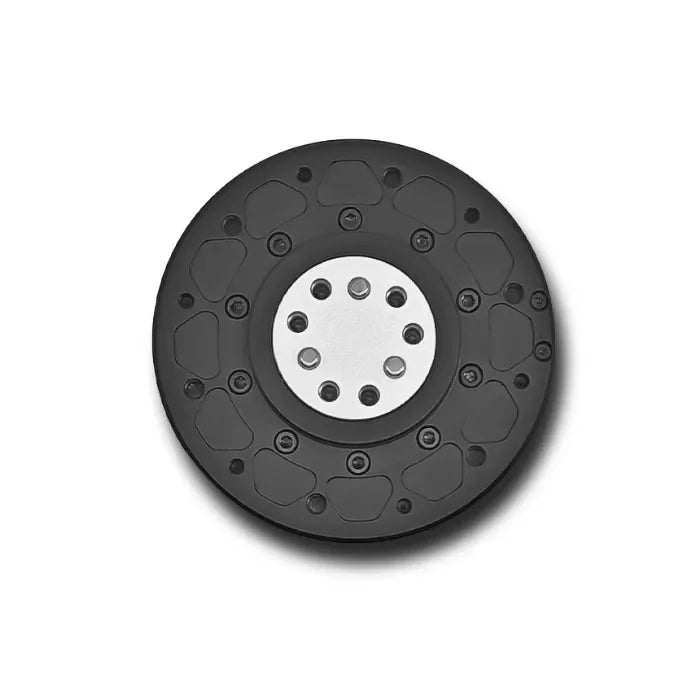







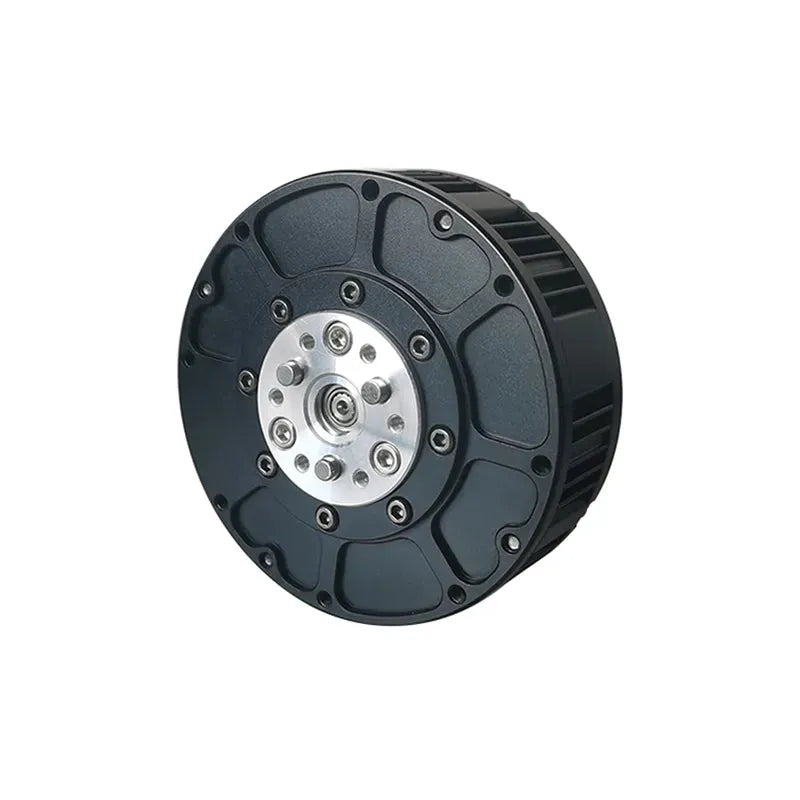





























What is ROBSTRIDE02? The ROBSTRIDE02 QDD 17N.m joint motor module is a high-performance robotic actuator designed for precision motion control applications. Manufactured by RobStride Dynamics, this compact dual-encoder actuator delivers exceptional torque density in a lightweight package, making it ideal for robotic arm joints, servo mechanisms, and industrial automation systems. With its 17 N·m peak torque output and advanced dual magnetic encoder feedback system, the ROBSTRIDE02 represents the cutting edge of quasi-direct drive (QDD) actuator technology for modern robotics applications.

Technical Specifications
The ROBSTRIDE02 boasts impressive specifications that position it as a leading solution in the compact actuator market. Its carefully engineered design balances power, precision, and size to meet the demanding requirements of modern robotic systems.
Mechanical Specifications
| Parameter | Value |
|---|---|
| Dimensions | 78.5 × 78.5 × 45.5 mm |
| Weight | 405 g ± 5 g |
| Poles | 28 |
| Phases | 3 |
| Drive Method | FOC (Field-Oriented Control) |
| Reduction Ratio | 7.75 : 1 |
| Gear Material | Machined Steel |
| Protection Level | IP52 (customizable to IP67) |
| Encoders | Dual Magnetic Encoder (14-bit) |
Electrical Specifications
| Parameter | Value |
|---|---|
| Rated Voltage | 48 V |
| Voltage Range | 24 – 60 V |
| Rated Output Power | 170 W ±10% |
| Rated Torque | 6 N·m |
| Peak Torque | 17 N·m |
| No-load Speed | 410 rpm ±10% |
| Rated Load Speed | 360 rpm ±10% |
| Peak Phase Current | 23 Apk ±10% |
| Communication | CAN Bus @ 1 Mbps |
| Temperature Range | -20 ~ 50 ℃ |
The ROBSTRIDE02 actuator achieves an excellent balance between torque density and compactness. Its dual encoder system provides superior position feedback compared to single-encoder designs, enabling more precise motion control for demanding applications. The 7.75:1 reduction ratio places this actuator in the quasi-direct drive category, offering natural compliance and high backdrivability essential for safe human-robot interaction.
Key Features and Capabilities
The ROBSTRIDE02 joint motor module incorporates several advanced technologies that distinguish it from conventional servo motors. Understanding these features helps engineers select the right actuator for their specific robotic applications.
Dual Encoder System
The standout feature of the ROBSTRIDE02 is its dual magnetic encoder configuration. Unlike the ROBSTRIDE01 which uses a single encoder, the ROBSTRIDE02 employs two 14-bit magnetic encoders positioned at different points in the drivetrain. This dual-feedback architecture provides significant advantages for precision control applications.

The primary encoder monitors the motor shaft position directly, providing high-speed feedback for the field-oriented control (FOC) algorithm. The secondary encoder measures the actual output shaft position after the gearbox, enabling closed-loop control at the joint level. This dual measurement capability eliminates errors caused by gear backlash and transmission compliance, delivering superior positioning accuracy compared to single-encoder systems.
Dual encoder technology also enhances safety in robotic applications. If the mechanical transmission experiences a failure, the output encoder can still report the actual joint position, preventing uncontrolled movements. This redundancy is particularly valuable in collaborative robot applications where human safety depends on accurate joint state estimation.
Quasi-Direct Drive Architecture
The ROBSTRIDE02 utilizes a quasi-direct drive (QDD) architecture with its 7.75:1 gear ratio. QDD actuators occupy a sweet spot between high-ratio geared motors and direct-drive systems. The moderate gear ratio provides sufficient torque multiplication while maintaining excellent backdrivability and force transparency.
Compared to harmonic drive actuators with ratios of 50:1 or higher, QDD systems like the ROBSTRIDE02 offer faster dynamic response and lower friction. The actuator can be backdriven with relatively low force, enabling gravity compensation and safe human-robot interaction. When a human pushes against a robot joint equipped with the ROBSTRIDE02, the actuator senses the external force through the encoder feedback and can respond appropriately, either yielding to the force or maintaining position depending on the control mode.
The ROBSTRIDE00 with its 10:1 ratio and the ROBSTRIDE03 with 9:1 ratio share similar QDD characteristics, offering engineers a family of compatible actuators with different torque capabilities for multi-joint robot designs.
Field-Oriented Control
The ROBSTRIDE02 employs field-oriented control (FOC), also known as vector control, to achieve smooth and efficient motor operation. FOC transforms the three-phase AC motor currents into a rotating reference frame aligned with the rotor magnetic field, enabling independent control of torque and flux components.
This control strategy delivers several benefits for robotic applications. The torque response is nearly instantaneous, enabling high-bandwidth force control essential for contact tasks. FOC also maximizes motor efficiency across the entire speed range, reducing power consumption and heat generation in battery-powered mobile robots. The smooth current waveforms produced by FOC result in quieter operation compared to trapezoidal commutation, an important consideration for robots operating near humans.
CAN Bus Communication
The ROBSTRIDE02 actuator communicates via CAN bus at 1 Mbps, a robust industrial standard widely used in automotive and industrial automation. CAN bus offers several advantages for multi-axis robotic systems:
- Differential signaling provides excellent noise immunity in electrically noisy environments
- Multi-drop topology allows multiple actuators to share a single bus
- Priority-based arbitration ensures critical messages are delivered first
- Built-in error detection maintains communication integrity
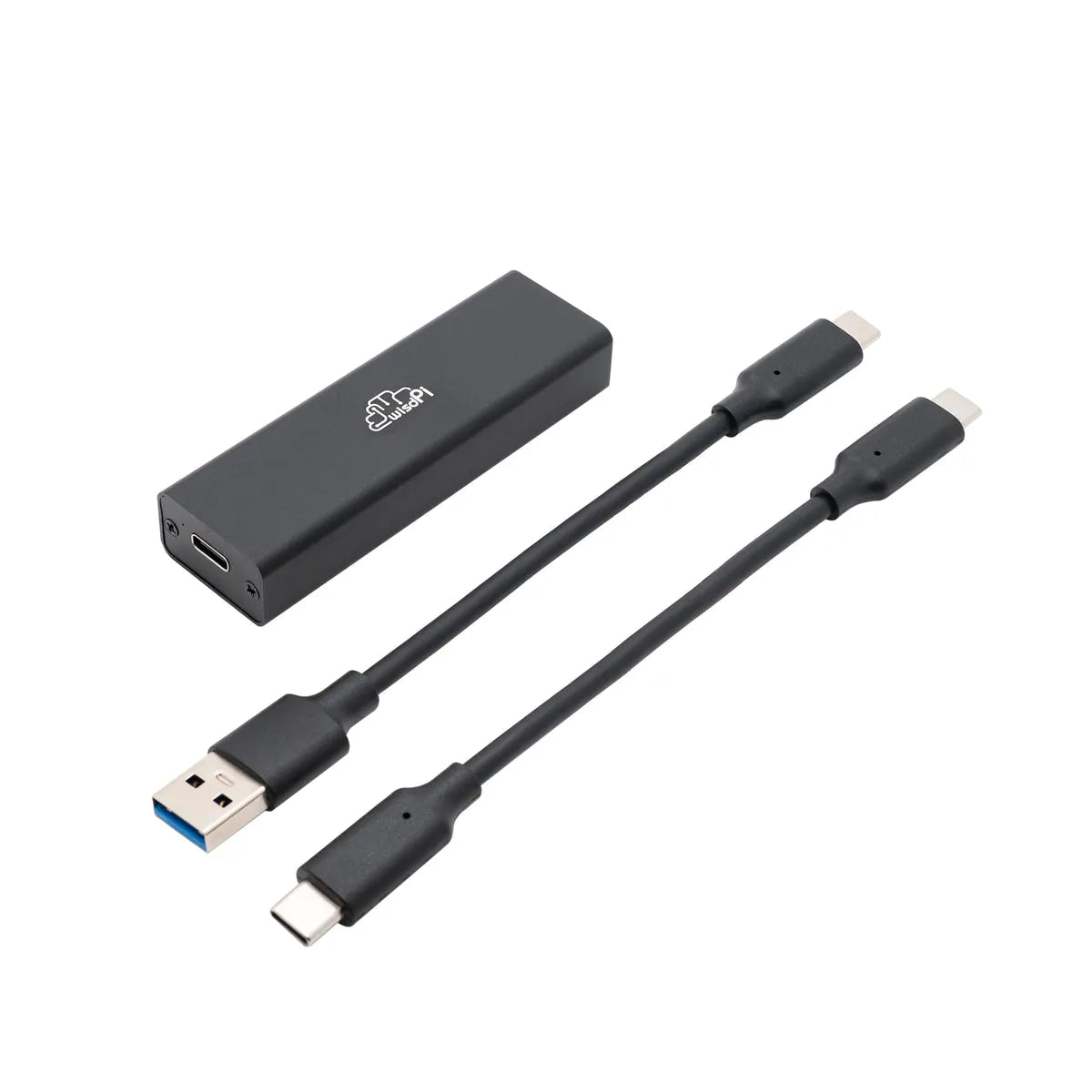
The ROBSTRIDE CAN to USB debugging module simplifies integration with PC-based control systems, providing a plug-and-play interface for development and testing. This accessory is essential for configuring the actuator parameters and updating firmware.
Dual Encoder vs Single Encoder: A Technical Comparison
Understanding the differences between dual encoder and single encoder configurations helps engineers appreciate the value proposition of the ROBSTRIDE02. The ROBSTRIDE01 uses a single encoder configuration at the same torque level, providing an interesting comparison point.
Position Accuracy
Single encoder systems measure motor position and infer joint position using the known gear ratio. However, gear backlash and compliance introduce errors between the motor position and actual joint position. In applications requiring sub-degree accuracy, these errors can significantly impact performance.
Dual encoder systems directly measure both motor and joint positions, eliminating the effect of transmission errors. The controller knows exactly where the joint is positioned regardless of backlash or gear deformation. This direct measurement is essential for precision assembly tasks, surgical robots, and high-accuracy positioning systems.
Control Bandwidth
The motor-side encoder in a dual system provides high-speed feedback for the current control loop, typically running at 10-20 kHz. The output encoder provides position feedback for the outer control loops at rates of 1-2 kHz. This separation allows optimization of each control loop for its specific purpose.
Single encoder systems must compromise between motor control bandwidth and position accuracy. Placing the encoder on the motor prioritizes control performance but sacrifices position accuracy due to transmission effects. Placing it on the output improves accuracy but introduces compliance that limits control bandwidth.
Diagnostics and Safety
Dual encoders enable sophisticated diagnostic capabilities. By comparing the motor and output encoder readings, the system can detect gear wear, bearing degradation, and transmission faults before they cause failures. This predictive maintenance capability reduces downtime in industrial applications.
From a safety perspective, dual encoders provide redundancy. If one encoder fails, the other can still provide position information, allowing the system to maintain safe operation or execute a controlled shutdown. This redundancy is valuable in collaborative robotics where human safety is paramount.

Applications and Use Cases
The ROBSTRIDE02 QDD 17N.m actuator serves diverse applications across the robotics and automation landscape. Its combination of torque density, precision control, and compact size makes it suitable for numerous demanding scenarios.
Collaborative Robot Arms
Collaborative robots (cobots) require actuators that are both powerful and safe for human interaction. The ROBSTRIDE02's 17 N·m peak torque is well-suited for medium-payload cobot joints, while its quasi-direct drive architecture provides the natural compliance needed for safe collaborative operation. The dual encoder system enables precise force control, allowing the robot to detect contact with humans and respond appropriately.
The compact 78.5mm form factor allows designers to create slender robot arms that can reach into confined spaces. The actuator's low weight of 405g minimizes the inertia of moving joints, improving dynamic performance and reducing power consumption.
Humanoid Robots
Humanoid robots demand actuators that match human joint performance in terms of torque, speed, and range of motion. The ROBSTRIDE02's specifications align well with the requirements for humanoid leg and arm joints. Its 17 N·m peak torque provides sufficient strength for supporting body weight during walking motions, while the 360 rpm rated speed enables fast limb movements.
The ROBSTRIDE EDULITE 05 offers a smaller 6N·m option for lighter joints, while the ROBSTRIDE03 and ROBSTRIDE04 provide higher torque options for hip and knee joints, creating a complete actuator ecosystem for humanoid designs.
Industrial Automation
Precision assembly and material handling applications benefit from the ROBSTRIDE02's accurate position control. The dual encoder system enables repeatable positioning within tight tolerances, essential for electronics assembly and quality inspection tasks. The actuator's wide operating temperature range of -20 to 50°C suits industrial environments without climate control.
The IP52 protection rating provides dust and water splash resistance for factory floor operation. For harsher environments, the actuator can be customized to IP67, enabling washdown compatibility and outdoor operation.
Research and Education
Research laboratories and educational institutions value the ROBSTRIDE02 for its accessible control interface and documented communication protocol. The CAN bus interface integrates easily with common robotics platforms like ROS (Robot Operating System), enabling rapid prototyping of experimental robotic systems.
The ROBSTRIDE EDULITE 05 specifically targets educational applications with its youth-focused design and documentation. The CAN to USB debugging module simplifies classroom integration, allowing students to control actuators directly from laptop computers.
AGV and AMR Systems
Automated Guided Vehicles (AGVs) and Autonomous Mobile Robots (AMRs) require compact, efficient actuators for steering and lifting mechanisms. The ROBSTRIDE02's power density and efficiency make it ideal for battery-powered mobile applications. The CAN bus interface integrates seamlessly with vehicle control systems, and the wide voltage range accommodates varying battery states of charge.
Medical and Rehabilitation Robotics
The precision and safety features of the ROBSTRIDE02 suit medical robot applications. The dual encoder system provides the accuracy needed for surgical assistance robots, while the backdrivable QDD architecture enables safe interaction with patients in rehabilitation exoskeletons. The low noise operation is appropriate for clinical environments where noise pollution must be minimized.

Integration and Development
Successfully integrating the ROBSTRIDE02 actuator into a robotic system requires understanding its mechanical, electrical, and software interfaces. Proper integration ensures optimal performance and reliability.
Mechanical Integration
The ROBSTRIDE02 features a flange mount design with threaded mounting holes for secure installation. The M3 mechanical installation holes provide robust attachment to robot structures, while the M4 flange holes enable joint-to-joint connections in articulated designs. Engineers should ensure mounting surfaces are flat and rigid to maintain alignment and minimize vibration.
The output shaft features threaded holes for attaching links and end effectors. When designing connections, consider the 17 N·m peak torque to ensure mechanical integrity under maximum loading. The machined steel gears provide durability but should not be subjected to impact loads beyond the specified torque limits.
Electrical Interface
The XT30PB electrical terminal provides power and communication connections. This connector type is common in RC and drone applications, making compatible cables readily available. The 24-60V input range accommodates various power system designs, though 48V nominal is recommended for optimal performance.
Power supply sizing should account for the 23A peak phase current during rapid acceleration or high-torque operations. A 48V power supply capable of delivering at least 15A continuous current with 25A peak capability is recommended for single-actuator applications. Multi-axis systems require proportionally larger power supplies.
Communication Setup
The CAN bus interface requires proper network termination and cabling. Use twisted-pair shielded cable for CAN_H and CAN_L signals to minimize electromagnetic interference. Terminate the bus with 120Ω resistors at both ends of the network. The ROBSTRIDE CAN to USB module simplifies initial setup and parameter configuration.
Each actuator on a CAN bus network requires a unique node ID. Configure IDs using the manufacturer's software tools before deploying in multi-axis systems. The 1 Mbps baud rate provides sufficient bandwidth for control loops running at 1 kHz with multiple actuators on the same bus.
Control Software
The ROBSTRIDE02 accepts CAN frame commands for position, velocity, and torque control modes. Implement the communication protocol according to the manufacturer's documentation, handling message priority and error checking appropriately. Many robotics frameworks including ROS have existing packages for similar CAN-based actuators that can be adapted.
For torque control applications, configure the FOC parameters to match your specific load characteristics. The default tuning provides good general-purpose performance, but optimizing the current control loop bandwidth for your application can improve force control accuracy.
RobStride Product Family Comparison
RobStride Dynamics offers a comprehensive range of QDD actuators to suit various robotic applications. Understanding the product family helps engineers select the optimal actuator for each joint in a multi-axis system.
| Model | Peak Torque | Weight | Size | Encoders |
|---|---|---|---|---|
| EDULITE 05 | 6 N·m | 242 g | 46×46×44 mm | Dual |
| ROBSTRIDE00 | 14 N·m | 310 g | 57×57×51 mm | Dual |
| ROBSTRIDE01 | 17 N·m | 380 g | Similar | Single |
| ROBSTRIDE02 | 17 N·m | 405 g | 78.5×78.5×45.5 mm | Dual |
| ROBSTRIDE05 | 5.5 N·m | Compact | Compact | Dual |
| ROBSTRIDE06 | 36 N·m | Mid | Mid | Dual |
| ROBSTRIDE03 | 60 N·m | 880 g | 106×106×56 mm | Dual |
| ROBSTRIDE04 | 120 N·m | 1420 g | 120×120×56 mm | Dual |
The ROBSTRIDE02 occupies the mid-range position in the RobStride lineup, offering more torque than the compact ROBSTRIDE00 and EDULITE 05 while remaining more compact than the high-torque ROBSTRIDE03 and ROBSTRIDE04 models. Its dual encoder configuration distinguishes it from the single-encoder ROBSTRIDE01, providing superior precision for demanding applications.
Pros and Cons
Like any engineering component, the ROBSTRIDE02 presents both advantages and limitations that engineers should consider during the selection process.
Advantages
- Dual Encoder Precision: The dual magnetic encoder system delivers exceptional position accuracy by eliminating transmission-induced errors
- High Torque Density: 17 N·m peak torque in a 405g package represents excellent power-to-weight ratio
- Compact Form Factor: The 78.5mm square cross-section enables slim robot arm designs
- QDD Architecture: Natural compliance and backdrivability support safe collaborative operation
- Wide Voltage Range: 24-60V operation accommodates various power system designs
- FOC Control: Smooth, efficient operation with excellent dynamic response
- Robust Communication: CAN bus provides reliable multi-axis networking
- IP52 Protection: Dust and splash resistance suits industrial environments
- Family Compatibility: Easy to mix with other RobStride actuators for complete robot designs
Limitations
- Gear Ratio Constraints: The 7.75:1 ratio limits maximum joint speed compared to direct-drive systems
- Power Requirements: 23A peak current requires substantial power supply capacity
- Thermal Management: High power density requires consideration of heat dissipation in enclosed designs
- Cost Premium: Dual encoder configuration adds cost compared to single-encoder alternatives
- Control Complexity: Dual encoder systems require more sophisticated control algorithms
For applications prioritizing precision and safety, the advantages of the dual encoder system outweigh the additional complexity and cost. The ROBSTRIDE01 provides a cost-effective alternative when single-encoder accuracy is sufficient.

FAQ: Frequently Asked Questions
What is the difference between ROBSTRIDE02 and ROBSTRIDE01?
The primary difference between the ROBSTRIDE02 and the ROBSTRIDE01 is the encoder configuration. The ROBSTRIDE02 features a dual encoder system with 14-bit magnetic encoders on both the motor and output shafts, providing superior position accuracy and backlash compensation. The ROBSTRIDE01 uses a single encoder configuration, making it more cost-effective for applications where extreme precision is not required. Both models deliver the same 17 N·m peak torque.
What does QDD mean in robotic actuators?
QDD stands for Quasi-Direct Drive, referring to actuators with low gear ratios (typically 5:1 to 10:1) that balance the benefits of direct-drive and geared systems. The ROBSTRIDE02's 7.75:1 ratio provides torque multiplication while maintaining high backdrivability and force transparency. This architecture enables natural compliance, fast dynamic response, and safe human-robot interaction that would be difficult to achieve with high-ratio gearboxes. Learn more about harmonic drives and gear systems on Wikipedia.
How do dual encoders improve robot performance?
Dual encoders enhance robot performance by directly measuring both motor position and actual joint position. This configuration eliminates errors caused by gear backlash and transmission compliance, delivering superior positioning accuracy compared to single-encoder systems. The dual feedback also enables advanced diagnostic capabilities, detecting gear wear and mechanical issues before failures occur. In safety-critical applications, the redundancy provides backup position information if one encoder fails. Read more about rotary encoder technology.
What control modes does the ROBSTRIDE02 support?
The ROBSTRIDE02 supports position, velocity, and torque control modes via CAN bus commands. The field-oriented control (FOC) implementation provides smooth, efficient motor operation across all modes. Position mode enables precise joint positioning for pick-and-place and assembly tasks. Velocity mode supports continuous rotation applications. Torque mode provides force control for compliant manipulation and safe human interaction. The dual encoder system enhances performance in all modes by providing accurate joint state feedback. Learn about vector control on Wikipedia.
Can I use ROBSTRIDE02 for a humanoid robot?
Yes, the ROBSTRIDE02 is well-suited for humanoid robot applications. Its 17 N·m peak torque and compact size match the requirements for arm and leg joints in human-scale robots. The quasi-direct drive architecture provides the natural compliance needed for dynamic walking and safe human interaction. Many humanoid robot builders combine the ROBSTRIDE02 for arm joints with the higher-torque ROBSTRIDE03 (60 N·m) or ROBSTRIDE04 (120 N·m) for hip and knee joints. The EDULITE 05 works well for smaller joints like wrists and ankles.
What power supply do I need for ROBSTRIDE02?
The ROBSTRIDE02 requires a 24-60V DC power supply, with 48V nominal recommended for optimal performance. The supply must deliver at least 7A continuous current for rated operation and should support 23A peak current for maximum torque output. For single-actuator applications, a 48V 15A continuous/25A peak supply provides adequate headroom. Multi-axis systems require proportionally larger supplies based on the number of simultaneous actuators and duty cycle. Consider supplies with regenerative braking capability for applications with frequent deceleration.
How do I program and control the ROBSTRIDE02?
The ROBSTRIDE02 communicates via CAN bus at 1 Mbps using a documented protocol. Send CAN frames to set target position, velocity, or torque values and receive feedback containing actual joint state. The ROBSTRIDE CAN to USB debugging module simplifies PC-based development, converting USB commands to CAN messages. Many users implement control software in Python, C++, or using robotics frameworks like ROS. The manufacturer's documentation provides detailed protocol specifications and example code. Learn about CAN bus communication.
What is the difference between rated torque and peak torque?
The ROBSTRIDE02's rated torque of 6 N·m represents the continuous torque output the actuator can sustain indefinitely without overheating. The 17 N·m peak torque represents the maximum instantaneous torque available for short durations during acceleration or high-load events. Operating continuously at peak torque would cause thermal overload. For sizing applications, use rated torque for continuous operations like holding position against gravity, and consider peak torque for intermittent demands like starting motion or handling impact loads. IEEE Robotics & Automation Society provides technical resources on motor sizing.
Conclusion
The ROBSTRIDE02 QDD 17N.m joint motor module represents a compelling solution for engineers building precision robotic systems. Its dual encoder configuration sets it apart from competitors, delivering the accuracy needed for demanding applications while the quasi-direct drive architecture provides the compliance essential for safe human-robot interaction.
With 17 N·m peak torque in a compact 405g package, the ROBSTRIDE02 achieves an excellent balance of power and size. The wide 24-60V operating range and robust CAN bus interface simplify system integration, while the IP52 protection rating suits industrial environments. Whether building collaborative robot arms, humanoid platforms, or custom automation systems, this actuator provides the performance and reliability modern robotics demands.
The RobStride product family offers a complete ecosystem of compatible actuators, from the compact EDULITE 05 to the powerful ROBSTRIDE04, enabling engineers to select optimal torque classes for each joint in complex robotic systems. Combined with the CAN to USB debugging module and comprehensive documentation, RobStride provides everything needed to bring robotic concepts to reality.
For projects requiring the precision of dual encoders with the benefits of quasi-direct drive technology, the ROBSTRIDE02 stands as an excellent choice in the increasingly competitive robotic actuator market. Its thoughtful engineering and robust feature set make it suitable for both research prototyping and production deployment in the next generation of intelligent robots.