openelab.de
 openelab.com




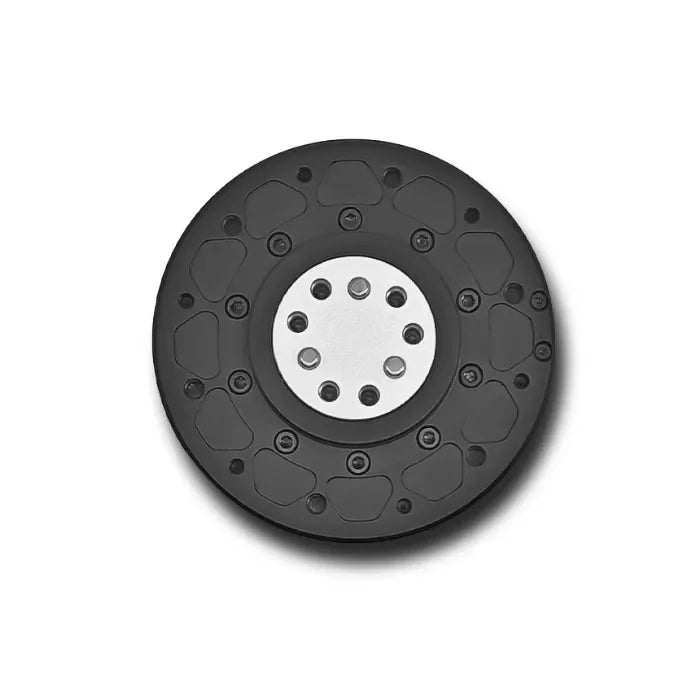







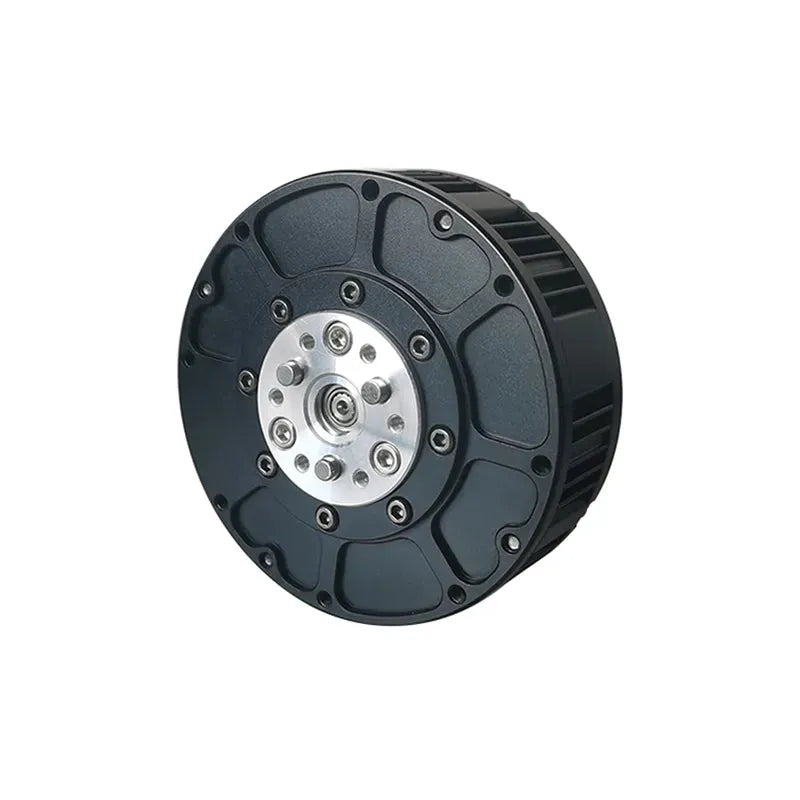






























What is ROBSTRIDE01? The ROBSTRIDE01 QDD 17N.m Integrated Joint BLDC Gear Motor is a high-performance robotic actuator designed for advanced automation systems, robotic joints, and lightweight industrial control applications. With its permanent magnet excitation system, it delivers high torque output in a compact and fully integrated design, making it ideal for space-constrained environments and precision motion tasks. The ROBSTRIDE01 represents the cutting edge of quasi-direct-drive (QDD) technology, offering engineers a powerful solution for building sophisticated robotic systems that require both precision and strength.
What is ROBSTRIDE01 QDD 17N.m?
The ROBSTRIDE01 is a compact, integrated joint motor module that combines a brushless DC (BLDC) motor, precision gearbox, magnetic encoder, and control electronics into a single, streamlined package. This 17N.m peak torque actuator leverages quasi-direct-drive technology to deliver exceptional performance for robotic applications. QDD technology, pioneered by research institutions like MIT's Biomimetics Robotics Lab for their famous Cheetah robot, provides a unique balance of torque density, backdrivability, and precision that traditional gear motors cannot match.

The ROBSTRIDE01 features a rated torque of 6 N·m and can deliver peak torque up to 17 N·m, making it suitable for a wide range of robotic applications from humanoid robots to industrial automation systems. The integrated design eliminates the need for external motor drivers and complex wiring, simplifying system integration and reducing overall system complexity. This all-in-one approach is particularly valuable for developers building robotics projects where space and weight are critical constraints.
Technical Specifications
Mechanical Specifications
| Parameter | Value |
|---|---|
| Model Number | RSQDD-PG-06-17-01A |
| Rated Torque | 6 N·m |
| Peak Torque | 17 N·m |
| Rated Speed | 275 rpm |
| Weight | 0.38 kg |
| Gear Material | Alloy Steel |
| Shaft End Type | With Threaded Hole |
| Mounting Method | Flange Mounting |
Electrical Specifications
| Parameter | Value |
|---|---|
| Rated Voltage | 36 V DC |
| Rated Current | 7 A |
| Rated Power | 170 W |
| Excitation Method | Permanent Magnet |
| Encoder Type | Single Magnetic Encoder |
| Phases | 3-Phase BLDC |
| Drive Method | FOC (Field-Oriented Control) |
| Operating Temperature | ≤ 70°C |
The ROBSTRIDE01 utilizes Field-Oriented Control (FOC), also known as vector control, which provides smooth, efficient operation with minimal torque ripple. This advanced control technique enables precise torque control and high-efficiency operation across the entire speed range, making the ROBSTRIDE01 motor module ideal for applications requiring dynamic motion control.
Key Features
Compact and Integrated Design
The ROBSTRIDE01 actuator combines motor, driver, encoder, and mechanical output into a single compact unit weighing only 380 grams. This streamlined structure is perfect for modular robotic systems where every gram counts. The integrated approach significantly reduces wiring complexity and system assembly time compared to traditional solutions that require separate motor drivers, encoders, and mechanical couplings.

Precision Motion Control
With its single magnetic encoder providing position feedback and FOC-based control, the ROBSTRIDE01 supports fine-tuned movements for multi-axis robotic arms, collaborative robots (cobots), and automated manipulators. The encoder system enables accurate position and velocity control, essential for smooth trajectory following and precise positioning tasks. Developers can integrate the ROBSTRIDE01 joint motor with confidence knowing that feedback resolution is sufficient for most robotics applications.
Strong Torque Output
Despite its compact size, the 17N.m peak torque capability handles demanding loads and complex joint movements with ease. This makes the ROBSTRIDE01 ideal for industrial automation and smart manufacturing applications where reliable torque output is essential. The high torque-to-weight ratio rivals much larger and more expensive servo systems, democratizing access to professional-grade motion control.
Low Noise and Heat Generation
Quiet operation with minimal thermal footprint enhances system stability and long-term reliability. The BLDC motor design eliminates brush wear and associated maintenance while reducing acoustic noise compared to brushed motors. The efficient FOC control minimizes resistive losses, keeping the motor cool even during extended operation periods. This thermal efficiency is particularly important in enclosed robotic systems where heat dissipation can be challenging. The low acoustic signature also makes the ROBSTRIDE01 suitable for applications in noise-sensitive environments such as laboratories, offices, and collaborative workspaces where human-robot interaction occurs.
Permanent Magnet Excitation System
The ROBSTRIDE01's permanent magnet excitation delivers high power density and excellent dynamic response. Unlike wound-field motors that require external excitation current, permanent magnet motors maintain constant magnetic fields, resulting in higher efficiency and faster torque response. The rare-earth magnets used in the ROBSTRIDE01 provide strong magnetic fields in a compact package, contributing to the actuator's exceptional torque density. This technology is the same class used in high-performance electric vehicles and aerospace applications, now made accessible for robotics development.
Alloy Steel Gear Construction
The precision gearbox in the ROBSTRIDE01 uses high-grade alloy steel for superior strength and wear resistance. This material choice ensures long service life even under demanding cyclic loading conditions common in robotic applications. The gear reduction system is carefully designed to balance torque multiplication with efficiency, minimizing energy losses while providing the mechanical advantage needed for high-torque output. The hardened steel construction resists deformation under load, maintaining positioning accuracy over the actuator's lifetime.

Applications
Robotic Joints
The ROBSTRIDE01 enables smooth articulation in humanoid robots, service bots, and precision arms. Its compact form factor and high torque output make it particularly suitable for knee, shoulder, and elbow joints in legged robots and manipulators. The ROBSTRIDE01 actuator can be combined with other ROBSTRIDE02 or ROBSTRIDE00 motors to create complete robotic systems with varying torque requirements across different joints.
Lightweight Industrial Control Systems
The ROBSTRIDE01 integrates seamlessly into compact control panels, inspection stations, and smart conveyor setups. Its flange mounting design simplifies mechanical integration, while the threaded output shaft provides flexible connection options for various mechanical loads. The CAN to USB debugging module facilitates easy communication setup for rapid prototyping and system development.

Automation Applications
The ROBSTRIDE01 motor module powers intelligent workflows in pick-and-place systems, lab automation, and smart agriculture. Its precise position control and reliable torque output make it suitable for repetitive tasks requiring consistent performance. The compact size allows integration into mobile robotic platforms where space is at a premium.
Educational and Research Robotics
For educational institutions and research labs, the ROBSTRIDE01 provides an accessible entry point to professional-grade robotics. Its CAN bus interface enables integration with standard industrial control systems and research platforms. Students and researchers can experiment with advanced control algorithms using the same hardware found in commercial robotic systems.
ROBSTRIDE Product Ecosystem
The ROBSTRIDE01 is part of a comprehensive family of QDD actuators from RobStride Dynamics, allowing engineers to select the optimal motor for each joint in their robotic system:
For lighter duty applications, the ROBSTRIDE EDULITE 05 offers 6N.m peak torque in an ultra-lightweight 242g package, perfect for educational humanoid robots and small automation projects. The ROBSTRIDE05 provides 5.5N.m peak torque in a 191g package, optimized for high-speed, precision applications.
Moving up in the torque range, the ROBSTRIDE00 QDD 14N.m offers slightly lower torque with dual encoder feedback, ideal for applications requiring enhanced position accuracy. The ROBSTRIDE02 QDD 17N.m provides the same torque class as the ROBSTRIDE01 but with dual magnetic encoders for even more precise feedback, making it suitable for force-controlled applications.
For heavy-duty applications, the ROBSTRIDE03 QDD 60N.m delivers substantial 60N.m peak torque for larger robotic arms and exoskeletons. The ROBSTRIDE06 QDD 36N.m fills the gap with 36N.m peak torque in a compact 621g package. For maximum power, the ROBSTRIDE04 QDD 120N.m delivers an impressive 120N.m peak torque for heavy industrial and research applications.
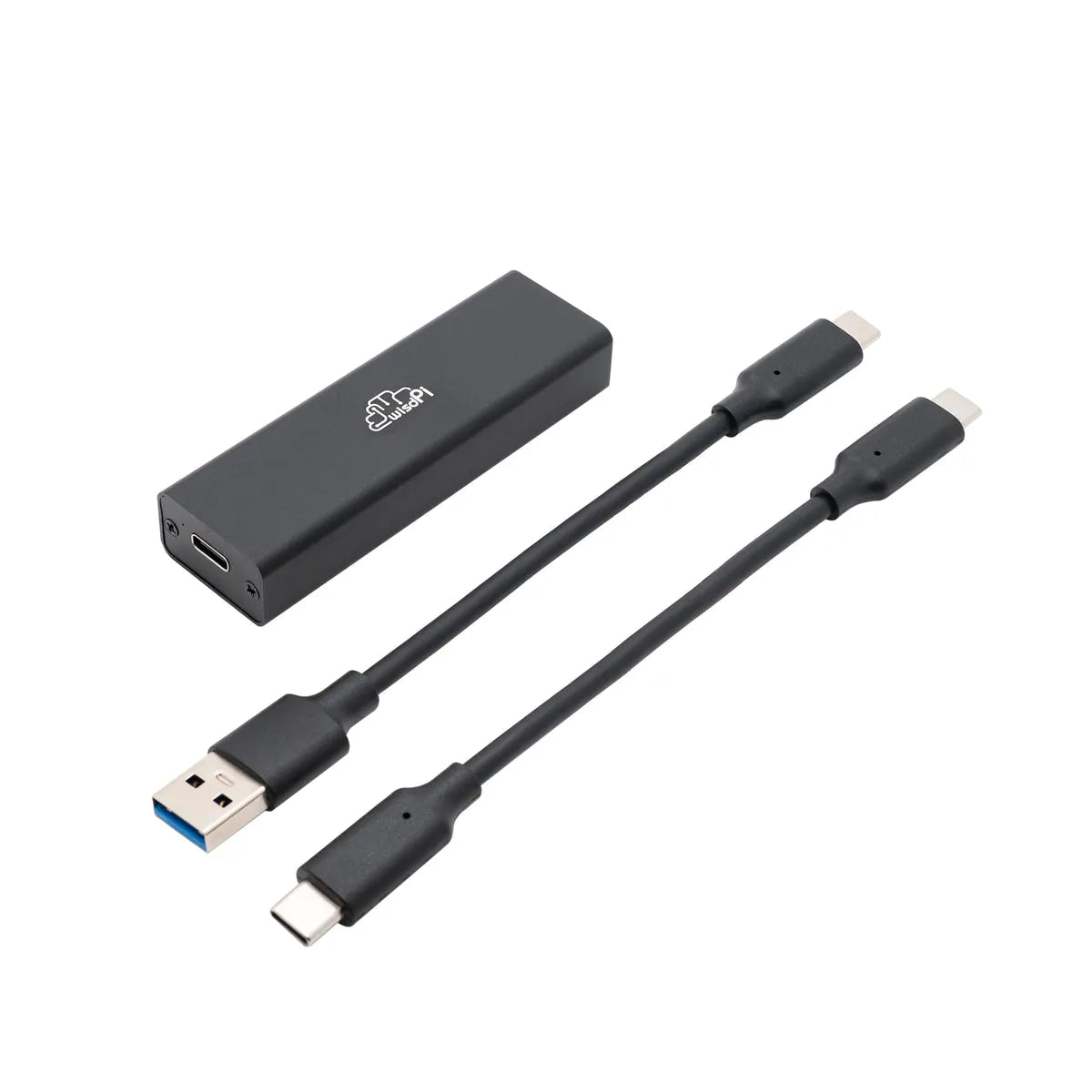
All RobStride motors can be easily programmed and debugged using the ROBSTRIDE CAN to USB debugging module, which provides a convenient interface between the CAN bus motor network and a host computer for configuration, firmware updates, and real-time monitoring.

Integration and Communication
The ROBSTRIDE01 communicates via CAN bus protocol, a robust industrial standard that enables reliable multi-node communication with high noise immunity. The CAN interface supports baud rates up to 1 Mbps, allowing real-time control loops suitable for dynamic robotic applications. Multiple motors can be connected on the same bus, simplifying wiring in multi-joint robotic systems. The differential signaling of CAN bus provides excellent immunity to electromagnetic interference, making it ideal for industrial environments with high power electronics and motor drives.
The CAN to USB debugging module provides a bridge between the motor's CAN interface and standard USB ports on PCs and single-board computers. This enables easy integration with development environments and allows engineers to monitor motor status, tune control parameters, and update firmware through intuitive software interfaces. The debugging module supports AT commands for motor configuration and real-time control, making it accessible to developers familiar with embedded systems programming. The module also facilitates firmware updates, ensuring the ROBSTRIDE01 can benefit from ongoing improvements and new features released by RobStride Dynamics.
For system integration, the ROBSTRIDE01 supports position control, velocity control, and torque control modes, enabling flexible implementation of various control strategies. The position mode is ideal for pick-and-place operations and trajectory following, while torque mode enables force control for safe human-robot interaction. Velocity mode provides smooth speed regulation for conveyor systems and continuous processes. These control modes can be switched dynamically, allowing adaptive behavior based on task requirements.
Pros and Cons
Advantages
- High torque-to-weight ratio (17N.m peak in 380g package)
- Fully integrated design reduces system complexity
- FOC control provides smooth, efficient operation
- Flange mounting simplifies mechanical integration
- Compact size ideal for space-constrained applications
- Single encoder provides sufficient feedback for most applications
- Compatible with broader RobStride ecosystem
Considerations
- Single encoder configuration may not provide output-side feedback
- 36V rated voltage requires appropriate power supply selection
- IP rating consideration needed for harsh environments
- CAN bus knowledge required for full utilization
Conclusion
The ROBSTRIDE01 QDD 17N.m Integrated Joint BLDC Gear Motor represents an excellent balance of performance, integration, and value for robotics developers. Its quasi-direct-drive architecture delivers the torque density and precision required for modern robotic systems while the integrated design significantly reduces development time and system complexity.
Whether you are building humanoid robots, industrial automation systems, or research platforms, the ROBSTRIDE01 provides a solid foundation for your motion control needs. The availability of compatible motors across the entire torque spectrum from the ROBSTRIDE05 (5.5N.m) to the ROBSTRIDE04 (120N.m) enables engineers to source complete actuator solutions from a single vendor, ensuring compatibility and simplifying supply chain management.
For developers new to QDD technology, the ROBSTRIDE EDULITE 05 offers an accessible entry point, while the ROBSTRIDE01 itself provides the sweet spot of performance and versatility that makes it suitable for a wide range of production robotic applications. Combined with the CAN to USB debugging module, the development experience is streamlined from prototype to production.
Frequently Asked Questions
What is QDD technology and how does it benefit robotic applications?
Quasi-direct-drive (QDD) technology uses low-ratio gear reduction (typically 6:1 to 10:1) combined with high-torque motors to achieve a balance between torque multiplication and backdrivability. Unlike traditional high-ratio gearboxes that make motors difficult to backdrive, QDD actuators can sense external forces and move smoothly when pushed, enabling force-controlled interactions essential for safe human-robot collaboration. The ROBSTRIDE01 leverages this technology to deliver precise, compliant motion control.
What applications is the ROBSTRIDE01 best suited for?
The ROBSTRIDE01 excels in applications requiring medium torque with compact size, including humanoid robot joints, service robot arms, industrial pick-and-place systems, and automated guided vehicles. Its 17N.m peak torque and 380g weight make it particularly suitable for mobile robots where payload capacity is limited. The ROBSTRIDE01 motor is also popular in educational and research settings due to its accessible price point and ease of integration.
What communication protocols does the ROBSTRIDE01 support?
The ROBSTRIDE01 primarily uses CAN (Controller Area Network) bus communication with support for 1 Mbps baud rate. CAN bus is an industry-standard protocol widely used in automotive and industrial automation due to its robustness and ability to support multiple devices on a single bus. The CAN to USB debugging module enables easy connection to PCs for configuration and control software development.
How does the single encoder work on the ROBSTRIDE01?
The ROBSTRIDE01 features a single magnetic encoder mounted on the motor shaft with 14-bit resolution. This provides high-resolution position feedback of the motor rotor, enabling precise commutation and velocity control. For applications requiring output-side position feedback, the ROBSTRIDE02 with dual encoders is recommended, as it provides both motor-side and output-side position sensing.
What is FOC control and why is it important?
Field-Oriented Control (FOC), also known as vector control, is an advanced motor control technique that enables smooth, efficient operation of brushless motors. Unlike simpler control methods, FOC controls the current vector in the rotating reference frame of the motor, allowing independent control of torque-producing and flux-producing current components. This results in higher efficiency, lower torque ripple, and better dynamic response. The ROBSTRIDE01's FOC implementation ensures smooth motion profiles essential for robotic applications.
How does the ROBSTRIDE01 compare to the ROBSTRIDE02?
Both the ROBSTRIDE01 and ROBSTRIDE02 deliver 17N.m peak torque, but differ in encoder configuration. The ROBSTRIDE01 uses a single encoder on the motor side, while the ROBSTRIDE02 features dual encoders measuring both motor position and output shaft position. The dual-encoder configuration enables direct measurement of output position without gear backlash effects, making the ROBSTRIDE02 better suited for force control and precision positioning applications.
What voltage range does the ROBSTRIDE01 support?
The ROBSTRIDE01 is rated for 36V DC operation with a 7A rated current. When selecting a power supply, ensure it can deliver sufficient current for peak torque operation (up to 17N.m) while maintaining voltage regulation. Many users pair the ROBSTRIDE01 with high-quality lithium battery packs or industrial DC power supplies capable of delivering clean, stable power for demanding motion profiles.
What is the weight and mounting method of the ROBSTRIDE01?
The ROBSTRIDE01 weighs 380 grams (0.38 kg), making it one of the most torque-dense actuators in its class. The flange mounting method provides a secure mechanical interface with standard threaded holes for easy attachment to robot frames. The output shaft features threaded holes for connecting mechanical loads such as linkages, pulleys, or direct joint mechanisms. This standardized mounting approach ensures compatibility with common mechanical design practices in robotics.