openelab.de
 openelab.com





































Meshtastic Antenna Testing & Range Optimization Guide
Testing antennas can range from straightforward to highly technical. At its most basic, it means sending signals from different spots and checking which ones are received, then comparing results with other antennas. More advanced methods involve specialized chambers and instruments to measure signal strength, gain, and radiation patterns. Fortunately, effective results can often be achieved with affordable approaches.
If your current antenna already provides sufficient coverage, you may not need further adjustments. If not, consider adding more nodes or replacing the stock antenna with one tuned to your region’s frequency:
-
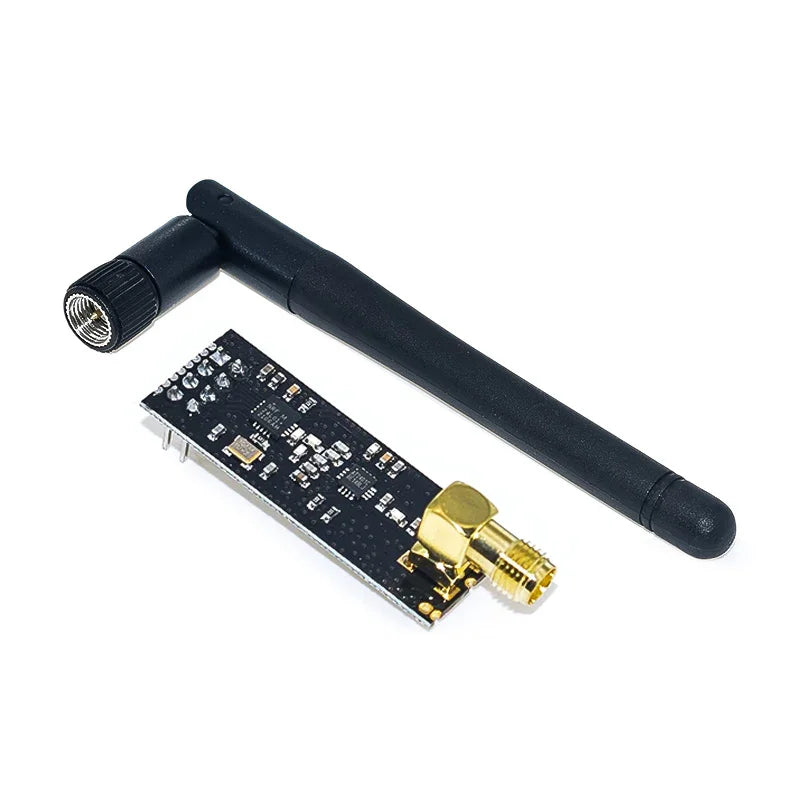
A quarter‑wave tuned stubby antenna (under 10cm) can deliver a few kilometers of range in open areas.
-
Key specifications: 50 Ohm impedance, proper connector (SMA male or U.FL), VSWR below 2 at the tuned frequency, and gain above 0 dBi.
-
Caution: Avoid vendors who fail to list the tuned frequency, exaggerate gain claims for omni antennas, or do not provide proper datasheets.
If extended range or directional performance is required, continue reading below.
General Guidance
Meshtastic devices use LoRa radios for point‑to‑point communication, which differs from the ubiquitous coverage of cellular or Wi‑Fi. Understanding the factors that influence radio transmission helps achieve better performance and longer reach. This guide outlines antenna selection, testing methods, and resources for deeper exploration.
Because Meshtastic nodes operate as a mesh, each device relays signals from others, helping overcome obstacles and extend coverage. Investing in antennas should be balanced against adding more low‑cost nodes.
Caution: Never operate LoRa radios without a properly matched antenna. Transmitting without one can reflect signals back and damage the hardware.
Range Testing
The simplest way to test range is:
-
Walk with a radio sending messages,
-
Record location and whether acknowledgments are received,
-
Note signal strength values,
-
Swap antennas, repeat, and compare outcomes.
Note: The range test module automates this process, logging received messages for later analysis in tools like Google Earth.
Signal Strength Testing
Practical testing methods are explained by Andreas Spiess in his tutorial. He also provides code for comparing antennas using LoRa32 boards. LilyGO offers additional resources for LORA32, TTGO LoRa Series, and T-Beam.
For comparisons, see these detailed reviews: example one and example two. They highlight antenna types, characteristics, and testing strategies.
Antenna Matching & Vector Network Analyzers
Ensuring your antenna is tuned to the correct frequency is critical. Mislabeling is common with low‑cost antennas, which reduces performance. A Vector Network Analyzer (VNA) checks impedance matching and reflected power. Affordable VNAs are now available under $100, making them accessible for hobbyists.
Andreas Spiess also explains how to use VNAs and provides a detailed tutorial. Remember, VNAs confirm matching but not transmission quality.
Non‑Antenna Factors Affecting Transmission
Several external conditions influence LoRa performance:
-
Weather: temperature, humidity, and pressure,
-
Radio settings: power, bandwidth, spreading factor,
-
Mesh density: number of nodes within range,
-
Material absorption: walls, stone, or metal attenuate signals,
-
Surface reflections and atmospheric tunnels,
-
Diffraction around obstacles,
-
Fresnel Zone: must remain clear for optimal transmission.
Environmental Factors
For deeper research:
In summary, LoRa signals perform well with clear line of sight, can bend over moderate obstacles, and reflect at shallow angles. They pass through humans with little loss but are blocked by brick or stone. Nearby LTE towers may cause interference.
Discussion
For more insights and community feedback, visit Meshtastic Discussions on GitHub.