openelab.de
 openelab.com








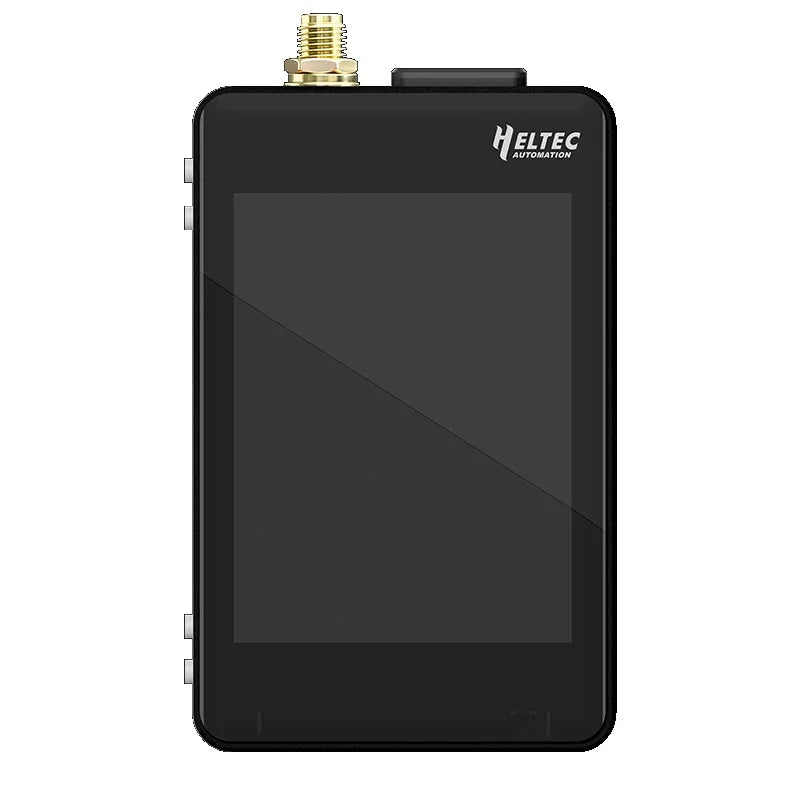




























LILYGO T-Watch Ultra vs LILYGO T-Watch S3 Plus: Which ESP32-S3 LoRa Smartwatch Is Better?
The LILYGO T-Watch Ultra and LILYGO T-Watch S3 Plus are two ESP32-S3 LoRa smartwatch development platforms for makers, IoT developers, engineers, and wearable technology projects. Both products combine ESP32-S3, LoRa, GNSS/GPS, Wi-Fi, Bluetooth LE, display, battery power, and open-source development resources in a wearable form factor. At first glance, the LILYGO T-Watch Ultra and LILYGO T-Watch S3 Plus may look like similar LoRa smartwatches. In practice, they are built for different project priorities. The LILYGO T-Watch Ultra focuses on a richer hardware experience with a larger AMOLED display, NFC, SD card support, and more advanced onboard modules. The LILYGO T-Watch S3 Plus focuses on practical LoRa/GPS development, lower cost, and more frequency options.
Relevant LILYGO Products
LILYGO T-Watch Ultra
High-end ESP32-S3 LoRa smartwatch with AMOLED display, GNSS, NFC, and SD card support.
LILYGO T-Watch S3 Plus
Practical ESP32-S3 LoRa smartwatch with GPS/GNSS, BLE, Wi-Fi, and multiple frequency choices.
What Is LILYGO T-Watch Ultra?
The LILYGO T-Watch Ultra is a higher-end ESP32-S3 LoRa smartwatch development board designed for wearable IoT projects that need more than simple wireless communication. It uses ESP32-S3 as the main controller and includes 16MB Flash, 8MB PSRAM, Wi-Fi, Bluetooth LE 5.0, LoRa SX1262, GNSS, NFC, RTC, microphone, vibration motor, audio amplifier, SD card slot, and a 2.06-inch AMOLED touchscreen.
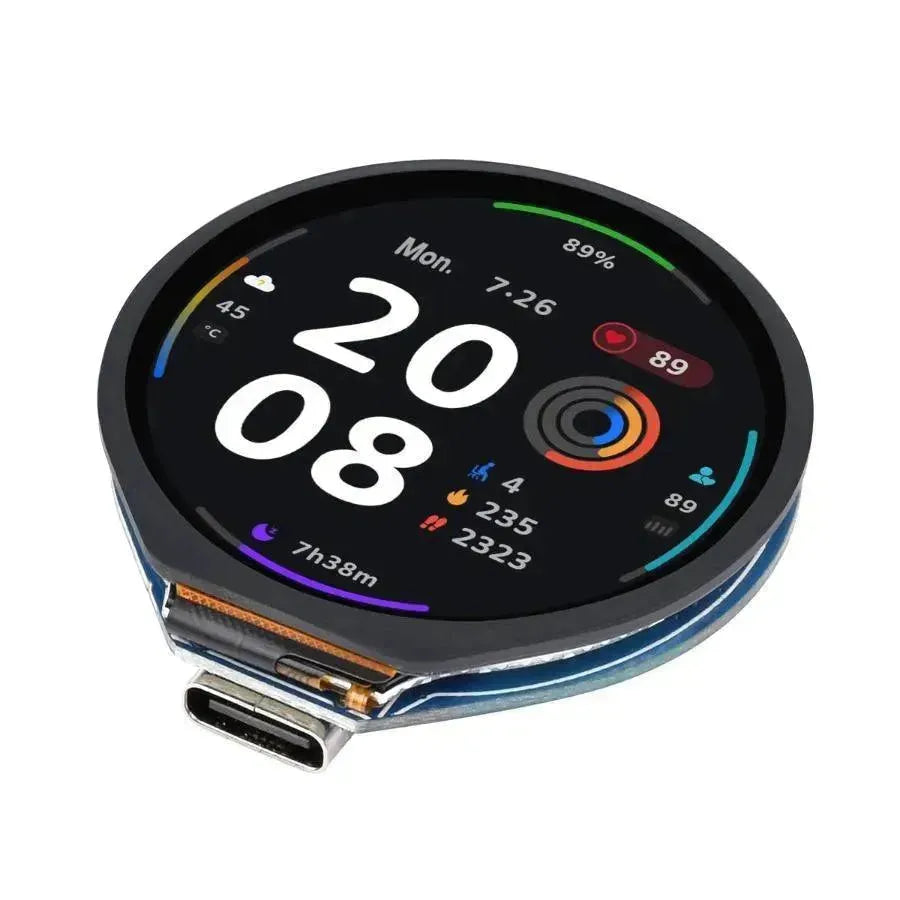
The strongest advantage of the LILYGO T-Watch Ultra is its display and expansion capability. The 2.06-inch AMOLED screen has 410 × 502 resolution, 16.7M colors, high brightness, and strong contrast. This makes the LILYGO T-Watch Ultra suitable for wearable dashboards, GNSS tracking interfaces, LoRa status panels, field data displays, sensor charts, and interactive IoT control screens.
The LILYGO T-Watch Ultra is also a better choice when a project needs local data storage. Its SD card slot is useful for saving GPS tracks, sensor logs, LoRa packets, and offline experiment data. NFC adds another layer of application potential, such as access control prototypes, contactless ID projects, and interactive wearable demonstrations.

What Is LILYGO T-Watch S3 Plus?
The LILYGO T-Watch S3 Plus is a practical ESP32-S3 LoRa smartwatch development platform for users who need LoRa, GPS/GNSS, Wi-Fi, Bluetooth LE, and wearable sensing at a lower cost. Like the LILYGO T-Watch Ultra, the LILYGO T-Watch S3 Plus uses ESP32-S3 with 16MB Flash and 8MB PSRAM, giving developers enough memory for Arduino, ESP-IDF, MicroPython, and wireless IoT applications.
Compared with the LILYGO T-Watch Ultra, the LILYGO T-Watch S3 Plus uses a smaller 1.3-inch IPS display with 240 × 240 resolution. This screen is not as vivid or spacious as the AMOLED screen on the Ultra, but it is enough for battery level, GPS coordinates, LoRa connection status, sensor values, and simple menus.
A major strength of the LILYGO T-Watch S3 Plus is frequency flexibility. It is available in 433MHz, 868MHz, 915MHz, 920MHz, and SX1280 2.4G versions. This makes the LILYGO T-Watch S3 Plus a strong option for developers who need to test LoRa projects in different regions or with different gateway configurations.

Key Specs to Start From
| Parameter | LILYGO T-Watch Ultra | LILYGO T-Watch S3 Plus |
|---|---|---|
| MCU | ESP32-S3 | ESP32-S3 |
| Flash / PSRAM | 16MB Flash / 8MB PSRAM | 16MB Flash / 8MB PSRAM |
| Wireless | Wi-Fi 802.11 b/g/n, BLE 5.0, LoRa | Wi-Fi 802.11 b/g/n, BLE 5.0, LoRa |
| LoRa Chip | SX1262 | SX1262, with SX1280 2.4G version available |
| Frequency Options | 868MHz, 915MHz | 433MHz, 868MHz, 915MHz, 920MHz, SX1280 2.4G |
| Display | 2.06-inch AMOLED, 410 × 502 | 1.3-inch IPS LCD, 240 × 240 |
| GNSS/GPS | u-blox MIA-M10Q listed in official docs | MIA-M10Q or Quectel LS550G listed in official docs |
| Sensors / Modules | NFC, BHI260AP, RTC, microphone, vibration, speaker driver, SD card | BMA423, RTC, microphone, vibration, speaker driver, IR transmitter |
| Battery | 1100mAh / 4.07Wh | 940mAh |
| Best-fit Use | Advanced wearable IoT, GNSS dashboard, NFC, SD card logging | LoRa/GPS prototyping, education, low-cost wearable IoT nodes |
Display and Interface Comparison
The display is one of the clearest differences between the LILYGO T-Watch Ultra and LILYGO T-Watch S3 Plus. The LILYGO T-Watch Ultra uses a 2.06-inch AMOLED touchscreen with 410 × 502 resolution, 16.7M colors, 600 nit brightness, and high contrast. This makes the LILYGO T-Watch Ultra much better for projects that require a rich user interface.
For example, if your project needs a GNSS tracking dashboard, LoRa message monitor, wearable control panel, sensor chart, or field data display, the LILYGO T-Watch Ultra gives you more screen space and better visual quality. The larger AMOLED screen also makes the device more suitable for product demonstrations, classroom teaching, and competition projects where visual presentation matters.
The LILYGO T-Watch S3 Plus uses a smaller IPS screen with 240 × 240 resolution. It is not designed for complex interfaces, but it is useful for compact status display. The LILYGO T-Watch S3 Plus can show GPS location, LoRa connection state, battery information, simple icons, sensor readings, and basic menus without adding much cost.
LoRa and GNSS Application Scenarios
Both the LILYGO T-Watch Ultra and LILYGO T-Watch S3 Plus are useful for long-range wireless IoT projects. With ESP32-S3, LoRa, GNSS/GPS, Wi-Fi, and Bluetooth LE, these watches can be used for outdoor tracking, asset monitoring, wearable location devices, field data collection, smart agriculture, environmental sensing, and LoRa mesh experiments.
The LILYGO T-Watch Ultra is available in 868MHz and 915MHz versions on the OpenELAB product page. This makes it suitable for many European and North American LoRa projects. The LILYGO T-Watch S3 Plus offers more frequency choices, including 433MHz, 868MHz, 915MHz, 920MHz, and SX1280 2.4G. If your project needs a specific regional frequency or if you want to test different LoRa bands, the LILYGO T-Watch S3 Plus gives you more flexibility.
GNSS/GPS is another key feature. The LILYGO T-Watch Ultra official hardware document lists u-blox MIA-M10Q. The LILYGO T-Watch S3 Plus official document lists MIA-M10Q or Quectel LS550G. Both products can support outdoor positioning projects, but actual GNSS performance depends on antenna placement, firmware settings, sky visibility, and power management.
Power and Battery Notes
Battery life is one of the most common questions about the LILYGO T-Watch Ultra and LILYGO T-Watch S3 Plus. There is no single runtime number that applies to every project because power consumption depends on screen brightness, GNSS usage, LoRa transmission interval, Wi-Fi activity, BLE connection, sleep mode, and code optimization.
The LILYGO T-Watch Ultra includes a larger AMOLED screen and more onboard modules, so developers should plan power management carefully. If the AMOLED display, GNSS, Wi-Fi, and LoRa are active for long periods, the LILYGO T-Watch Ultra will consume more power. However, if deep sleep and scheduled wake-up are used properly, it can still be optimized for field experiments.
The LILYGO T-Watch S3 Plus has a smaller display and a simpler hardware set, which makes it easier to design as a low-power LoRa/GPS node. For projects that only wake up occasionally to read GPS data, send LoRa packets, and return to sleep, the LILYGO T-Watch S3 Plus may be easier to tune.
Project Checklist
- Confirm whether the LoRa frequency matches your region and gateway.
- Choose LILYGO T-Watch Ultra if AMOLED display, NFC, and SD card logging are important.
- Choose LILYGO T-Watch S3 Plus if lower cost and more frequency options are important.
- Check whether your project needs GNSS tracking, LoRa messaging, Wi-Fi, BLE, or all of them together.
- Plan power management early if GNSS, LoRa, and display will run for long periods.
- Confirm battery, interface, and included accessories before ordering for batch projects.
Recommendation
Use the LILYGO T-Watch Ultra when your ESP32-S3 LoRa smartwatch project needs a larger AMOLED display, better user interface, NFC, SD card logging, richer sensors, and a more complete wearable development platform. The LILYGO T-Watch Ultra is especially suitable for advanced IoT demos, GNSS dashboards, access control prototypes, data logging, wearable HMI, and field research devices.
Use the LILYGO T-Watch S3 Plus when your project needs a lower-cost ESP32-S3 LoRa smartwatch with more frequency options. The LILYGO T-Watch S3 Plus is ideal for LoRa/GPS prototyping, education, small batch testing, outdoor sensor nodes, basic wearable tracking, and projects where screen size is not the main requirement.
In summary, the LILYGO T-Watch Ultra is built for capability, while the LILYGO T-Watch S3 Plus is built for flexibility. Both are useful ESP32-S3 LoRa smartwatch platforms, but the best option depends on your project goal.
FAQ
Q1: Is LILYGO T-Watch Ultra a consumer smartwatch?
A: No, the LILYGO T-Watch Ultra is not a finished consumer smartwatch like an Apple Watch or Garmin. It is a developer platform in a smartwatch form factor. The LILYGO T-Watch Ultra is made for coding, prototyping, LoRa experiments, GNSS applications, sensor testing, and wearable IoT development.
Q2: Is LILYGO T-Watch S3 Plus good for beginners?
A: Yes. The LILYGO T-Watch S3 Plus is often a better starting point because it costs less and still includes ESP32-S3, LoRa, GPS/GNSS, Wi-Fi, BLE, display, motion sensing, audio, and haptic feedback. For many beginner ESP32-S3 LoRa smartwatch projects, the LILYGO T-Watch S3 Plus is practical enough.
Q3: Does LILYGO T-Watch Ultra support LoRaWAN?
A: The LILYGO T-Watch Ultra uses SX1262 LoRa hardware, which can be used for LoRa development. However, LoRaWAN also requires the correct software stack, regional parameters, gateway, network server, and device configuration. Treat it as a LoRa-capable development platform rather than a certified LoRaWAN end device.
Q4: Which frequency should I choose for LILYGO T-Watch S3 Plus?
A: Choose the frequency based on your region and gateway. 868MHz is common in Europe, 915MHz is common in North America, and 920MHz is used in some regions such as Japan. The LILYGO T-Watch S3 Plus is useful for regional testing because it offers more LoRa frequency options than the Ultra version listed on OpenELAB.
Q5: Which one is better for data logging?
A: The LILYGO T-Watch Ultra is better for data logging because it includes SD card support. This makes it more suitable for saving GNSS tracks, sensor readings, LoRa communication logs, and offline experiment data. The LILYGO T-Watch S3 Plus is better when lower cost and frequency flexibility are more important than onboard storage.
Q6: Where can I compare the product options?
A: You can compare the two ESP32-S3 LoRa smartwatch options on the OpenELAB product pages for LILYGO T-Watch Ultra and LILYGO T-Watch S3 Plus. For deeper development details, also check the official LILYGO GitHub hardware notes for T-Watch Ultra and T-Watch S3 Plus.