







































🗣️ DFRobot Offline Voice Recognition Sensor: Your Project's Secret Weapon Against the Cloud!
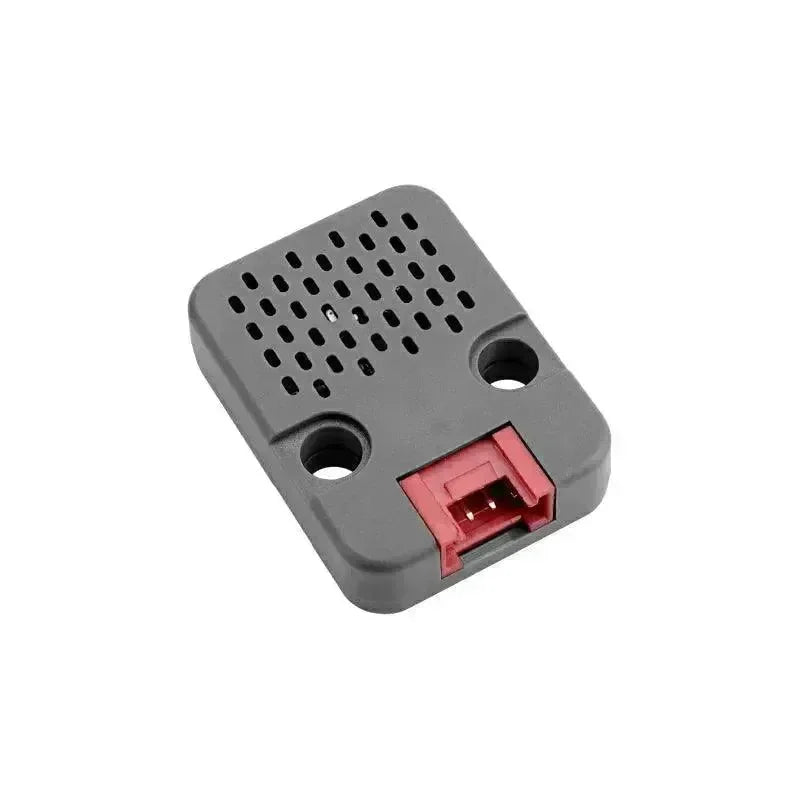
Tired of devices listening in? The DFRobot Gravity Offline Voice Recognition Sensor Offline Language Learning is here to rescue your smart projects. This compact module delivers ultra-fast, local voice control, making it perfect for Arduino, Raspberry Pi, and privacy-focused DIY electronics.
1. 🚀 Tech Specs & The Need for Speed (Offline Advantage)
The sensor’s biggest appeal is its ability to operate entirely offline. There is zero reliance on the internet or distant cloud servers, which translates directly into blazing-fast responsiveness and unbeatable privacy.
| Feature | Detail |
|---|---|
| Offline Operation | No Internet needed. Pure privacy-first voice control. |
| Command Set | 150 Fixed Commands (Increased from previous versions). |
| Custom Learning | Plus 17 User-Defined Commands/Sounds (trainable by user). |
| Microphones | Dual-Mic Design for better noise cancellation. |
| Latency | Typically sub-200ms response time. |
At its core, the Offline Language Learning is an ASIC-based solution, meaning the heavy-lifting of speech recognition is handled directly on the chip, keeping the process efficient and isolated.
2. 🧠 Teach Me Something New! How Custom Commands Work
While the 150 fixed commands cover common actions, the real fun begins with the 17 custom slots. This functionality allows you to break free from pre-set language barriers:
💡 The Power of Custom Training:
- Personalized Activation: Train it to recognize specific names, nicknames, or unique phrases like "Engage Warp Drive!"
- Multi-Lingual Support: Easily teach the module commands in German, Spanish, or any other language.
- Sound Recognition: It can learn to recognize specific sounds, like a clap, a snap, or even your cat’s meow 🐱, to trigger an action.
The learning process is straightforward: You speak the desired command three times, and the sensor creates an averaged acoustic model for future recognition. Remember, these custom commands are speaker-dependent for optimal accuracy!
3. 🔒 Privacy First: Applications for the DFRobot Voice Module
In an age where data security is paramount, the DFRobot Offline Language Learning sensor stands out. Your data stays on your hardware—it never leaves your device. This makes it a fantastic choice for:
- DIY Smart Home Systems: Control lights, fans, and blinds without sending your voice commands through corporate servers.
- Educational & STEM Projects: A simple, safe introduction to Voice Recognition for students.
- Robotics & Automation: Giving your robot precise, immediate commands in areas with poor Wi-Fi coverage.
- Interactive Toys: Creating highly engaging gadgets that respond uniquely to your voice or specific sounds.
4. 🎯 Weighing the Odds: Pros and Cons
Every piece of technology has trade-offs. Here’s a quick look at why you might choose this offline sensor—or why you might need a more powerful cloud solution:
👍 Advantages (Pros)
- Guaranteed Data Privacy (No Cloud Upload). 🛡️
- Extremely Low Latency for Real-Time Control.
- Improved stability due to the Dual-Mic Array.
- Low power consumption compared to Wi-Fi/Cloud modules.
👎 Disadvantages (Cons)
- Limited Vocabulary (Only 150 fixed slots).
- No support for Natural Language Processing (NLP)—only fixed commands are recognized.
- Accuracy may decrease significantly in high background noise.
- Custom commands are generally speaker-dependent.
5. 💻 The Simple Code Logic: Interfacing with Arduino via UART/I2C
Integrating the Offline Language Learning sensor into a project is beginner-friendly. The module translates the spoken command into a simple Integer ID, which is then sent to your microcontroller (e.g., Arduino or ESP32) via UART or I2C. Your code simply waits for that ID and executes the corresponding action.
// Example Pseudo Code (Arduino Sketch)
void loop() {
    // 1. Wait for Wake-Up Word (e.g., "Hello Robot")
    int commandID = Sensor.readCommand();

    // 2. Check the returned Command ID
    if (commandID == 0x1F) {
        // ID 0x1F corresponds to the command "Turn on the light"
        digitalWrite(LED_PIN, HIGH);
        Serial.println("Light Activated!"); 💡
    }
}
This event-driven approach ensures your project is responsive and resource-efficient.