openelab.de
 openelab.com















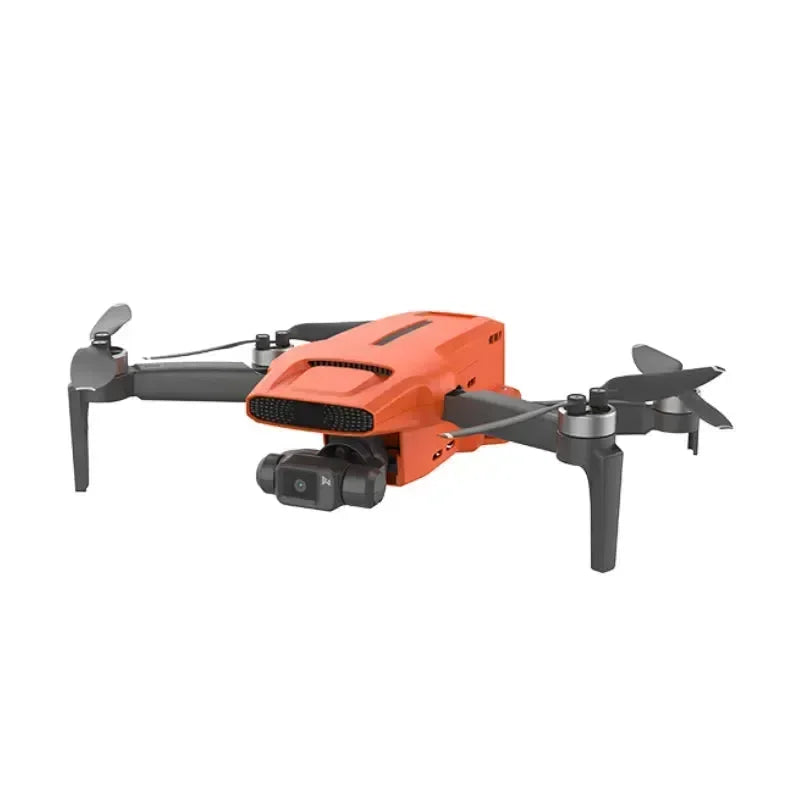





















If you fly a drone purely for fun in the United States, you generally do not need an FAA Part 107 Remote Pilot Certificate. However, recreational drone pilots must pass the FAA's Recreational UAS Safety Test (TRUST) before flying.
If you fly under Part 107, the requirements are different. To operate the controls of a drone under Part 107, you generally need an FAA Remote Pilot Certificate with a small UAS rating, or you must operate under the direct supervision of someone who holds one.
The confusion usually comes from the word license. New drone owners often mix together four separate FAA requirements:
- TRUST
- Part 107 Remote Pilot Certificate
- FAA drone registration
- Remote ID
These are not the same thing. Depending on why you are flying, your drone's weight, and how the aircraft is registered, you may need some of them without needing the others.
Do I Need a License to Fly a Drone in the USA? Quick Answer
| Situation | Part 107 Certificate? | TRUST? | FAA Registration? |
|---|---|---|---|
| Purely recreational flight | No | Yes | Depends on drone weight |
| Recreational drone under 250 g | No | Yes | Generally not required |
| Recreational drone 250 g or more | No | Yes | Yes |
| Flight under Part 107 | Yes, or direct supervision by a certificate holder | Not a substitute for Part 107 | Yes, regardless of weight |
| Business or work-related flight | Usually Part 107 applies | No substitute for Part 107 | Yes under Part 107 |
| Indoor-only flight | Part 107 does not apply to indoor-only operations | Different regulatory context | Depends on how the aircraft is otherwise used |
Simple rule: Flying purely for fun? Start with TRUST. Flying for another purpose? Check Part 107.
Table of Contents
- What Does “Drone License” Mean in the USA?
- Do Recreational Drone Pilots Need a License?
- What Is TRUST?
- Is TRUST a Drone License?
- Do You Need to Register a Recreational Drone?
- When Do You Need a Part 107 Remote Pilot Certificate?
- Do You Need Part 107 If You Are Not Getting Paid?
- What Is the Part 107 Remote Pilot Certificate?
- How Do You Get a Part 107 Certificate?
- Does a Part 107 Certificate Expire?
- Can You Fly Under Part 107 Without Your Own Certificate?
- Is FAA Drone Registration a License?
- Is Remote ID a Drone License?
- Do You Need a License for a Drone Under 250 g?
- Do You Need a License to Fly a DJI Mini?
- Do You Need a License to Fly FPV?
- Do You Need a License on Your Own Property?
- Do You Need Part 107 for YouTube?
- Do You Need a License to Fly Indoors?
- Do You Need Both TRUST and Part 107?
- What Does a New Drone Owner Actually Need to Do?
- Frequently Asked Questions
What Does “Drone License” Mean in the USA?
The FAA does not issue one universal document called a “drone license” that every drone owner must obtain.
Instead, different requirements apply to the pilot and the aircraft.
TRUST Certificate
TRUST stands for The Recreational UAS Safety Test.
It is required for pilots flying under the FAA's Exception for Limited Recreational Operations. TRUST is a recreational safety and knowledge requirement, not a Part 107 pilot certificate.
Part 107 Remote Pilot Certificate
The FAA pilot credential used for Part 107 operations is formally called the Remote Pilot Certificate with a small UAS rating.
It is often informally called a:
- Drone license
- Part 107 license
- Commercial drone license
FAA Drone Registration
Registration concerns the aircraft and its registration with the FAA.
Registering a drone does not make you a certificated Part 107 pilot.
Remote ID
Remote ID allows compliant drones to broadcast identification and location-related information during flight.
Remote ID is also not a pilot license.
| Requirement | What It Is | Is It a Pilot License? |
|---|---|---|
| TRUST | Recreational safety and knowledge test | No |
| Part 107 Remote Pilot Certificate | FAA pilot certification for Part 107 operations | Yes, commonly described as a drone license |
| FAA Registration | Drone registration | No |
| Remote ID | Identification and location broadcasting compliance | No |
Do Recreational Drone Pilots Need a License?
If you fly purely for fun or personal enjoyment, you generally do not need a Part 107 Remote Pilot Certificate.
U.S. law provides an Exception for Limited Recreational Operations of Unmanned Aircraft. Pilots who satisfy the requirements of that exception can fly recreationally without operating under Part 107.
However, recreational does not simply mean:
“I didn't get paid.”
The FAA specifically explains that compensation—or the lack of compensation—is not the single determining factor. A qualifying recreational flight must be conducted purely for recreational purposes or personal enjoyment.
Recreational pilots must also comply with requirements such as:
- Completing TRUST
- Following the safety guidelines of an FAA-recognized Community-Based Organization
- Maintaining Visual Line of Sight
- Giving way to other aircraft
- Following applicable airspace requirements
- Registering the aircraft when required
- Complying with Remote ID when applicable
Official guidance: FAA Recreational Flyers
What Is TRUST?
TRUST stands for The Recreational UAS Safety Test.
The FAA requires recreational flyers operating under the recreational exception to pass an aeronautical knowledge and safety test before flying.
TRUST covers basic topics such as:
- Drone safety
- Recreational operating requirements
- Airspace awareness
- Pilot responsibilities
- Safe interaction with other aircraft
Is TRUST Free?
Yes. FAA-approved TRUST test administrators offer the online test for free.
What Happens After You Pass?
After passing TRUST, you receive a completion certificate.
You should:
- Download the certificate
- Save a copy
- Print a backup if useful
- Keep proof available when flying recreationally
The FAA notes that approved test administrators do not retain a copy of your certificate for you. If you lose it, you may need to take TRUST again.
Official guidance: FAA Recreational UAS Safety Test (TRUST)
Is TRUST a Drone License?
No. TRUST is not the same as a Part 107 Remote Pilot Certificate.
TRUST demonstrates that a recreational flyer has completed the required safety and knowledge test.
A Part 107 Remote Pilot Certificate is an FAA pilot credential used for Part 107 operations.
| TRUST | Part 107 Remote Pilot Certificate |
|---|---|
| For recreational flyers | For Part 107 operations |
| Free online test | Formal FAA pilot-certification process |
| Basic recreational safety and rules | Broader aeronautical knowledge |
| Completion certificate | FAA pilot certificate |
| Not a Part 107 credential | Commonly called a drone license |
Do You Need to Register a Recreational Drone?
This is where the 250 g / 0.55 lb threshold becomes important.
Under current FAA rules, recreational drones weighing 250 g or more must be registered. A drone below 250 g can generally qualify for the recreational registration exemption when it is flown entirely under the limited recreational exception.
Recreational Drone Under 250 g
- TRUST: Yes
- Part 107 Remote Pilot Certificate: No
- FAA registration: Generally not required
Recreational Drone 250 g or More
- TRUST: Yes
- FAA registration: Yes
- Part 107 Remote Pilot Certificate: No, provided the flight remains purely recreational
Under 250 g does not mean “no FAA rules apply.”
The weight threshold mainly affects registration in this context. It does not remove TRUST, Visual Line of Sight rules, airspace restrictions, or other recreational requirements.
When Do You Need a Part 107 Remote Pilot Certificate?
Part 107 is the FAA's main regulatory framework for most small-drone operations under 55 lb that do not qualify for the limited recreational exception.
The most useful question is:
“Why am I flying this drone?”
Examples of Recreational Flights
- Flying because you enjoy piloting drones
- Practicing maneuvers purely for fun
- Recording personal vacation footage for your own enjoyment
- Flying FPV recreationally while following the applicable FPV rules
Examples of Non-Recreational Flights
FAA examples of non-recreational operations include:
- Taking photos to help sell a property or service
- Conducting roof inspections
- Taking photos of a high-school football game for a school's website
- Volunteering drone services to survey coastlines for a nonprofit organization
These examples are important because some of them involve no direct payment to the pilot.
The purpose of the flight determines whether it is recreational—not simply whether money changed hands.
Do You Need Part 107 If You Are Not Getting Paid?
Possibly, yes.
The FAA explicitly states that compensation, or the lack of compensation, is not the single factor that determines whether a flight is recreational.
Instead, ask:
Was the flight conducted purely for personal enjoyment?
| Example | Likely Framework |
|---|---|
| Flying because you enjoy flying drones | Recreational |
| Taking vacation footage purely for yourself | Recreational |
| Free roof inspection for someone | Non-recreational / Part 107 should be evaluated |
| Free aerial images for a nonprofit project | Non-recreational |
| Images intended to help sell a property | Part 107-type operation |
The FAA's current guidance is straightforward: if you are unsure which rules apply, assume Part 107 and make sure you comply with its requirements.
What Is the Part 107 Remote Pilot Certificate?
To operate as a remote pilot under Part 107, you generally need an FAA Remote Pilot Certificate with a small UAS rating.
The certificate demonstrates that the pilot has the aeronautical knowledge required for Part 107 operations.
Basic Eligibility for First-Time Applicants
FAA requirements include:
- Being at least 16 years old
- Being able to read, speak, write, and understand English
- Meeting the applicable safety and eligibility requirements
- Passing the initial Unmanned Aircraft General – Small (UAG) aeronautical knowledge test
Official certification guidance: FAA Become a Certificated Remote Pilot
How Do You Get a Part 107 Drone License?
This article focuses on whether you need Part 107 rather than serving as a complete exam-preparation guide, but the basic first-time applicant process is:
Step 1: Create an IACRA Profile
Create an account in the FAA's Integrated Airman Certification and Rating Application system and obtain an FAA Tracking Number (FTN).
Step 2: Schedule the Knowledge Test
Schedule the UAG knowledge test at an FAA-approved Knowledge Testing Center.
Step 3: Pass the UAG Exam
Knowledge areas include topics such as:
- FAA regulations
- Airspace classifications and restrictions
- Aviation weather
- Aircraft loading and performance
- Emergency procedures
- Crew resource management
- Radio communication procedures
- Airport operations
- Aeronautical decision-making
- Maintenance and preflight inspection
- Night operations
Step 4: Apply Through IACRA
Submit your Remote Pilot Certificate application through IACRA after passing the knowledge test.
Step 5: Complete TSA Security Vetting
After successful security vetting, eligible applicants can access a temporary Remote Pilot Certificate through IACRA.
Step 6: Receive the Permanent Certificate
The permanent certificate is issued after FAA processing.
Does a Part 107 Certificate Expire?
The physical Remote Pilot Certificate itself does not simply expire every two years.
Instead, Part 107 pilots must maintain aeronautical knowledge recency.
The FAA currently requires Remote Pilot Certificate holders to complete approved recurrent online training within the previous 24 calendar months in order to exercise Part 107 privileges.
Can You Fly Under Part 107 Without Your Own Certificate?
Yes, but only under the applicable supervision arrangement.
FAA Part 107 rules allow a person to manipulate the drone's controls when they are under the direct supervision of someone who holds a Remote Pilot Certificate.
This does not mean:
“Anyone can fly commercially as long as a licensed pilot happens to be somewhere nearby.”
The certificate holder must provide the direct supervision required by Part 107.
Is FAA Drone Registration the Same as a License?
No.
Drone registration and pilot certification are separate requirements.
Recreational Registration
Recreational drones weighing 250 g or more generally must be registered.
A qualifying recreational drone below 250 g is generally exempt from FAA registration.
Part 107 Registration
All drones operated under Part 107 must be registered regardless of weight.
| Drone Weight | Pure Recreation | Part 107 |
|---|---|---|
| 249 g | Registration generally not required | Registration required |
| 500 g | Registration required | Registration required |
Official guidance: FAA How to Register Your Drone
Is Remote ID a Drone License?
No.
Remote ID is an aircraft-identification requirement rather than a pilot qualification.
Under current FAA rules, drones that are required to be registered or that are registered generally must comply with Remote ID requirements unless an applicable exception or authorization applies.
The distinction is:
- Part 107: pilot certification and operating framework
- Registration: aircraft registration
- Remote ID: aircraft identification/location broadcasting compliance
Meeting one requirement does not automatically satisfy the others.
Official guidance: FAA Remote Identification of Drones
Do You Need a License to Fly a Drone Under 250 g?
Not necessarily a Part 107 certificate—but being under 250 g does not answer the entire legal question.
Your reason for flying still determines whether you are operating under the recreational exception or Part 107. Weight mainly changes certain aircraft requirements, particularly recreational registration.
Under 250 g and Purely Recreational
- TRUST: Required
- Part 107 Remote Pilot Certificate: Not required
- FAA registration: Generally not required
What Weight Should You Check?
Do not look only at the manufacturer's headline weight for the basic aircraft. Consider the drone in the configuration you actually intend to fly.
Equipment that can increase aircraft weight may include:
- Higher-capacity or extended-flight batteries
- Propeller guards
- Lights
- Additional cameras
- Payload-release devices
- Other mounted accessories
If those additions bring a recreational drone to 250 g or more, you can no longer rely on the sub-250 g recreational registration exemption. The aircraft must be registered with the FAA.
Under 250 g Under Part 107
- Part 107 operating rules: Apply
- Remote Pilot Certificate or qualifying direct supervision: Required
- FAA registration: Required regardless of weight
Purpose determines recreational vs Part 107 status. Weight changes some aircraft requirements—it does not determine the purpose of the flight.
Do You Need a License to Fly a DJI Mini?
Many DJI Mini-class drones are designed around the sub-250 g category, but you should check the actual configuration you intend to fly.
Depending on the particular model and available accessories, adding equipment such as:
- A higher-capacity or Plus-type battery
- Propeller guards
- Additional lighting
- A payload-release accessory
- Other mounted equipment
can push the aircraft to or above the 250 g registration threshold.
If your configured recreational drone weighs 250 g or more, it must be registered even if the basic version of the aircraft was marketed as a sub-250 g model.
For a DJI Mini-class drone that remains below 250 g and is flown purely for recreation:
- You generally do not need a Part 107 Remote Pilot Certificate.
- You still need TRUST.
- FAA recreational registration is generally not required.
If the same aircraft is operated under Part 107, its sub-250 g weight does not remove Part 107 pilot-certification or registration requirements.
Do You Need a License to Fly FPV in the USA?
FPV does not create a separate FAA pilot-license category.
The qualification requirement still depends primarily on why you are flying:
- Purely recreational FPV → recreational framework and TRUST
- Part 107 FPV → Part 107 pilot-certification framework
However, FPV creates a separate compliance issue involving Visual Line of Sight (VLOS) and visual observers.
For a detailed explanation, see: Is Flying FPV Alone Illegal?
Do You Need a License to Fly a Drone on Your Own Property?
Owning the land does not determine which FAA operating framework applies.
You still need to ask why the flight is being conducted.
| Example | Likely Framework |
|---|---|
| Flying around your backyard purely because you enjoy it | Recreational |
| Using a drone to inspect a roof for a business purpose | Part 107-type operation |
| Taking aerial photos to help market or sell property | Part 107-type operation |
Permission to use the property and permission to operate an aircraft under FAA rules are separate issues.
Do You Need Part 107 to Post Drone Videos on YouTube?
Uploading drone footage to YouTube does not automatically mean that the original flight required Part 107.
The FAA focuses on the purpose of the flight. Compensation—or the lack of compensation—is not the sole factor used to distinguish recreational from non-recreational flying.
Scenario 1: You Flew Purely for Fun and Uploaded the Video Later
Suppose you went flying simply because you enjoy flying drones, recorded some footage, and later decided to upload that footage to a personal YouTube or social-media account.
The later upload does not, by itself, automatically change why you originally conducted the flight.
The central question is still:
Why did you launch the drone at the time of the flight?
Scenario 2: You Flew Specifically to Create Monetized Content
The situation changes when producing content was part of the reason for launching the drone.
Examples can include flights specifically conducted to produce:
- Content for a monetized channel operated as a business
- Sponsored videos
- Brand promotions
- Affiliate marketing content
- Footage for a client
- Advertising material
- Content supporting a business or organization
These purposes go beyond simply flying for personal enjoyment and should be evaluated under Part 107.
Does YouTube Monetization Automatically Mean Part 107?
It is more accurate not to reduce the FAA rule to:
“Monetization on = Part 107, monetization off = recreational.”
The FAA's published recreational guidance focuses on whether the flight itself was conducted purely for recreational purposes.
Monetization, sponsorship, advertising, brand promotion, or business use can be strong indications of a non-recreational purpose when producing that content was one of the reasons for the flight.
If you launched the drone specifically to create monetized, sponsored, promotional, client, or business content, do not rely on the recreational exception simply because nobody directly paid you to operate the drone.
If you genuinely cannot determine whether the flight qualifies as recreational, the FAA recommends assuming Part 107 and meeting its requirements.
Do You Need a License to Fly a Drone Indoors?
Drone operations conducted entirely indoors are treated differently from outdoor flights.
The FAA explicitly states that Part 107 does not apply to operations conducted indoors. FAA drone rules apply to operations conducted outdoors in the National Airspace System (NAS).
Examples of clearly indoor environments can include:
- A home
- A fully enclosed warehouse
- A fully enclosed indoor sports hall
- An enclosed film studio
- Another building where the aircraft remains entirely inside
What About Partially Enclosed or Covered Spaces?
The situation becomes less clear when a location is not completely enclosed.
Examples include:
- An open-air stadium
- A stadium with a retractable roof that is open
- A covered walkway with open sides
- A pavilion
- A partially enclosed industrial structure
- Another covered area open to outdoor airspace
Do not assume that a location qualifies as “indoors” merely because there is a roof above the drone.
The FAA's published exemption specifically addresses operations conducted indoors only. If the aircraft is operating in, can enter, or is exposed to outdoor airspace, you should not automatically rely on the indoor exception.
Even when FAA Part 107 does not apply to an indoor-only operation, other requirements can still matter, including:
- Property-owner permission
- Venue policies
- Insurance requirements
- Workplace safety requirements
- Privacy laws
- State or local rules
Official guidance: FAA Indoor Drone Operations FAQ
Do You Need Both TRUST and Part 107?
TRUST and Part 107 belong to different operating frameworks.
Flying Under the Recreational Exception
Recreational flyers must complete TRUST.
Operating Under Part 107
The relevant pilot qualification is the Remote Pilot Certificate or the permitted direct-supervision arrangement.
TRUST should not be viewed as:
- A beginner Part 107 certificate
- A temporary commercial drone license
- A substitute for Part 107 certification
TRUST vs Part 107 vs Registration vs Remote ID
| Requirement | Applies To | What It Is | Is It a Pilot License? |
|---|---|---|---|
| TRUST | Recreational flyers | Safety and knowledge test | No |
| Part 107 Remote Pilot Certificate | Part 107 pilots | FAA pilot certification | Yes, commonly called a drone license |
| FAA Registration | Drones that meet registration requirements | Aircraft registration | No |
| Remote ID | Registered or registration-required drones, subject to applicable exceptions | Identification and location broadcast compliance | No |
What Does a New Drone Owner Actually Need to Do?
For a new U.S. drone owner, the easiest approach is to work through the requirements in this order.
Step 1: Why Are You Flying?
Only for fun or personal enjoyment?
→ The limited recreational exception may apply.
For work, business, a client, an organization, inspection, promotion, or another non-recreational purpose?
→ Check Part 107.
Step 2: If Recreational, Take TRUST
TRUST is required for recreational flyers even when the drone weighs less than 250 g.
Step 3: Check the Aircraft's Actual Flight Configuration
Below 250 g?
→ Recreational registration is generally not required if all conditions of the recreational exception are satisfied.
250 g or more?
→ Register the recreational drone with the FAA.
Check the configuration you actually fly, particularly after installing a different battery or additional accessories.
Step 4: Check Remote ID
If the aircraft is required to be registered or has been registered,
Step 4: Check Remote ID
If the aircraft is required to be registered or has been registered, determine how the FAA's Remote ID requirements apply.
Step 5: Check the Airspace
Having TRUST or a Part 107 certificate does not automatically authorize every flight location.
Check for:
- Controlled airspace
- Temporary Flight Restrictions
- Airport-related restrictions
- Other FAA airspace limitations
Step 6: Check Special Operating Rules
Additional requirements can apply to:
- FPV flying
- Night operations
- Flights over people
- Operations from moving vehicles
- BVLOS operations
- Advanced commercial missions
A pilot certificate is only one part of legal drone operation. Why, where, and how you fly also matter.
Frequently Asked Questions
Do you need a license to fly a drone in the USA?
Not for every flight. Purely recreational pilots generally do not need a Part 107 Remote Pilot Certificate, but they must complete TRUST. Pilots operating under Part 107 generally need a Remote Pilot Certificate or must operate under the direct supervision of a certificate holder.
Do recreational drone pilots need a license?
Recreational pilots do not need a Part 107 Remote Pilot Certificate simply to fly for fun, but they must pass TRUST and follow the FAA's recreational operating requirements.
Is TRUST a drone license?
No. TRUST is the FAA-required recreational safety and knowledge test. The Part 107 Remote Pilot Certificate is the pilot credential commonly referred to as a drone license.
Is TRUST required for a drone under 250 g?
Yes. The recreational registration exemption for a drone below 250 g does not remove the requirement for recreational flyers to complete TRUST.
Do I need Part 107 for a drone under 250 g?
If the operation is conducted under Part 107, being below 250 g does not remove the Part 107 pilot-certification framework. The aircraft must also be registered when operated under Part 107.
What if accessories make my drone weigh 250 g or more?
Check the aircraft in the configuration you actually fly. If batteries, propeller guards, lights, cameras, payload equipment, or other accessories bring a recreational drone to 250 g or more, the sub-250 g recreational registration exemption no longer applies.
Do I need a drone license if I am not getting paid?
Possibly. The FAA says compensation is not the sole factor. A flight must be conducted purely for recreation or personal enjoyment to qualify for the limited recreational exception.
Do I need Part 107 to take real-estate photos?
FAA guidance specifically identifies taking photos to help sell a property or service as an example of non-recreational drone flying.
Do I need Part 107 for a roof inspection?
FAA guidance lists roof inspections as an example of a non-recreational operation that generally falls within the Part 107 framework.
Do I need a license to fly a DJI Mini?
A DJI Mini-class aircraft that remains below 250 g and is flown purely recreationally generally does not require a Part 107 Remote Pilot Certificate or recreational FAA registration, but the pilot still needs TRUST. Check the configured weight because batteries and accessories can push the aircraft to 250 g or more.
Do I need a license to fly a drone on my own property?
Property ownership does not determine which FAA pilot framework applies. The purpose of the flight still determines whether the recreational exception or Part 107 should be used.
Do I need Part 107 to upload drone videos to YouTube?
Not automatically. The important question is why the drone flight was conducted. Footage recorded during a genuinely recreational flight does not automatically become Part 107 simply because it is later uploaded. If the flight was specifically planned to create monetized, sponsored, promotional, client, or business content, the operation should be evaluated under Part 107.
Does YouTube monetization automatically mean Part 107?
The FAA's published recreational guidance does not use a simple “monetization on or off” test. It focuses on whether the flight itself was conducted purely for recreational purposes. Monetization or sponsorship can be important evidence of a non-recreational purpose when creating that content was one of the reasons for flying.
Do I need a license to fly FPV?
The certification framework depends on the purpose of the FPV flight. Recreational FPV uses the recreational framework and TRUST, while Part 107 FPV uses the Part 107 certification framework. FPV pilots must separately comply with applicable VLOS and visual-observer rules.
Do I need a license to fly a drone indoors?
FAA Part 107 does not apply to operations conducted entirely indoors. However, property rules, venue requirements, insurance, workplace safety, privacy requirements, and other laws may still apply.
Does a covered area automatically count as indoors?
No. A roof alone does not necessarily make an operation clearly indoor-only. Open-air stadiums, open retractable-roof venues, covered walkways, pavilions, and other partially open structures should not automatically be treated the same as a fully enclosed building.
Is FAA drone registration a license?
No. FAA drone registration and pilot certification are separate requirements.
Is Remote ID a drone license?
No. Remote ID concerns identification and location broadcasting from the aircraft. It is not a pilot credential.
Can I fly under Part 107 without my own Remote Pilot Certificate?
A person may manipulate the controls under Part 107 when operating under the direct supervision of someone who holds a Remote Pilot Certificate, subject to the applicable Part 107 requirements.
Does a Part 107 certificate expire?
The certificate itself does not simply expire every two years. However, pilots must maintain aeronautical knowledge recency, and the FAA currently requires approved recurrent online training within the previous 24 calendar months to operate under Part 107.
Conclusion
So, do you need a license to fly a drone in the USA?
Not necessarily.
If you fly purely for fun or personal enjoyment, you generally do not need a Part 107 Remote Pilot Certificate. You do, however, need to complete TRUST and follow the FAA's recreational operating requirements.
If the flight is conducted for a purpose other than pure recreation, Part 107 is generally the framework you should evaluate. To operate the controls under Part 107, you generally need a Remote Pilot Certificate or must operate under the direct supervision of someone who holds one.
Remember:
- TRUST is not Part 107.
- FAA registration is not a pilot license.
- Remote ID is not a pilot license.
- Being under 250 g does not eliminate all FAA requirements.
- Batteries and accessories can push a recreational drone to 250 g or more and trigger registration.
- Not getting paid does not automatically make a flight recreational.
- YouTube monetization is not a standalone FAA legal test; the purpose of the flight is what matters.
- A flight planned to create business, sponsored, promotional, or monetized content should be evaluated under Part 107.
- Part 107 does not apply to indoor-only operations, but partially open or outdoor structures should not automatically be treated as indoors.
The most useful first question is therefore not:
“How big is my drone?”
It is:
“Why am I flying it?”
Once you know the purpose of the flight, it becomes much easier to determine whether you should follow the recreational TRUST framework or Part 107.
Related Drone and FPV Products
The products below are relevant to the recreational and FPV aircraft context discussed in this guide. Product hardware does not determine your FAA obligations; check the current rules for your flight purpose, aircraft configuration, registration, Remote ID, and airspace before operating.

Quadrotor DIY kit for learning and custom flight projects
MiniFly Quadrotor Drone STM32 DIY Kit
View Product
FPV frame kit for a custom long-range build
iFlight Nazgul XL10 V6 10 inch FPV Frame Kit
View Product