openelab.de
 openelab.com








































Difference Between ORBBEC Gemini 2XL and ORBBEC Gemini 2XL-POE
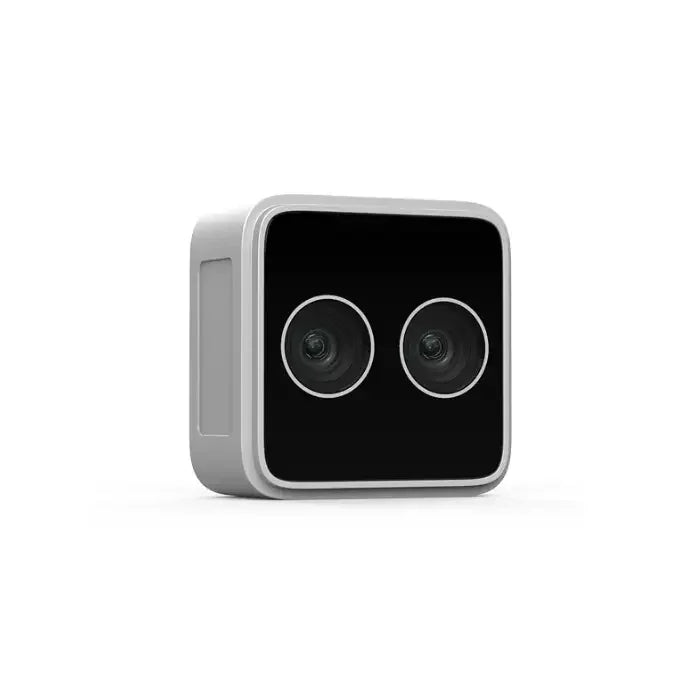
The difference between ORBBEC Gemini 2XL and ORBBEC Gemini 2XL-POE is not mainly depth quality. It is about deployment, mostly. The non-POE version is more simple for local USB-style setups, while the POE variant is better for robot, warehouse, and remote-mounted vision systems that need Ethernet and power over one cable path.
Executive summary: Gemini 2XL and Gemini 2XL-POE share the same long-range depth-camera direction: infrared-enhanced stereo, 0.4 m to 20 m depth range, wide field of view, global-shutter RGB/IR cameras, IMU, and multi-camera sync. The POE version is about easier network deployment, longer cable runs, and cleaner power/data routing.
Product Positioning
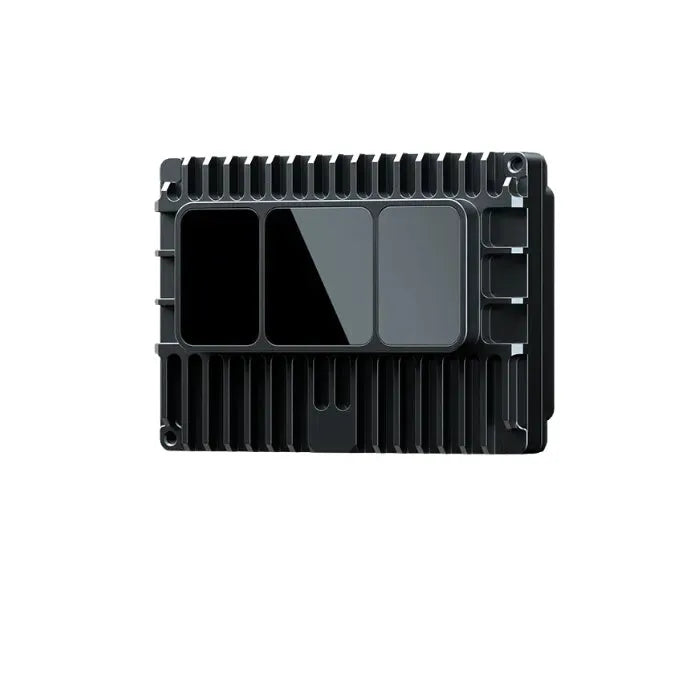
Gemini 2XL is a long-range 3D camera for AMRs, AGVs, warehouse perception, dimensioning, security, and interaction systems. The POE configuration is the same idea optimized for installed systems where camera placement is not always near the host computer.
Choose Gemini 2XL
- The camera sits close to the host computer.
- You are developing on a bench, robot prototype, or local USB system.
- You want the lower-cost configuration.
- Your cable routing is short and simple.
Choose Gemini 2XL-POE
- You need Gigabit Ethernet and Power over Ethernet support.
- The camera is mounted far from the main computer.
- You are deploying in a warehouse, AMR, or fixed monitoring system.
- You want cleaner power/data routing for an installed robot vision system.
Key Differences at a Glance
| Category | Gemini 2XL | Gemini 2XL-POE | Why It Matters |
|---|---|---|---|
| Depth imaging | Same long-range Gemini 2XL class | Same long-range Gemini 2XL class | The camera choice mostly is not about depth quality. |
| Connectivity | Local connection path | USB plus Gigabit Ethernet / PoE deployment path | POE helps when the camera is remote-mounted. |
| Power | Local power/USB-style setup | PoE+ or DC power depending on kit | Network camera placement becomes easier. |
| Best use | Prototype, local robot, lab, embedded host nearby | AMR, warehouse, fixed installation, longer cable runs | Choose based on physical deployment. |
| Cost | Lower | Higher | POE adds value only when the install needs it. |
Engineering Details Behind the Difference
Gemini 2XL is built for long-range depth output from 0.4 m to 20 m and a wide depth field of view. That makes it very different from compact close-range cameras. It is meant to be a primary vision system for robots and AI perception platforms.
The POE version should be treated as a deployment option. If the robot architecture already uses Ethernet, or if the camera is mounted away from the compute box, POE is usually worth the extra cost.
If your project is still on a workbench, the non-POE configuration is more easy to justify. You can always decide later if the final installation need Ethernet/PoE routing.
Specification Snapshot
| Specification | Gemini 2XL | Gemini 2XL-POE |
|---|---|---|
| Depth technology | Infrared enhanced stereo | Infrared enhanced stereo |
| Depth range | 0.4 m to 20 m | 0.4 m to 20 m |
| Ideal range | 0.4 m to 10 m class | 0.4 m to 10 m class |
| Depth FOV | 91° x 66° class | 91° x 66° class |
| RGB / IR shutter | Global shutter | Global shutter |
| IMU | Supported | Supported |
| Multi-camera sync | Supported | Supported |
| Deployment difference | Local/simple connection | Gigabit Ethernet and PoE-oriented setup |
OpenELAB selection note: choose the regular Gemini 2XL variant for local builds. Choose Gemini 2XL-POE from the same OpenELAB product page when the camera must be deployed through Ethernet/PoE in a robot or facility.
FAQ
Is Gemini 2XL-POE more accurate than Gemini 2XL?
The main advantage is deployment connectivity, not a different depth engine.
When is POE worth it?
POE is worth it when the camera is far from the host, cable routing is difficult, or the system already uses Ethernet.
Can I use Gemini 2XL for AMRs?
Yes. For production AMRs, the POE configuration may be easier to integrate.
Do both support the Orbbec SDK?
Yes. Both belong to the Orbbec SDK ecosystem.