openelab.de
 openelab.com















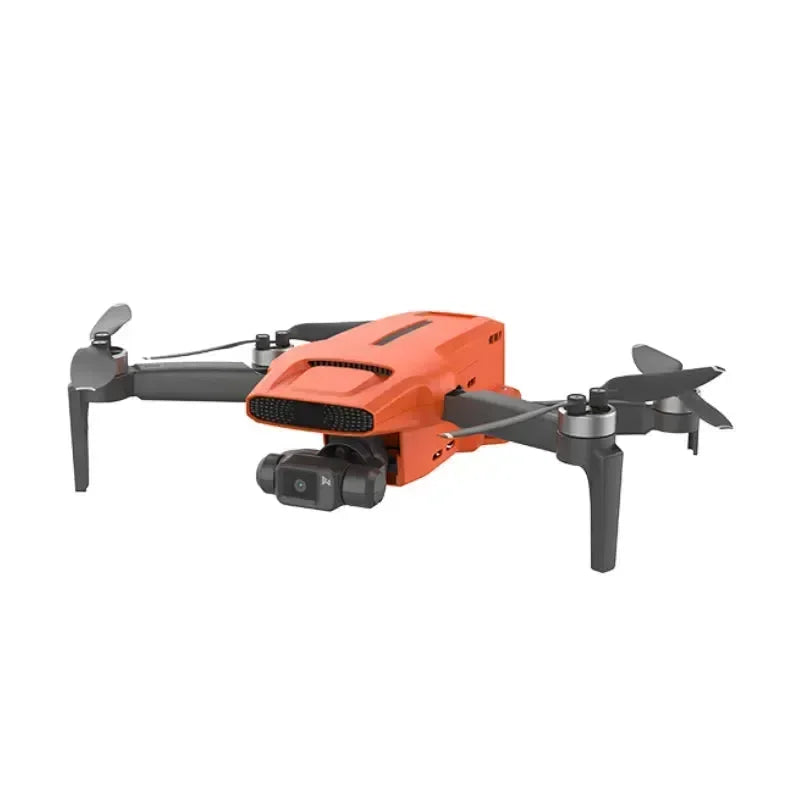






















There is no single maximum distance that every FPV drone can fly. Depending on the drone, battery, video system, radio-control link, antennas, terrain, weather, and local regulations, FPV flying can range from short indoor flights to long-range setups with communication systems capable of operating over many kilometers.
The most important thing to understand is that maximum transmission range is not the same as maximum usable flight range. Your video signal may theoretically reach much farther than the aircraft has enough battery to fly out and safely return.
For example, the DJI O4 Air Unit Pro is officially rated for a maximum video transmission range of up to 15 km under FCC conditions and 8 km under CE conditions when tested outdoors in an unobstructed, interference-free environment. The standard DJI O4 Air Unit is rated for up to 10 km under FCC conditions and 6 km under CE conditions.
Those figures describe the communication link—not a guaranteed safe one-way flight distance.
Your real FPV range is determined by the weakest limit in the complete system: battery endurance, video link, control link, environment, and legal operating limits.
How Far Can an FPV Drone Fly? Quick Answer
| FPV Setup | What Commonly Limits Range? | Typical Use |
|---|---|---|
| Micro FPV / Tiny Whoop | Small battery, walls, and obstacles | Indoor and close-range flying |
| Cinewhoop | Battery, weight, and obstacles | Close-range cinematic flying |
| 5-inch Freestyle FPV | Battery and flight style | Freestyle and cinematic action |
| 7-inch Long-Range FPV | Battery, video link, terrain, and wind | Long-range cruising and cinematic flights |
| 10-inch Long-Range FPV | Battery, operating conditions, and legal limits | Extended endurance and long-range flight |
A long-range FPV drone can therefore have a radio or video system capable of operating over many kilometers while its safe round-trip distance remains considerably shorter.
What Does “FPV Drone Range” Actually Mean?
When someone asks how far an FPV drone can fly, the word range can refer to several different things.
To understand the real limit of an FPV setup, separate these four concepts:
- Video transmission range
- Radio-control range
- Battery and safe round-trip range
- Legal operating range
Video Transmission Range
Video transmission range is the maximum distance at which your FPV goggles or display can still receive a usable image from the drone.
With a digital system such as DJI O4, the air unit sends the live camera image back to compatible goggles. As distance, interference, or obstruction increases, the quality and reliability of that connection can eventually deteriorate.
The DJI O4 Air Unit Pro, for example, is officially rated for up to:
- 15 km under FCC conditions
- 8 km under CE conditions
- 8 km under SRRC conditions
The standard DJI O4 Air Unit is rated for up to:
- 10 km under FCC conditions
- 6 km under CE conditions
- 6 km under SRRC conditions
These figures are measured in unobstructed outdoor environments without interference. Real-world conditions can reduce the usable distance substantially.
Radio-Control Range
The radio-control link connects your transmitter to the receiver on the aircraft. It is separate from the FPV video link.
Common FPV control systems include:
- ExpressLRS 2.4 GHz
- ExpressLRS 868/900 MHz
- DJI control systems
- Crossfire and other long-range RC systems
Modern systems such as ExpressLRS can provide extremely strong RF performance when configured appropriately. However, this does not mean the aircraft itself should be flown to the maximum theoretical range of the radio system.
Your control link might still be strong even after the video starts becoming unreliable. The reverse can also happen depending on the setup.
Battery Range
Even if your radio and video links remain connected, the drone still needs enough energy to complete the flight.
A safe battery calculation must account for:
- The outbound flight
- The entire return flight
- Wind
- Changes in current draw
- Climbing and maneuvering
- A reasonable landing reserve
This is why battery capacity is often the real limit in long-range FPV.
Battery Use Is Not a Simple Linear Countdown
One of the most dangerous assumptions in long-range FPV is that battery use is perfectly symmetrical.
For example:
“I used 40% of my battery flying out, so another 40% will definitely get me back.”
That is not a safe assumption.
LiPo and Li-Ion batteries do not behave like a perfectly linear fuel gauge. As the pack reaches a lower state of charge, the remaining voltage margin becomes less forgiving. Under load, voltage sag can also cause the displayed voltage to drop, especially when higher current is required.
The return journey may also require more power than the outbound journey.
This is especially important when:
- You flew outbound with a tailwind
- You must return into a headwind
- The aircraft is carrying a heavy action camera or battery
- The return route requires climbing
- You need more throttle to maintain ground speed
Using 40% of the battery on the way out does not guarantee that another 40% will safely bring you home.
Safe Round-Trip Range
For practical flying, this is usually the range that matters most.
Instead of asking:
“How far away can the drone get before the signal disappears?”
ask:
“How far can I fly while still having enough communication margin and battery reserve to return safely?”
Your safe operating radius should therefore be shorter than the maximum theoretical distance of either the video or control link.
Legal Range
Technical capability and legal operating distance are also separate concepts.
A drone may have a video and RC system technically capable of operating several kilometers away while local aviation regulations still require Visual Line of Sight (VLOS) or additional authorization for Beyond Visual Line of Sight (BVLOS) operations.
For more detail on FPV visibility and observer requirements, see: Is Flying FPV Alone Illegal?
What Determines How Far an FPV Drone Can Fly?
Real FPV range is the result of the entire aircraft system rather than one specification.
1. Video System
The video system can become the first limiting factor because FPV pilots rely on the live camera feed to fly.
Common systems include:
- DJI O4 / O4 Air Unit Pro
- Analog FPV
- HDZero
- Other digital FPV systems
Different video systems behave differently near the edge of their useful link. What matters is not simply whether a connection technically exists, but whether the image remains reliable enough to control the aircraft safely.
2. Radio-Control System
The control link must remain reliable independently of the video system.
A typical FPV setup may use DJI O4 for video while using ExpressLRS for control. These are separate links with separate antennas, frequencies, power levels, and link-quality characteristics.
Your effective range can never be greater than the weakest critical link.
3. Battery Capacity
Battery capacity has an obvious effect on flight time, but larger is not always better.
A larger battery may provide more energy, but it also adds weight. More weight can require more thrust, increase current draw, alter handling, and eventually produce diminishing returns.
Long-range FPV therefore involves balancing:
- Capacity
- Battery chemistry
- Weight
- Motor efficiency
- Propeller efficiency
- Aircraft size
4. LiPo vs Li-Ion
Long-range pilots often choose between LiPo and Li-Ion battery packs.
In broad terms, LiPo packs are well suited to high-power flying, while appropriate Li-Ion packs can offer attractive energy density for efficient cruising configurations.
This is one reason dedicated long-range aircraft are often designed to support large Li-Ion as well as LiPo battery options.
5. Propeller Size and Efficiency
Propeller and aircraft size strongly influence the purpose of an FPV platform.
5-Inch FPV
A typical 5-inch FPV drone emphasizes:
- Agility
- Acceleration
- Freestyle performance
- High-speed cinematic flying
It can still use a powerful long-range video and control link, but maximum endurance is usually not its primary design objective.
7-Inch FPV
Seven-inch and 7.5-inch platforms are common in long-range FPV because they can combine:
- More efficient cruising
- Larger batteries
- Higher payload capability
- Long-range radio equipment
- GPS
10-Inch FPV
A 10-inch long-range drone can support even larger propellers and batteries, making extended endurance possible.
The trade-offs are greater size, weight, inertia, and different handling characteristics.
6. Flying Speed
Flying faster does not necessarily mean flying farther.
High-speed flight generally increases power demand and aerodynamic drag. Long-range FPV is therefore often built around efficient cruising rather than maximum-throttle flight.
The difference can be substantial. For example, iFlight lists the Helion Pro at approximately 26–27 minutes of maximum hover time with its specified 6S 5600mAh test battery, but approximately 8–9 minutes of cruising time at 80 km/h under its stated test conditions.
That illustrates why a headline flight-time figure cannot simply be converted into a universal distance estimate.
7. Payload
FPV drones often carry extra equipment such as:
- GoPro or another action camera
- GPS
- Larger antennas
- Lighting
- Larger batteries
Every addition can change weight, drag, balance, and energy consumption.
8. Wind
Wind can transform what looks like an easy outbound flight into a difficult return.
Imagine flying away from home with a tailwind. Your ground speed is high and the flight appears efficient.
After turning around, that same wind becomes a headwind.
The aircraft may now need:
- More throttle
- More current
- More time
- More remaining battery capacity
At the same time, the battery is already at a lower state of charge, where voltage sag can become increasingly important under load.
One of the worst long-range combinations is an easy tailwind outbound leg followed by a low-battery headwind return.
9. Terrain and Obstacles
RF systems perform best when there is a clear radio line of sight between the transmitter and receiver antennas.
Range can fall rapidly when the signal must pass through or behind:
- Mountains
- Hills
- Buildings
- Dense trees
- Rock formations
- Other large obstacles
A system that performs extremely well across an open valley may behave very differently after the drone disappears behind a ridge.
10. RF Interference
The surrounding RF environment also matters.
Heavy Wi-Fi activity, other FPV transmitters, radio equipment, and dense urban infrastructure can reduce usable link quality.
This is another reason manufacturer range specifications measured in clean, unobstructed conditions should not be interpreted as guaranteed real-world range.
11. Antenna Setup
Antennas are one of the most important parts of a long-range RF system.
Range can be affected by:
- Antenna orientation
- Polarization
- Antenna placement
- Carbon-frame shielding
- Damaged antennas
- Antenna nulls
- Diversity receiver configuration
Increasing transmitter power cannot fully compensate for a poor antenna installation.
How Far Can DJI O4 FPV Fly?
DJI O4 is currently one of the most important digital video systems in modern FPV drones.
DJI O4 Air Unit
The standard O4 Air Unit is officially rated for maximum video transmission distances of:
- 10 km — FCC
- 6 km — CE
- 6 km — SRRC
DJI O4 Air Unit Pro
The O4 Air Unit Pro is officially rated for:
- 15 km — FCC
- 8 km — CE
- 8 km — SRRC
DJI states that these measurements assume an unobstructed outdoor environment free of interference and also notes that the actual maximum communication distance during flight is limited by aircraft endurance.
A 15 km video-transmission specification does not mean your FPV drone can safely fly 15 km away and then return.
Does FCC vs CE Change FPV Range?
Yes. Regional radio regulations can change the permitted RF characteristics of a system, which is why the same video hardware can have different official range ratings in different regions.
For example, DJI rates the O4 Air Unit Pro at:
- 15 km under FCC conditions
- 8 km under CE conditions
Always operate radio equipment in accordance with the requirements that apply in your region.
How Far Can ExpressLRS Fly?
ExpressLRS, commonly abbreviated as ELRS, is an open radio-control system designed around long range, low latency, and high data throughput.
It supports hardware across both 2.4 GHz and 900 MHz frequency families.
Under favorable conditions, the control link itself can operate much farther than the distance many FPV drones can practically cover with their available battery energy.
ELRS 2.4 GHz vs 900 MHz
Both can be suitable for long-range FPV, but they have different characteristics.
2.4 GHz ELRS
- Very widely used in FPV
- Supports high packet rates
- Can still provide substantial range with a good installation
- Compact antennas are convenient for many multirotors
868/900 MHz ELRS
- Frequently chosen for range-focused applications
- Can provide advantages when maximum RF range is prioritized
- Uses physically larger antennas than typical 2.4 GHz installations
Do ELRS Range Records Show How Far You Should Fly?
No.
ExpressLRS maintains long-range performance records, but these are demonstrations of RF-link capability under particular conditions.
They should not be interpreted as:
- A recommended flight radius
- A guaranteed range for your installation
- A safe battery range
- A legal operating distance
ExpressLRS itself notes that achievable range varies with factors such as local RF noise, position, environment, and antenna orientation.
Video Range vs Control Range: Which One Matters More?
The simple answer is:
Whichever becomes unusable first.
| Situation | What It Means |
|---|---|
| RC link strong, video weak | You may still control the drone, but lose a usable FPV view |
| Video strong, RC link weak | Control-link failsafe becomes the major risk |
| Both links strong, battery low | The aircraft may not have enough energy to return |
| All technical systems strong, but outside legal limits | The operation can still be non-compliant |
Your effective FPV range is limited by the weakest critical part of the system.
Battery Life Is Often the Real FPV Range Limit
Modern FPV radio systems have become extremely capable. As a result, battery endurance can become the limiting factor before the theoretical maximum range of either the RC or video link is reached.
Flight Time Does Not Equal Outbound Time
If a drone can remain airborne for 20 minutes, that does not mean you can fly away from yourself for 20 minutes.
The same total endurance must cover:
Outbound flight + return flight + reserve
And the return leg is not guaranteed to consume the same amount of energy as the outbound leg.
Understanding the Battery Return Window
A useful way to think about long-range endurance is the battery return window.
Early in the flight, you have a large energy reserve and many options. As you travel farther away and the state of charge falls, your margin for handling unexpected conditions becomes progressively smaller.
Near the later part of the discharge:
- Available energy is lower
- Voltage sag under load can become more significant
- A headwind can consume your remaining margin quickly
- Climbing or high-throttle flight becomes more expensive
- There is less time available to solve a navigation or signal problem
That is why experienced range planning should not be based on a simple assumption that percentage consumed outbound equals percentage required to return.
Why Long-Range FPV Drones Carry Larger Batteries
Dedicated long-range aircraft are designed around efficient cruising and increased battery capacity.
The iFlight Chimera7 Pro V2, for example, uses a 7.5-inch long-range platform specifically designed to accommodate larger batteries than a conventional freestyle setup.
Larger propellers, appropriate motors, and a battery configuration designed for cruising can increase endurance without requiring the aircraft to rely solely on an extreme RF-link specification.
How to Estimate a Safe FPV Range
There is no universal formula that can tell every FPV pilot exactly how many kilometers a drone can safely fly.
A better approach is to build a conservative range estimate from actual aircraft performance.
Step 1: Determine Realistic Cruise Endurance
Measure how the aircraft behaves in the configuration you actually use.
Consider:
- Battery type and capacity
- Action-camera payload
- Average cruise throttle
- Typical current consumption
- Wind
Do not assume a manufacturer's no-load hover figure will equal real long-range mission endurance.
Step 2: Reserve Energy for the Return
Never plan to reach the turnaround point at the theoretical halfway point of your usable energy with no extra margin.
The return flight can require more energy than expected.
Step 3: Add a Weather Margin
Check wind direction as well as wind speed.
A strong return headwind can reduce your effective radius dramatically.
Step 4: Monitor Battery Behavior, Not Just a Percentage
Depending on your FPV setup, useful battery information can include:
- Pack voltage
- Cell voltage
- Current draw
- Consumed mAh
- Known behavior of that specific battery pack
Remember that battery behavior under load is not perfectly linear.
Step 5: Compare Battery Range With RF Range
Even if the battery can theoretically cover the distance, the video and RC links must also maintain adequate margin.
Step 6: Apply the Legal Limit
Finally, the flight must remain within the operating framework allowed in your jurisdiction.
A useful conceptual formula is:
Usable FPV Range = the shortest practical limit among battery endurance, video link, RC link, environmental conditions, and legal operating limits.
How Far Can Different Types of FPV Drones Fly?
Drone type strongly affects how much of the theoretical RF range can realistically be used.
Micro FPV / Tiny Whoop
Micro FPV drones are built primarily for:
- Indoor flying
- Small spaces
- Lightweight setups
- Short flights
Small batteries and indoor obstacles normally matter far more than extreme long-distance transmission capability.
Cinewhoop
Cinewhoops are typically optimized for smooth, controlled cinematic flight around subjects and structures rather than maximum range.
iFlight's Defender series, for example, belongs much closer to the compact cinematic / Micro FPV side of the ecosystem than to dedicated long-range platforms such as Chimera or Helion.
5-Inch Freestyle FPV
Five-inch drones such as the iFlight Nazgul Evoque F5 V3 prioritize performance, agility, freestyle capability, and dynamic cinematic flight.
The current Evoque F5 V3 uses the DJI O4 Air Unit Pro, giving its video system a strong theoretical communications range. However, iFlight lists approximately 12–13 minutes of maximum no-load hover time with the specified 6S 1480mAh configuration.
This clearly demonstrates an important point:
A video system capable of 15 km communication does not turn a 5-inch freestyle drone into a 15 km-out-and-back aircraft.
7-Inch Long-Range FPV
Seven-inch and 7.5-inch platforms are much more closely associated with long-range FPV.
They can offer:
- More efficient cruise performance
- Larger battery support
- GPS
- Greater payload capacity
- Long-range receiver configurations
Examples in the current iFlight ecosystem include:
- Nazgul Evoque F7
- Chimera7 Pro V2
- SH CineLR 7
10-Inch Long-Range FPV
Ten-inch aircraft push farther toward high-efficiency, long-endurance operation.
iFlight's Helion series is an example of this category, using large propellers and batteries to support longer flights while maintaining stability in demanding environments.
iFlight FPV Range Examples
The following iFlight models demonstrate why “range” cannot be reduced to one specification.
Nazgul Evoque F5 V3
The Nazgul Evoque F5 V3 is primarily a 5-inch freestyle and cinematic-performance platform.
Its current O4 configuration uses the DJI O4 Air Unit Pro, which provides a maximum specified video-transmission range of up to 15 km under FCC conditions.
But the aircraft itself is listed with approximately 12–13 minutes of maximum no-load hover time using the specified 6S 1480mAh battery.
The aircraft's mission profile and endurance therefore become much more relevant to real-world range than the O4 Pro's theoretical maximum RF distance.
Nazgul Evoque F7
The Nazgul Evoque F7 moves the platform toward dedicated long-range flying.
Its current specifications include:
- 7.5-inch propellers
- DJI O4 Air Unit Pro
- GPS/GNSS support
- Large 6S battery compatibility
- Approximately 25 minutes maximum no-load hover time with the specified 8000–10000mAh battery configuration
That longer endurance makes the aircraft much better suited to long-range cruising than a typical 5-inch freestyle quad.
Still:
25 minutes of hover time does not mean 25 minutes of outbound flight.
Chimera7 Pro V2
The Chimera7 Pro V2 is a dedicated 7.5-inch long-range FPV platform.
Its design emphasizes efficient cruising and the ability to carry larger batteries, including configurations suitable for LiPo or Li-Ion packs.
This is the type of aircraft where endurance, propulsion efficiency, GPS, RF system, payload, and wind planning all need to work together.
SH CineLR 7
The SH CineLR 7 combines a 7-inch long-range platform with cinematic use.
iFlight currently lists:
- DJI O4 Air Unit Pro
- 7.5-inch propellers
- Integrated GNSS
- Approximately 18 minutes maximum hover time with the specified 6S 3300mAh battery
- Approximately 25 minutes maximum hover time with the specified 6S 8000mAh battery
iFlight states that its 25-minute endurance figure is based on testing with a Fullsend 21700 8000mAh battery under its laboratory conditions.
Helion Pro
Helion Pro provides one of the clearest examples of how different flight conditions change endurance.
Its current specification includes:
- 10-inch-class propulsion
- DJI O4 Air Unit Pro
- GNSS
- Approximately 26–27 minutes maximum hover time with the specified 6S 5600mAh battery
- Approximately 8–9 minutes cruising time at 80 km/h with that stated test configuration
Its O4 Air Unit Pro video system is also specified for up to 15 km maximum transmission distance under FCC conditions.
These specifications make the central lesson obvious:
Video range, hover endurance, high-speed endurance, and safe round-trip distance are four different numbers.
Why Can a Drone With a 15 km Video Link Not Necessarily Fly 15 km Away?
Because a 15 km transmission specification describes the communication system, not the complete aircraft mission.
Several other limits can appear first:
- The battery may not support a 30 km round trip.
- The return flight may face a headwind.
- The RC control link must also remain reliable.
- Terrain may obstruct the signal.
- RF interference can reduce usable range.
- The pilot must maintain an adequate battery reserve.
- Local regulations may prohibit the operation without additional authorization.
That is why transmission specifications should never be treated as guaranteed flight radius.
One-Way Range vs Round-Trip Range
Another common mistake is confusing distance from the pilot with total distance traveled.
If a drone flies:
10 km away + 10 km back
then the aircraft has traveled approximately:
20 km
before accounting for maneuvering, route changes, climbing, or landing.
Therefore:
Maximum communication distance is not the same as total flight-path capability.
Why Does Wind Reduce Long-Range FPV Distance So Much?
Wind changes the amount of energy required to cover a given distance over the ground.
Tailwind Outbound
With a tailwind:
- Ground speed can increase
- The outbound trip feels easy
- The aircraft may cover distance quickly
Headwind Return
After turning around:
- Ground speed may fall
- Throttle demand may increase
- Current consumption may increase
- The return journey takes longer
At this point the battery is also partially discharged. The combination of a reduced energy reserve, higher load, and voltage sag can shrink the return window much faster than the outbound trip suggested.
This is why long-range planning must consider wind direction for the return leg, not simply the wind conditions at takeoff.
Does Flying Higher Increase FPV Range?
From a purely RF perspective, greater altitude can sometimes improve radio line of sight by reducing obstruction from terrain, trees, or buildings.
But this does not mean that flying higher is automatically the correct way to increase range.
Higher altitude can involve:
- Different wind conditions
- Greater exposure
- Additional energy for climbing
- Legal altitude restrictions
Always follow the altitude and airspace requirements that apply where you fly.
Can You Increase FPV Range?
Rather than trying to push a drone until something disconnects, focus on improving the reliability and efficiency of the complete system.
Useful practices include:
- Use properly installed antennas
- Keep antennas undamaged
- Use appropriate antenna polarization
- Use diversity receivers where appropriate
- Keep RF paths as unobstructed as possible
- Use an appropriate battery for the aircraft
- Optimize propulsion for efficient cruising
- Monitor control-link quality
- Monitor battery consumption
- Understand your failsafe configuration
- Use GPS appropriately on range-oriented aircraft
Do not treat unauthorized RF-power modifications or regional-limit bypasses as a normal solution to range limitations.
Does GPS Increase FPV Range?
No. GPS does not directly increase your FPV transmission or control range.
GPS can provide useful functions such as:
- Position information
- Distance-to-home information
- Ground speed
- Location data
- Support for GPS Rescue on compatible configurations
But GPS does not:
- Increase O4 video range
- Increase ELRS range
- Add battery capacity
- Remove terrain obstruction
- Create legal BVLOS authorization
What Happens When an FPV Drone Goes Out of Range?
The result depends on which link fails and how the aircraft has been configured.
Video Link Loss
Depending on the FPV system, deteriorating video can involve:
- Reduced image quality
- Image breakup
- Increased latency
- Frozen or lost video
Losing the FPV image can make manual control extremely difficult even if the radio-control link remains connected.
Control Link Loss
If the control link is lost, the flight controller follows its configured failsafe behavior.
Depending on the aircraft and setup, this may involve:
- Disarming
- A configured landing behavior
- GPS Rescue
- Another configured failsafe action
What Is GPS Rescue?
On compatible Betaflight configurations, GPS Rescue can use GPS information to help bring an aircraft back toward its home location after an RC or video-link emergency.
Current Betaflight GPS Rescue can perform a sequence that may include climbing to a configured altitude, turning toward home, flying back, descending, and—when correctly configured—landing.
However, long-range pilots should treat GPS Rescue as a failsafe safety net, not as their normal method of getting home.
Its success still depends on factors such as:
- A valid GPS fix
- A correctly recorded home position
- Correct Rescue configuration
- Available battery energy
- Wind conditions
- Terrain and obstacles
- A properly functioning aircraft
GPS Rescue should help protect you when something goes wrong. It should not be the strategy that makes an otherwise marginal long-range flight possible.
Configure and test failsafe behavior before relying on it in an emergency.
Is Long-Range FPV Legal?
Long-range FPV equipment itself is not automatically illegal, but technical range and permitted operating range are different.
Depending on the country and regulatory framework, rules can involve:
- Visual Line of Sight (VLOS)
- Visual observers
- Altitude limits
- Airspace restrictions
- BVLOS authorization
A video system capable of communicating 15 km does not automatically provide permission to fly 15 km from the pilot.
For more information, see: Is Flying FPV Alone Illegal?
If you fly in the United States, you may also want to read: Do I Need a License to Fly a Drone in the USA?
How Far Should a Beginner Fly an FPV Drone?
Beginners should not try to discover the maximum range of an FPV system by flying until the connection fails.
A better progression is to begin in a large, suitable open area and remain comfortably within:
- Strong video-link conditions
- Strong RC-link conditions
- A large battery reserve
- The applicable legal operating range
Before attempting more demanding flights, learn how to interpret:
- Battery voltage
- Consumed mAh
- RSSI
- Link Quality (LQ)
- GPS position
- Distance to home
- Wind
- Failsafe behavior
Do not learn your drone's maximum range by flying until something disconnects.
FPV Range Comparison: What Usually Becomes the Limit?
| Limiting Factor | What Can Happen? |
|---|---|
| Video link | FPV image becomes unreliable or unusable |
| RC link | Control-link failsafe risk |
| Battery | Insufficient energy to return safely |
| Wind | Return range can shrink dramatically |
| Terrain | Signal can deteriorate rapidly when line of sight is blocked |
| Payload | Higher weight and energy consumption |
| Antenna setup | Reduced link margin and reliability |
| Regional RF rules | Permitted transmitter characteristics can differ |
| VLOS / aviation rules | Technical capability may exceed permitted operating range |
Frequently Asked Questions
How far can an FPV drone fly?
There is no universal distance. FPV range depends on battery endurance, video transmission, radio-control link, antennas, terrain, interference, weather, aircraft efficiency, and legal operating limits. Dedicated long-range drones can operate much farther than Micro FPV or typical freestyle drones, but maximum communication range should not be confused with safe round-trip range.
Can an FPV drone fly 10 km?
Some modern FPV video and radio-control systems are technically capable of communication at 10 km or more under favorable conditions. Whether a specific aircraft has enough endurance to safely complete the flight—and whether such an operation is legal—is a separate question.
Can an FPV drone fly 15 km?
The DJI O4 Air Unit Pro has a maximum specified video-transmission distance of up to 15 km under FCC conditions in an unobstructed, interference-free environment. That does not mean an FPV drone can safely fly 15 km away and return. Aircraft endurance, control link, wind, terrain, battery reserve, and regulations remain separate limits.
How far can DJI O4 transmit?
DJI currently rates the O4 Air Unit Pro for up to 15 km under FCC conditions and 8 km under CE conditions. The standard O4 Air Unit is rated for up to 10 km under FCC conditions and 6 km under CE conditions. These are communication specifications measured under favorable test conditions.
How far can ExpressLRS fly?
ExpressLRS can provide very long RC-link range under favorable conditions, but there is no single guaranteed distance for every setup. Antenna configuration, transmitter power, packet rate, RF noise, terrain, frequency band, and installation all affect performance. The aircraft's battery and video system may become limiting factors before the ELRS link does.
Is 900 MHz better than 2.4 GHz for long-range FPV?
Both frequency families can provide substantial FPV control range. 900 MHz systems are commonly chosen when maximum RF range is prioritized, while 2.4 GHz ELRS offers high packet rates and remains capable of significant range with a properly designed installation.
Does a bigger battery always increase FPV range?
No. A larger battery provides more energy but also adds weight. Beyond a certain point, the additional mass can increase power consumption enough to reduce the benefit of adding more capacity.
How far can a 5-inch FPV drone fly?
There is no fixed range for all 5-inch drones. They are usually optimized more for freestyle, speed, and responsiveness than maximum endurance. Modern video and control systems may provide far more RF range than the battery can practically support.
How far can a 7-inch FPV drone fly?
Seven-inch and 7.5-inch drones are commonly used for long-range FPV because their larger propellers and battery capacity can provide more efficient cruising. Actual safe distance still depends on battery configuration, payload, wind, RF links, terrain, and legal limits.
How far can the iFlight Chimera7 Pro V2 fly?
The Chimera7 Pro V2 is designed as an efficient 7.5-inch long-range platform capable of carrying larger batteries. There is no single guaranteed flight-distance figure because actual range depends on battery choice, payload, speed, wind, video/control systems, route, and required return reserve.
Does GPS make an FPV drone fly farther?
No. GPS can provide position, speed, distance-to-home information, and support functions such as GPS Rescue, but it does not increase video range, RC range, or battery capacity.
Should I rely on GPS Rescue for long-range FPV?
GPS Rescue should be treated as a failsafe safety feature rather than a routine return method. Its operation still depends on GPS data, correct configuration, sufficient battery energy, aircraft condition, wind, terrain, and other factors.
What limits FPV range first?
It depends on the setup. Common limiting factors include battery endurance, video link, radio-control link, terrain, RF interference, wind, antenna configuration, and legal VLOS requirements.
Is maximum FPV range the same as safe range?
No. Maximum range usually describes the technical limit of one part of the system. Safe range must also allow for the return flight, battery reserve, changing wind, reliable video and control links, and applicable operating rules.
If I use 40% battery flying out, will 40% get me back?
Not necessarily. Battery behavior and energy consumption are not perfectly symmetrical. A headwind, climbing, higher throttle demand, lower state of charge, and voltage sag can make the return flight consume more of your remaining margin than the outbound flight.
Conclusion
So, how far can an FPV drone fly?
There is no universal distance.
Modern FPV communication systems can technically reach many kilometers, and specialized long-range aircraft such as the iFlight Nazgul Evoque F7, Chimera7 Pro V2, SH CineLR 7, and Helion Pro are designed to provide substantially greater endurance than Micro FPV or conventional freestyle platforms.
But the real usable range is determined by the complete system:
- Video transmission
- Radio-control link
- Battery endurance
- Propulsion efficiency
- Payload
- Wind
- Terrain
- RF interference
- Antenna configuration
- Legal operating limits
Battery planning deserves particular attention. The return leg is not guaranteed to consume the same energy as the outbound leg, and a partially discharged battery combined with voltage sag and a strong headwind can rapidly reduce your remaining return window.
GPS Rescue can provide an additional failsafe safety net on properly configured aircraft, but it should not be used to justify pushing a normal flight beyond a conservative return margin.
Do not confuse maximum transmission range with maximum safe round-trip range.
For long-range FPV, the better question is not simply:
“How far will my signal reach?”
It is:
“How far can the entire aircraft system operate reliably, return with adequate reserve, and remain within the rules that apply to the flight?”
Related FPV Range Products
These products correspond to the FPV airframe, control-link, and video-link topics discussed in this guide. Their rated capabilities are not a guarantee of usable flight distance and do not override applicable visual-line-of-sight or local operating rules.

10-inch FPV frame kit for a custom long-range build
iFlight Nazgul XL10 V6 10 inch FPV Frame Kit
View Product
2.4 GHz ExpressLRS receiver for the control link
Happymodel EP1 Dual Receiver 2.4Ghz ExpressLRS RX
View Product
5.8 GHz analog video-transmission hardware
RUSH TANK SOLO 5.8G VTX Video Transmitter CNC shell 1.6W
View Product