openelab.de
 openelab.com











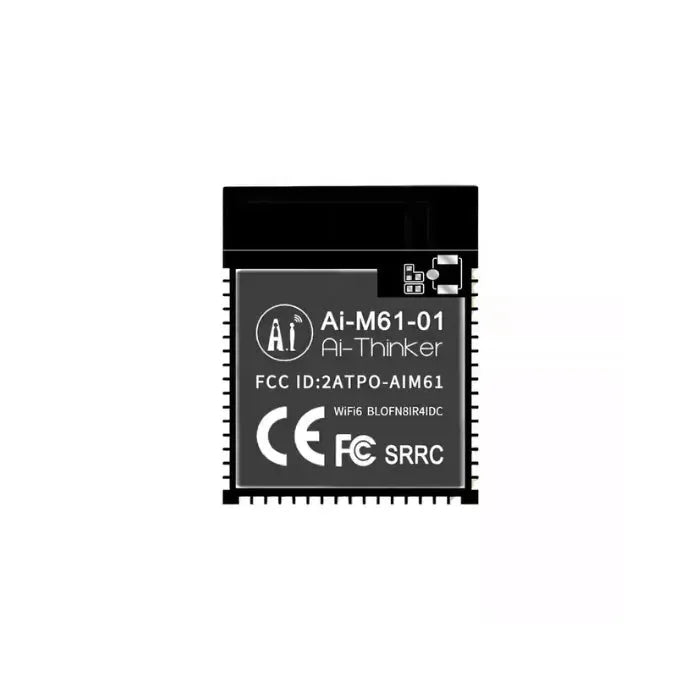






















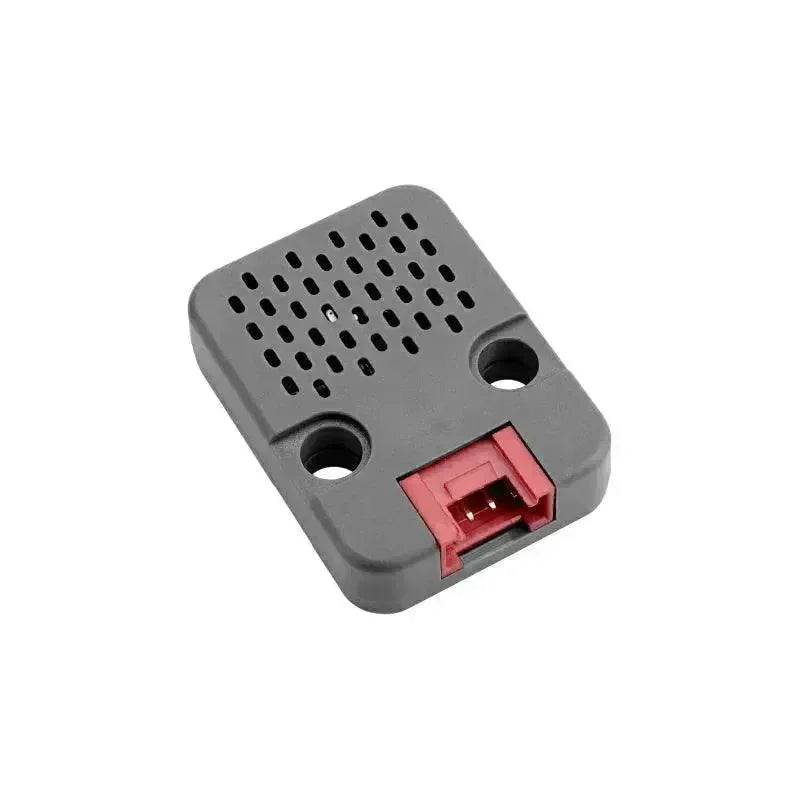
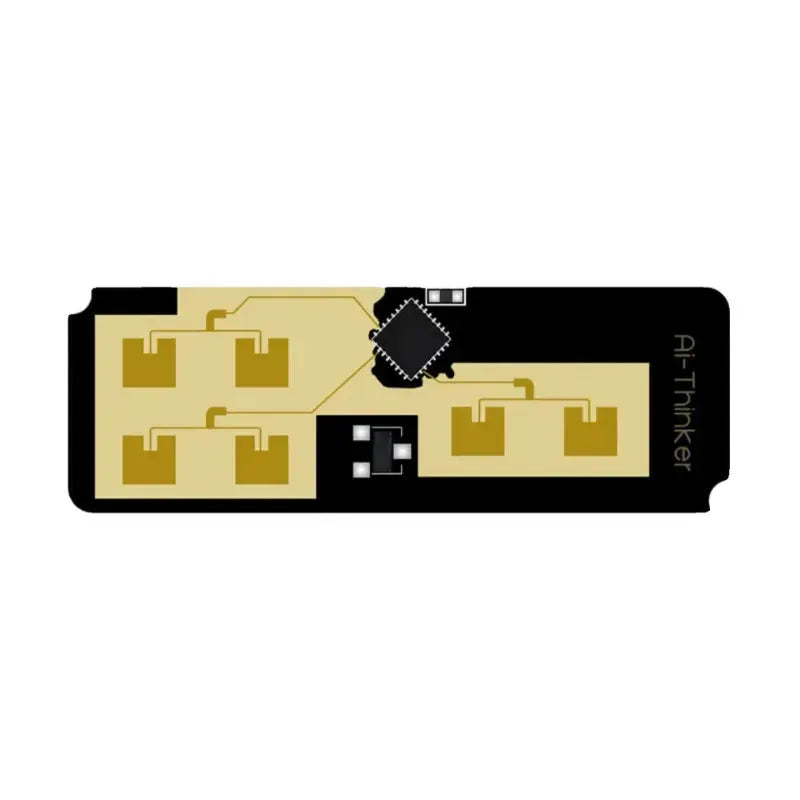






What is the Ai-Thinker UWB BU03 DW3000 Plan Kit? It is a high-precision Ultra-Wideband (UWB) development platform built around the Qorvo DW3000 series transceiver, designed by Ai-Thinker to enable centimeter-level positioning and ranging applications. The kit integrates the BU03 UWB module with an STM32F103 microcontroller, providing developers with a complete hardware and software ecosystem for building indoor positioning systems, asset tracking solutions, and proximity-aware IoT devices. With support for IEEE 802.15.4-2015 and IEEE 802.15.4z standards, the BU03-Kit delivers positioning accuracy up to 10 cm and data rates of 6.8 Mbps, making it suitable for demanding applications in robotics, smart warehouses, healthcare, and industrial automation.
Understanding UWB Technology
Ultra-Wideband (UWB) is a radio technology that operates across a very wide frequency bandwidth (greater than 500 MHz) at very low power levels. Unlike traditional narrowband wireless technologies, UWB transmits information by generating radio energy at specific time intervals using extremely short pulses. This approach enables precise time-of-flight measurements, which form the foundation of UWB's centimeter-level positioning capabilities.
The FiRa Consortium and major technology companies including Apple, Samsung, and NXP have driven UWB adoption in consumer electronics. The technology is now found in flagship smartphones, smartwatches, and tracking devices like Apple AirTag. UWB's immunity to multipath interference makes it particularly effective in indoor environments where GPS signals cannot reach.
Technical Specifications
BU03-Kit Development Board
| Parameter | Specification |
|---|---|
| Model | BU03-Kit |
| Package | DIP-40 |
| Dimensions | 35.56 × 55.00 mm (±0.2 mm) |
| Core Module | BU03 (SMD-24) |
| Microcontroller | STM32F103 |
| UWB Chip | Qorvo DW3000 |
| Antenna | Onboard ceramic antenna |
| Center Frequency | CH5 (6489.5 MHz) / CH9 (7987.2 MHz) |
| Operating Temperature | -40℃ ~ 85℃ |
| Power Supply | USB Type-C or 3.3V / 5V pins |
| Power Current | ≥ 500 mA |
| Interfaces | UART, I2C, SPI |
| GPIO Pins | 20 GPIO |
BU03 Module Specifications
| Parameter | Specification |
|---|---|
| Model | BU03 |
| Package | SMD-24 |
| Dimensions | 23.0 × 13.0 × 2.5 mm |
| Interface | SPI |
| GPIO | 9 pins |
| Voltage | 2.5V ~ 3.6V (typical 3.3V) |
| Current | ≥ 200 mA |
Wireless Performance
| Feature | Capability |
|---|---|
| Positioning Accuracy | Up to 10 cm |
| Data Rates | 850 Kbps / 6.8 Mbps |
| Standards | IEEE 802.15.4-2015, IEEE 802.15.4z BPRF |
| Channels | CH5 (6.4895 GHz), CH9 (7.9872 GHz) |
| Positioning Methods | TWR, TDOA, PDOA |
| Encryption | Hardware AES-256 |
| Sleep Current | < 1 µA |
Development Setup
Hardware Requirements
To begin development with the BU03-Kit, you will need:
- Minimum 2x BU03-Kit boards for ranging demonstrations
- 4x BU03-Kit boards for basic positioning (3 anchors + 1 tag)
- USB Type-C cable for power and programming
- Windows, Linux, or macOS computer
- Optional: Additional BU03 modules for custom PCB designs
Kit Variants
The Ai-Thinker BU03 product line includes several kit configurations:
| Variant | Contents | Application |
|---|---|---|
| BU03 Kit | Single development board | Individual module testing |
| PDOA Kit | Multiple boards for PDOA | Angle-of-arrival positioning |
| TWR Ranging Kit | 2+ boards for two-way ranging | Distance measurement |
| TWR Position Kit | 4+ boards for positioning | Full RTLS implementation |
Software Setup
Step 1: Install Development Tools
Download and install the following software:
- STM32CubeIDE or Keil MDK for STM32 development
- USB-to-UART drivers (CH340 or CP2102 depending on your board)
- Serial terminal software (PuTTY, Tera Term, or Arduino Serial Monitor)
Step 2: Download SDK and Documentation
Ai-Thinker provides comprehensive development resources:
- BU03-Kit Specification
- BU03 Module Datasheet
- AT Command Reference
- SDK available via Baidu Pan (extraction code: oh0s)
Step 3: Connect Hardware
- Connect the BU03-Kit to your computer via USB Type-C
- Install drivers if prompted
- Open your serial terminal at 115200 baud (default)
- Power LED should illuminate, indicating successful connection
Programming Interfaces
AT Command Mode
The BU03-Kit supports AT commands for rapid prototyping without firmware development. This mode is ideal for testing and simple applications.
Basic AT Commands:
| Command | Function | Response |
|---|---|---|
| AT | Test connection | OK |
| AT+VERSION | Get firmware version | Version string |
| AT+ADDR? | Query device address | +ADDR:xxxx |
| AT+RANGE=<addr> | Measure distance to device | +RANGE:xx.xxm |
| AT+MODE=<mode> | Set operation mode | OK |
SPI Interface Programming
For advanced applications, developers can communicate directly with the DW3000 chip via SPI. The DW3000 provides a comprehensive register set for controlling all aspects of UWB communication.
SPI Configuration:
- Mode: SPI Mode 0 (CPOL=0, CPHA=0)
- Clock: Up to 20 MHz
- Data Order: MSB first
- Chip Select: Active low
STM32 Firmware Development
The onboard STM32F103 microcontroller can be programmed using standard ARM development tools. Ai-Thinker provides example projects demonstrating:
- Basic UWB initialization and configuration
- Two-way ranging implementation
- TDOA positioning algorithms
- Low-power mode management
- GPIO and peripheral control
Positioning Methods Implementation
Two-Way Ranging (TWR)
TWR is the simplest UWB positioning method, measuring distance between two devices through message exchange. The BU03-Kit implements TWR through the following process:
- Device A sends a poll message with timestamp t1
- Device B receives at timestamp t2 and responds after delay
- Device A receives response at timestamp t4
- Distance = (t4 - t1 - delay) × speed_of_light / 2
TWR provides accurate distance measurement between pairs of devices but requires direct communication between each pair.
Time Difference of Arrival (TDOA)
TDOA enables scalable positioning systems using multiple anchors. The tag transmits a single blink message, and multiple anchors record arrival times. Position is calculated from time differences between anchors.
TDOA System Requirements:
- Minimum 3 anchors for 2D positioning
- Minimum 4 anchors for 3D positioning
- Time synchronization between anchors
- Central processor for position calculation
The TWR Position Kit provides the hardware needed for TDOA implementation.
Phase Difference of Arrival (PDOA)
PDOA uses the phase difference of the received signal across multiple antennas to determine angle of arrival. This method enables single-anchor positioning when combined with ranging data.
The PDOA Kit includes specialized hardware for angle estimation, enabling applications like "follow-me" drones and autonomous navigation.
Code Examples
Basic UWB Initialization
The following pseudo-code illustrates the initialization sequence for the DW3000:
// Initialize SPI interface
spi_init(SPI_MODE_0, 8000000);

// Reset DW3000
dw3000_reset();

// Configure basic parameters
dw3000_set_channel(CHANNEL_5);      // 6489.5 MHz
dw3000_set_preamble_length(64);     // 64 symbols
dw3000_set_data_rate(DWT_BR_6M8);   // 6.8 Mbps

// Load calibration data
dw3000_load_lde_code();

// Configure interrupts
dw3000_enable_interrupt(RX_OK | TX_OK);

// Enter idle mode
dw3000_set_mode(DWT_IDLE);
Simple Ranging Example
// Initiator (Device A)
void initiator_ranging(uint16_t responder_addr) {
    // Prepare ranging message
    tx_buffer[0] = RANGING_POLL;
    tx_buffer[1] = responder_addr >> 8;
    tx_buffer[2] = responder_addr & 0xFF;

    // Record transmit time
    tx_time = dw3000_get_tx_timestamp();

    // Send poll message
    dw3000_transmit(tx_buffer, 3);

    // Wait for response
    if (dw3000_wait_rx(100)) {
        rx_time = dw3000_get_rx_timestamp();

        // Calculate distance
        round_trip_time = rx_time - tx_time;
        distance = (round_trip_time * SPEED_OF_LIGHT) / 2;
    }
}
Power Management
// Enter deep sleep
void enter_sleep_mode() {
    // Save configuration
    dw3000_save_config();

    // Configure wake-up source
    dw3000_set_wakeup_pin(WAKEUP_PIN);
    dw3000_set_wakeup_interval(1000); // 1 second

    // Enter sleep
    dw3000_enter_sleep(DWT_DEEP_SLEEP);
}

// Wake from sleep
void wakeup_handler() {
    // Restore configuration
    dw3000_restore_config();

    // Re-initialize if needed
    dw3000_reinit();
}
Integration with Other Systems
Combining with Radar Sensors
The BU03-Kit can be combined with Ai-Thinker radar sensors for comprehensive environmental awareness:
- Rd-03: 24GHz human presence detection
- Rd-03D: Multi-target tracking with positioning
- Rd-03E: Distance measurement and gesture recognition
- Rd-04: Low-power motion detection
Wireless Connectivity Options
Pair the BU03-Kit with Ai-Thinker BLE modules for wireless data transmission:
- TB-02: Bluetooth 5.0 with mesh networking
- TB-04: Compact BLE 5.0 module
- TB-05: BLE with Tmall Genie support
Voice Control Integration
Add voice control capabilities using the VC-01 Intelligent Voice Module for hands-free operation of positioning systems.
Applications and Use Cases
Indoor Positioning Systems
The BU03-Kit enables precise indoor positioning where GPS fails. Applications include:
- Warehouse asset tracking and inventory management
- Hospital equipment and patient tracking
- Shopping mall navigation and analytics
- Factory worker safety monitoring
Robotics and Autonomous Vehicles
UWB provides reliable positioning for robotics applications:
- Autonomous mobile robot navigation
- Drone positioning and follow-me modes
- Automated guided vehicle (AGV) tracking
- Collision avoidance systems
Smart Home and IoT
Integration with smart home systems enables:
- Keyless entry with precise proximity detection
- Smart lighting based on room occupancy
- Personalized environment control
- Child and pet monitoring
Industrial Safety
Industrial applications leverage UWB for:
- Worker proximity warnings near hazardous equipment
- Confined space personnel tracking
- Evacuation mustering and accountability
- Geofencing and restricted area enforcement
Advanced Topics
Calibration Procedures
Accurate UWB ranging requires proper calibration:
- Antenna Delay Calibration: Measure and compensate for signal processing delays
- Clock Offset Compensation: Account for crystal frequency variations
- Path Loss Compensation: Adjust for environmental factors
- Temperature Compensation: Maintain accuracy across operating temperature range
Multipath Mitigation
While UWB is inherently resistant to multipath effects, challenging environments may require:
- First-path detection algorithms
- Channel impulse response analysis
- Multiple measurement averaging
- Machine learning-based error correction
Security Considerations
The BU03-Kit implements IEEE 802.15.4z security features:
- Scrambled timestamp sequence (STS) for ranging integrity
- AES-256 encryption for payload protection
- Secure ranging protocols to prevent relay attacks
- Device authentication and key management
Troubleshooting
Common Issues
| Issue | Possible Cause | Solution |
|---|---|---|
| No response to AT commands | Wrong baud rate | Check serial settings (default 115200) |
| Inconsistent ranging results | Multipath interference | Adjust antenna orientation, add calibration |
| High power consumption | Sleep mode not enabled | Implement power management code |
| SPI communication fails | Incorrect SPI mode | Use Mode 0, check wiring |
| Poor range performance | Channel interference | Switch between CH5 and CH9 |
Debug Techniques
- Use serial output for status monitoring
- Implement GPIO indicators for state visualization
- Monitor power consumption with multimeter
- Use spectrum analyzer to verify channel selection
- Compare results against known reference distances
Related Products
Ai-Thinker offers a comprehensive ecosystem of modules that complement the BU03-Kit:
UWB Products
- BU03 Module - Standalone UWB module for custom designs
- BU04-Kit - Enhanced UWB kit with dual antennas and STM32F103
Millimeter Wave Radar
- Rd-01 - 24GHz radar with Wi-Fi and BLE
- Rd-03 V2 - 24GHz human presence sensor
- Rd-03D - Multi-target detection radar
- Rd-03D V2 - Enhanced version with ICL1122 chip
- Rd-03E - Distance and gesture recognition
- Rd-04 - 10GHz low-power motion sensor
- RD-03L V2 - Ultra-low power presence detection
Bluetooth Modules
- TB-02 - Bluetooth 5.0 mesh module
- TB-03F - Compact BLE module for lighting
- TB-04 - BLE 5.0 with low power consumption
- TB-05 - BLE with Tmall Genie support
Development Tools
- Radar Debugging Board - Development platform for radar modules
External Resources
- Wikipedia: Ultra-wideband - Comprehensive UWB technology overview
- Qorvo DW3000 Product Page - Official chip documentation
- FiRa Consortium - UWB industry standards and ecosystem
- BU03-Kit Specification - Official hardware documentation
- AT Command Reference - Command interface documentation
- IEEE 802.15.4-2015 Standard - UWB communication standard
- STM32F103 Reference - MCU documentation
- Android UWB Support - Mobile platform integration
- Apple Nearby Interaction - iOS UWB framework
- NXP UWB Solutions - Alternative UWB implementations
FAQ
What is the difference between BU03-Kit and BU03 Module?
The BU03-Kit is a complete development board with STM32F103 microcontroller, USB interface, and 20 GPIO pins. The BU03 Module is the standalone UWB transceiver module with SPI interface, designed for integration into custom PCB designs.
How many BU03-Kit boards do I need for a positioning system?
For basic two-way ranging, you need 2 boards. For 2D positioning using TDOA, you need a minimum of 3 anchors plus 1 tag (4 total). For 3D positioning, you need at least 4 anchors plus 1 tag (5 total). The TWR Position Kit provides the recommended configuration for positioning applications.
What is the maximum range of the BU03-Kit?
The practical range depends on environmental conditions and configuration. In open indoor environments, the BU03-Kit can achieve 50-100 meters. Obstacles, interference, and antenna orientation will reduce this range. For extended range, consider using external antennas or the BU04-Kit with IPEX antenna support.
Can I use BU03-Kit with Arduino?
Yes, the BU03-Kit can interface with Arduino through UART or SPI. Use the AT command mode for simple applications, or implement the DW3000 driver library for advanced functionality. Example code is available in the Ai-Thinker SDK.
What programming language is supported?
The STM32F103 on the BU03-Kit can be programmed in C/C++ using STM32CubeIDE, Keil MDK, or Arduino IDE. The DW3000 chip requires register-level programming, and Ai-Thinker provides C-based example code.
Is the BU03-Kit compatible with Apple U1 or Samsung UWB devices?
The DW3000 chip is interoperable with Apple U1 and U2 chips when using FiRa-compliant protocols. However, Apple's Nearby Interaction framework requires MFi certification for commercial products.
How do I update the firmware?
Firmware can be updated via the USB Type-C interface using the STM32 bootloader mode. Hold the BOOT0 button while resetting the board to enter bootloader mode, then use STM32CubeProgrammer or similar tools to upload new firmware.
What power supply options are available?
The BU03-Kit supports multiple power sources: USB Type-C (5V), 3.3V pin, or 5V pin. The onboard regulator provides stable 3.3V to the UWB module. Ensure your power supply can deliver at least 500mA during transmission bursts.
Conclusion
The Ai-Thinker UWB BU03 DW3000 Plan Kit provides developers with a powerful platform for implementing centimeter-level positioning and ranging applications. With its Qorvo DW3000 foundation, comprehensive interface options, and support for TWR, TDOA, and PDOA positioning methods, the BU03-Kit accelerates development of indoor positioning systems, robotics navigation, and proximity-aware IoT devices.
The extensive ecosystem of radar sensors, BLE modules, and development tools from Ai-Thinker enables rapid prototyping of complex applications combining UWB positioning with environmental sensing and wireless connectivity. Whether you are building a smart warehouse tracking system, autonomous robot, or consumer proximity device, the BU03-Kit delivers the precision and flexibility required for modern location-aware applications.
For production deployments, consider the BU03 Module for custom PCB integration or the BU04-Kit for enhanced features including dual antennas and expanded GPIO. With proper calibration and implementation of security features, UWB technology enables a new generation of precise, reliable location services.