openelab.de
 openelab.com
















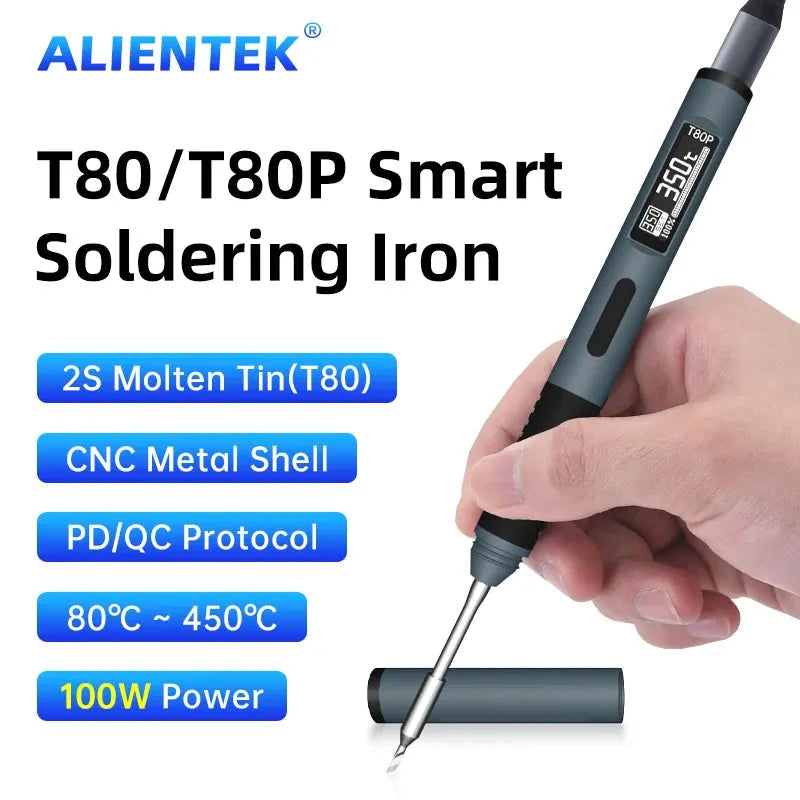























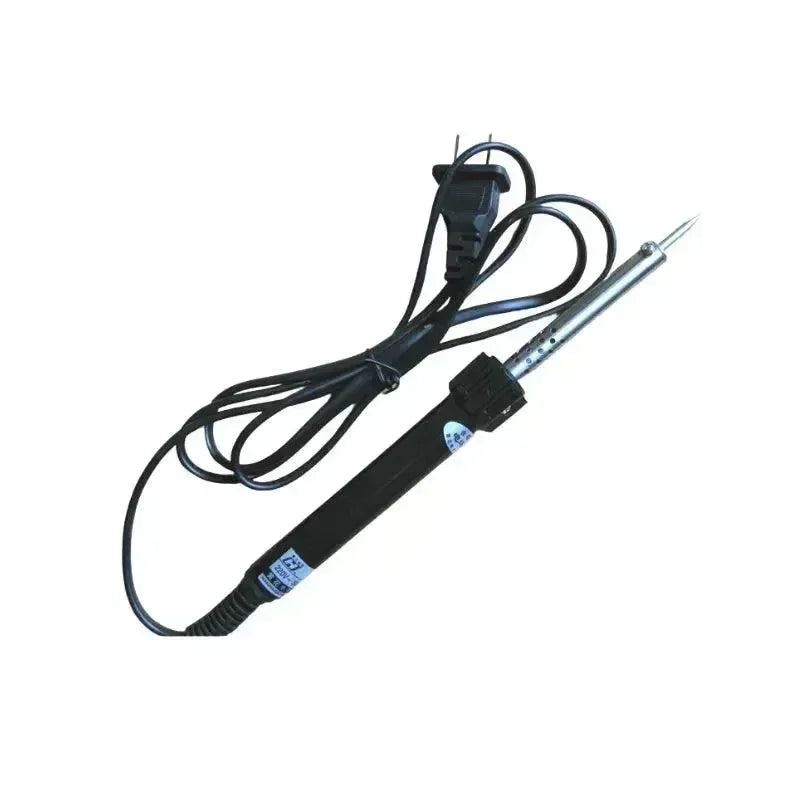
A USB-C soldering iron is attractive because it is small, portable, and easy to power from modern adapters. A traditional soldering station is still attractive because it is stable, comfortable for long sessions, and built around a fixed bench workflow. This guide compares the FNIRSI HS-02B 100W USB-C Smart Soldering Iron with traditional soldering stations so you can decide which tool fits PCB repair, SMD touch-ups, connector work, field maintenance, and everyday electronics assembly.
The short answer: choose the FNIRSI HS-02B if you want a compact temperature-controlled iron for portable electronics repair, USB-C powered toolkits, and light-to-medium PCB work. Choose a traditional soldering station if you do long bench sessions, repeated production soldering, larger thermal loads, or work where stand quality, cable management, and a broad station ecosystem matter more than portability.
Important boundary: the HS-02B does not include a built-in battery. OpenELAB lists it as a USB-C PD/QC powered iron with up to 100W maximum power, 9V to 20V working voltage, and a 100°C to 450°C / 212°F to 842°F temperature range. It will not deliver the same experience with every charger. Its real heating performance depends on the external USB-C power source, cable, tip, temperature setting, solder type, and the thermal mass of the joint.
Shop FNIRSI HS-02B at OpenELAB

Quick Answer: FNIRSI HS-02B or Traditional Soldering Station?
| Use case | Better choice | Why |
|---|---|---|
| Portable repair kit | FNIRSI HS-02B | Small tool body, USB-C power, smart display, presets, sleep mode, and easy transport. |
| Permanent electronics bench | Traditional soldering station | Better stand, fixed power base, stable bench ergonomics, and easier long-session workflow. |
| SMD touch-ups and small PCB pads | FNIRSI HS-02B or station | Both can work if the tip, temperature, and technique are right; HS-02B is easier to carry. |
| Larger connectors, ground pads, or high thermal mass | Traditional station | Stations often offer more bench stability, larger stands, and stronger sustained workflow for heavier jobs. |
| Field maintenance | FNIRSI HS-02B | Can run from a suitable USB-C PD/QC power source without carrying a full station. |
| Production-style repeated soldering | Traditional station | Better for long sessions, repeated hand movement, fixed tool placement, and bench organization. |
| Minimal desk setup | FNIRSI HS-02B | Useful when a full control base takes too much space. |
What Is the FNIRSI HS-02B?
The FNIRSI HS-02B is a portable intelligent temperature-controlled soldering iron for PCB repair, field maintenance, SMD soldering, and general electronics assembly. OpenELAB lists it with USB-C PD/QC compatible input, up to 100W maximum power, 9V to 20V working voltage, and a 100°C to 450°C temperature range.
The HS-02B also includes a 0.96-inch IPS HD color screen, three preset temperature groups, sleep mode, automatic power-off, child lock, and a compact integrated tip structure. It uses HS-02B tip series I, IS, and K. OpenELAB notes that HS-02A and HS-02B use different internal boards and tip systems, so their tips are not interchangeable.
The most important buying detail is power: HS-02B has no built-in battery. You need a compatible external USB-C power source. A weak adapter or poor cable can limit heating and temperature recovery even if the iron itself is listed for up to 100W.
What Is a Traditional Soldering Station?
A traditional soldering station usually has a separate control base, fixed power input, soldering handpiece, stand, sponge or brass wool holder, and a more permanent place on the bench. Many stations are designed for long sessions where the iron is lifted, returned to the stand, cleaned, and reused repeatedly throughout the day.
Compared with a USB-C iron, a station is less portable but often more comfortable for repeated bench work. The stand is usually heavier, the cable route is predictable, the controls stay in one place, and the tool fits a stable work area. Many stations also have broader tip ecosystems, stronger bench ergonomics, better long-session handling, and easier integration with hot air, fume extraction, PCB holders, and other rework tools. For repair shops, teaching labs, production benches, or frequent soldering, that consistency matters.
FNIRSI HS-02B vs Traditional Soldering Station: Main Differences
| Comparison point | FNIRSI HS-02B USB-C soldering iron | Traditional soldering station |
|---|---|---|
| Portability | High. Small iron body, tool bag workflow, powered by compatible USB-C PD/QC source. | Low to medium. Designed to stay on a bench. |
| Power source | External USB-C power source required; no built-in battery. | Dedicated station base with fixed power input. |
| Temperature control | Built into the smart iron with display and presets. | Controlled through station base, knob, buttons, or digital interface depending on station. |
| Bench ergonomics | Minimal and compact, but stand and cable setup depend on the portable kit. | Usually better for long repeated sessions due to heavier stand and fixed layout. |
| Field repair | Strong fit if you have a suitable USB-C power source. | Less convenient unless AC power and bench space are available. |
| Thermal workload | Good for many electronics tasks, but performance depends on power adapter, cable, tip, and joint size. | Often better for sustained heavier work, depending on station class and tip system. |
| Safety features | Sleep mode, automatic power-off, child lock listed by OpenELAB. | Varies by station; many offer sleep, standby, calibration, or holder-based standby. |
| Best role | Portable smart iron or compact primary iron for light-to-medium electronics repair. | Main bench tool for frequent, long, or heavier soldering work. |
Where FNIRSI HS-02B Makes the Most Sense
Portable PCB repair
The HS-02B is a strong fit when you need to carry a soldering tool with a USB-C power bank, USB-C adapter, or compact repair kit. It is much easier to pack than a traditional station, especially for field maintenance, lab carts, event repair, robotics pits, or small electronics work away from a fixed bench.
SMD touch-ups and small electronics assembly
For small pads, wires, headers, and SMD touch-ups, a compact USB-C iron can be convenient. Start with a suitable tip, use flux, keep the tip tinned, and avoid excessive temperature. OpenELAB lists the HS-02B temperature range from 100°C to 450°C, but good soldering is not about using the highest temperature possible. The goal is enough heat transfer for a clean joint without lifting pads or damaging nearby components.
Minimal desk setups
If you work from a small desk, shared lab table, dorm room, maker space, or mobile kit, a full soldering station can feel bulky. The HS-02B reduces the amount of dedicated bench hardware you need, as long as your USB-C power source is capable enough for the work.
Occasional repair and maintenance
If soldering is part of your work but not your entire day, HS-02B can be easier to justify as a compact tool. Sleep mode, automatic power-off, presets, and a color screen are useful for occasional users who want modern controls without leaving a large station permanently on the bench.

Where a Traditional Soldering Station Still Wins
Long bench sessions
If you solder for hours, a traditional station is usually more comfortable. The stand is stable, the cleaning area is fixed, the handpiece cable has a predictable path, and the control base stays where you expect it. This matters for repeated soldering, teaching labs, and repair shops.
Heavier thermal jobs
Large connectors, ground planes, thick wires, shielding, and high thermal mass joints can be challenging for small irons if the power source, tip, or technique is not right. Some traditional stations with larger tip ecosystems and stronger sustained heating are better suited to repeated heavy work.
Production-style workflow
For repeated assembly, a station's fixed layout can be faster. The iron returns to the same stand, the cleaning method stays in place, and the operator does not need to manage a portable power adapter or cable arrangement.
Full bench ecosystem
A soldering station often sits beside hot air, fume extraction, microscopes, PCB holders, tweezers, desoldering tools, and known tip families. If your bench already has that workflow, a USB-C iron may be a secondary portable tool rather than the main iron.
What Power Supply Do You Need for HS-02B?
The HS-02B is a USB-C soldering iron, but USB-C alone does not guarantee full performance. OpenELAB lists USB-C PD/QC compatible input and a 9V to 20V working voltage range. To get strong heating and recovery, use a compatible USB-C PD/QC power source and a cable that can handle the required current for your soldering workload.
If the adapter is underpowered, the iron may still turn on but heat more slowly, recover poorly after touching a larger joint, or feel inconsistent during connector work. If the cable is poor, the same problem can happen even with a capable adapter. For portable repair, treat the power adapter and cable as part of the soldering system, not as random accessories.
A practical setup includes the HS-02B, a capable USB-C PD/QC adapter or power bank, a suitable USB-C cable, a small stand, solder wire, flux, tip cleaner, and ventilation. Without those supporting items, even a good portable iron can feel worse than it should.
Tip Choice and Technique Still Decide the Result
A smart soldering iron does not fix poor technique. Tip geometry, flux, solder type, contact area, board thermal mass, and dwell time decide whether the joint is clean. Use a fine tip for small pads only when the pad is actually small. For connectors and ground areas, a tip with more contact area can transfer heat more effectively than simply raising the temperature.
OpenELAB lists HS-02B tip series I, IS, and K. Also note the compatibility warning: HS-02A and HS-02B use different internal boards and tip systems, so their tips are not interchangeable. Check the HS-02B tip family before buying replacements.
Safety, Consumables, and Bench Setup
The soldering iron is only one part of a repair setup. For cleaner joints and safer work, plan the surrounding tools and consumables before judging the iron.
- Stand: use a stable stand so the hot tip is not resting on the desk, mat, cable, or plastic case.
- Ventilation or fume extraction: soldering and flux fumes should not be inhaled directly, even during short repair sessions.
- Flux: good flux often improves solder flow more effectively than raising temperature.
- Solder wire: choose solder appropriate for your electronics work and temperature range.
- Tip cleaning: brass wool or a damp sponge helps remove residue; keep the tip tinned before pauses and storage.
- Heat-resistant work surface: use a mat or surface that can tolerate accidental contact with hot tools.
- ESD handling: for sensitive electronics, use ESD-safe habits, tweezers, and workspace grounding where needed.
OpenELAB lists CE and WEEE for the HS-02B, but those markings should not be read as proof that every soldering setup is safe or that soldering quality is automatically better. Safe soldering still depends on power source choice, tip care, work surface, ventilation, and user technique.
Common Buying Mistakes
- Assuming USB-C means battery-powered. The HS-02B has no built-in battery; it needs an external USB-C power source.
- Using an underpowered adapter. A weak adapter can limit heating performance.
- Choosing by maximum wattage alone. Tip choice, power source, contact area, and thermal mass matter just as much.
- Using too much temperature for small pads. Excessive heat can lift pads or damage nearby parts.
- Expecting a portable iron to replace every station workflow. HS-02B is strong for portability and compact repair, while stations still win for many long bench sessions.
- Mixing HS-02A and HS-02B tips. OpenELAB notes that the tip systems are not interchangeable.
- Skipping fume control. Even a small USB-C iron should be used with ventilation or fume extraction.
Recommended Buying Logic
| Buyer type | Recommended direction | Reason |
|---|---|---|
| Field technician | FNIRSI HS-02B | Portable, USB-C powered, compact enough for a repair bag. |
| Small desk hobbyist | FNIRSI HS-02B | Less bench hardware than a traditional station. |
| Repair shop bench | Traditional soldering station first; HS-02B as backup or field tool | Fixed station workflow is better for repeated daily work. |
| SMD learner | Either, with the right tip and flux | Technique matters more than tool format for many small joints. |
| Connector-heavy repair | Traditional station or HS-02B with a capable power source and suitable tip | Thermal mass is the deciding factor. |
| Travel repair kit | FNIRSI HS-02B | Much easier to pack than a station, as long as power is planned. |
FAQ
Can FNIRSI HS-02B replace a traditional soldering station?
It can replace a basic iron or act as the main soldering tool for many portable and light-to-medium electronics repair tasks. It should not be described as a replacement for every traditional station workflow, especially long bench sessions, production soldering, or repeated high-thermal-mass work.
Does FNIRSI HS-02B have a built-in battery?
No. OpenELAB lists the FNIRSI HS-02B as requiring an external USB-C power source. It does not include a built-in battery.
What power source should I use with HS-02B?
Use a compatible USB-C PD/QC power source that can provide enough voltage and current for the soldering work. If the adapter or cable is weak, heating and recovery performance may be limited.
Is HS-02B good for SMD soldering?
Yes, it can be useful for SMD touch-ups and small PCB work when paired with the right tip, flux, solder, and temperature. Use enough heat for a clean joint, but avoid overheating small pads.
When should I choose a traditional soldering station instead?
Choose a traditional station for frequent long sessions, repeated bench repair, larger thermal loads, production-style work, or when a stable stand and fixed bench workflow matter more than portability.
Are HS-02A and HS-02B tips interchangeable?
No. OpenELAB notes that HS-02A and HS-02B use different internal boards and tip systems, so their tips are not interchangeable. Use HS-02B-compatible tips.
What temperature should I use?
Use the lowest temperature that gives fast, clean wetting for the joint, solder type, and board. Small SMD pads usually need less heat than large connectors or ground pads. Flux and tip contact area often matter more than simply raising the temperature.
Final Recommendation
Choose the FNIRSI HS-02B USB-C Smart Soldering Iron if you want a portable, temperature-controlled soldering tool for PCB repair, SMD touch-ups, field maintenance, small workspaces, and compact electronics kits. It is especially useful if you already have a capable USB-C PD/QC power source and want to avoid carrying a full soldering station.
Choose a traditional soldering station if soldering is a daily bench workflow, if you work on larger connectors or thermal loads often, or if you need the comfort of a fixed stand, stable control base, and station ecosystem. For many users, the best answer is not either/or: use a traditional station at the bench and keep HS-02B as the portable repair iron.