openelab.de
 openelab.com







































The Rockchip RK3588 has been the go-to SoC for serious edge AI work since 2022. It's not the flashiest name in the room — NVIDIA still owns the mindshare — but for engineers who've run the numbers on power consumption, BOM cost, and I/O density, it keeps coming out ahead for a specific class of deployment. The Forlinx RK3588 Linux AI Dev Board (OK3588-C) is one of the more complete implementations of this chip: industrial temperature range, a clean SoM + carrier board architecture, and a hardware spec verified against the official Forlinx hardware manual.
Here's the full breakdown.
What Is the Forlinx OK3588-C?
The OK3588-C is a development board built around the FET3588-C System-on-Module. The SoM — 68 × 50 mm, 10-layer immersion gold PCB — connects to the 190 × 130 mm carrier board via 4× 100-pin board-to-board connectors at 0.4mm pitch. That's 400 pins total, which is how the RK3588's considerable I/O count actually makes it out to your design. If you're building a custom carrier board, this SoM format is well-suited for it.
The carrier board itself is the OK3588-C dev platform: it breaks out all the major interfaces — dual GbE, HDMI, eDP, PCIe 3.0, CAN, RS485, multiple camera inputs, full-size M.2 for cellular — in a layout designed for evaluation and early-stage product development.

Specifications (Verified Against Official Hardware Manual)
| Component | Specification |
|---|---|
| SoC | Rockchip RK3588, 8nm |
| CPU | 4× Cortex-A76 @ 2.4 GHz + 4× Cortex-A55 @ 1.8 GHz |
| GPU | ARM Mali-G610 MP4 — OpenGL ES 3.2, OpenCL 2.2, Vulkan 1.2 |
| NPU | 6 TOPS (triple-core) — INT4, INT8, INT16, FP16 |
| ISP | 48 MP — HDR, 3A, 3DNR, fisheye correction, gamma |
| RAM | 4 / 8 / 16 GB LPDDR4X |
| eMMC | 32 / 64 / 128 GB |
| Video Decode | 8K@60fps (H.265, VP9); 8K@30fps (H.264); 4K@60fps (AV1) |
| Video Encode | 8K@30fps (H.264, H.265) |
| SoM Dimensions | 68 × 50 mm, 10-layer PCB |
| Carrier Dimensions | 190 × 130 mm |
| SoM Connector | 4× 100-pin board-to-board, 0.4mm pitch (400 pins total) |
| Power Input | 12V DC (5V–13V wide-voltage range) |
| OS Support | Linux 5.10, Android 12/14, Forlinx Desktop 20.04/22.04 |
| Temperature (Commercial) | 0°C to +80°C |
| Temperature (Industrial) | -40°C to +85°C |
OK3588-C Carrier Board Interfaces
| Interface | Specification |
|---|---|
| Ethernet | Dual GbE — GMAC0 (1.8V) + GMAC1 (3.3V, configurable) |
| USB | USB 3.1 Gen1 × 2 (Type-C, 5 Gbps); USB 2.0 Host × 1 (Type-A) |
| PCIe | PCIe 3.0 × 4-lane (x4 slot); PCIe 2.0 × 1-lane (x1 slot) |
| 4G/5G | M.2 Key-B slot |
| Wi-Fi / BT | M.2 Key-E slot — Wi-Fi 6 + Bluetooth 5.3 |
| HDMI TX | 1× HDMI 2.1 — up to 7680×4320@60Hz |
| HDMI RX | 1× HDMI 2.0 — up to 4K@60Hz input |
| eDP TX | 1× eDP 1.3 — up to 4K@60Hz |
| DP TX | 2× DisplayPort 1.4 via USB Type-C — up to 7680×4320@30Hz |
| MIPI DSI | 2× 4-lane — up to 4K@60fps |
| MIPI CSI | 2× 4-lane + 2× 2-lane + 1× 4-lane DPHY; 1× DVP (150MHz) |
| CAN | CAN1 + CAN2 — up to 1 Mbps |
| RS485 | 1× RS485 — TDH341S485S transceiver, 5000V isolation, 15kV HBM protection |
| UART | Debug UART via Type-C (CP2102), up to 4 Mbps |
| SATA | SATA 3.0 × 3 (6 Gbps, multiplexed with PCIe/USB) |
| Storage | TF card (SDR104, up to 150 MHz, bootable) |
| GPIO | 9× GPIO, 3.3V, 2.54mm pitch; 5V/3.3V/1.8V power pins |
| Audio | Onboard codec — headphone out + MIC in + 1W speaker out |
| RTC | Onboard RTC + battery socket |
| ADC | 5× SARADC channels, 12-bit, 1 MS/s |
| JTAG | ARM JTAG (SWD mode) |
NPU Performance: What 6 TOPS Gets You in Practice
The RK3588 NPU is a triple-core design clocked to hit 6 TOPS at INT8. Real-world numbers matter more than the headline figure:
- ResNet18 inference: ~4ms latency, 244 FPS throughput
- 12× faster than the same model on the A76 CPU cores
- Person detection, face recognition, license plate recognition: all run at 30+ FPS
- Small LLMs (1B class): 10–15 tokens/sec
- Typical power under full AI load: 5–6W total for the SoM
The RKNN Toolkit 2 handles conversion from PyTorch, TensorFlow, MXNet, ONNX, and Caffe. Quantization support covers INT4 through FP16. It's a mature toolchain — the same one used across the RK3568, RK3576, and RK3588 product families.
Target Applications
Industrial IoT Edge Gateway
Dual GbE, CAN (1 Mbps), RS485 with 5000V galvanic isolation, PCIe 3.0 x4, and cellular via M.2 — this board has the industrial I/O stack to sit at the edge of a plant floor. Run anomaly detection or predictive maintenance inference locally, send summaries upstream. Offline-capable by design.
Smart Surveillance & Multi-Camera Analytics
The 48MP ISP, multiple MIPI CSI inputs (up to 5 camera ports), and 8K@60fps decode pipeline make this a natural fit for NVR systems and multi-camera edge analytics. Object tracking, person detection, license plate recognition — all on-device, no cloud round-trip.
Robotics & Autonomous Mobile Robots
Dual GbE for network segmentation, CAN for motor controllers, MIPI CSI for stereo vision, PCIe for fast SSD logging, and a 6 TOPS NPU for real-time inference. The SoM + carrier board architecture also means you can migrate the compute module to a custom robot chassis board without redoing the software stack.
Digital Signage & Smart Displays
HDMI 2.1 (8K@60Hz) + eDP + 2× MIPI DSI + 2× DP via USB-C: the RK3588 supports up to six display outputs from a single SoC. Run 4K content playback and audience analytics simultaneously, all at under 10W board power in standby.
AIoT Prototyping & R&D
Rich I/O, Linux BSP support, an active community, and a price point well below Jetson platforms. The OK3588-C is where most teams start before designing a custom carrier board around the FET3588-C SoM.
Forlinx RK3588 vs NVIDIA Jetson Orin Nano
| Category | Forlinx OK3588-C | NVIDIA Jetson Orin Nano |
|---|---|---|
| AI Performance | 6 TOPS NPU | 40 TOPS |
| CPU | 4× A76 + 4× A55 (8 cores) | 6× Carmel ARMv8.2 |
| Video Processing | 8K@60fps decode ✓ | 4K@60fps |
| Industrial I/O | CAN, RS485, dual GbE, PCIe 3.0 ✓ | Requires carrier board; limited native I/O |
| Display Outputs | Up to 6 outputs (HDMI+eDP+DSI+DP) ✓ | HDMI + DP |
| Power (SoM, AI load) | ~5–6W | ~10–20W |
| Price (OpenELAB) | See OpenELAB product page | Higher (varies by config) |
| Software Ecosystem | RKNN Toolkit 2, Linux BSP | CUDA, TensorRT, DeepStream ✓ |
| Temp Range | -40°C to +85°C (industrial) ✓ | -25°C to +80°C |
The Jetson wins on raw AI throughput and CUDA ecosystem depth — if you're deploying transformer models, running multi-model parallelism, or need the DeepStream SDK, it's the right choice. The RK3588 wins on industrial I/O completeness, video processing bandwidth, power efficiency, price, and cold-temperature operation. Most edge deployments don't need 40 TOPS; they need reliable 6 TOPS with CAN bus and isolated RS485 at -40°C.
Available Configurations & Pricing on OpenELAB
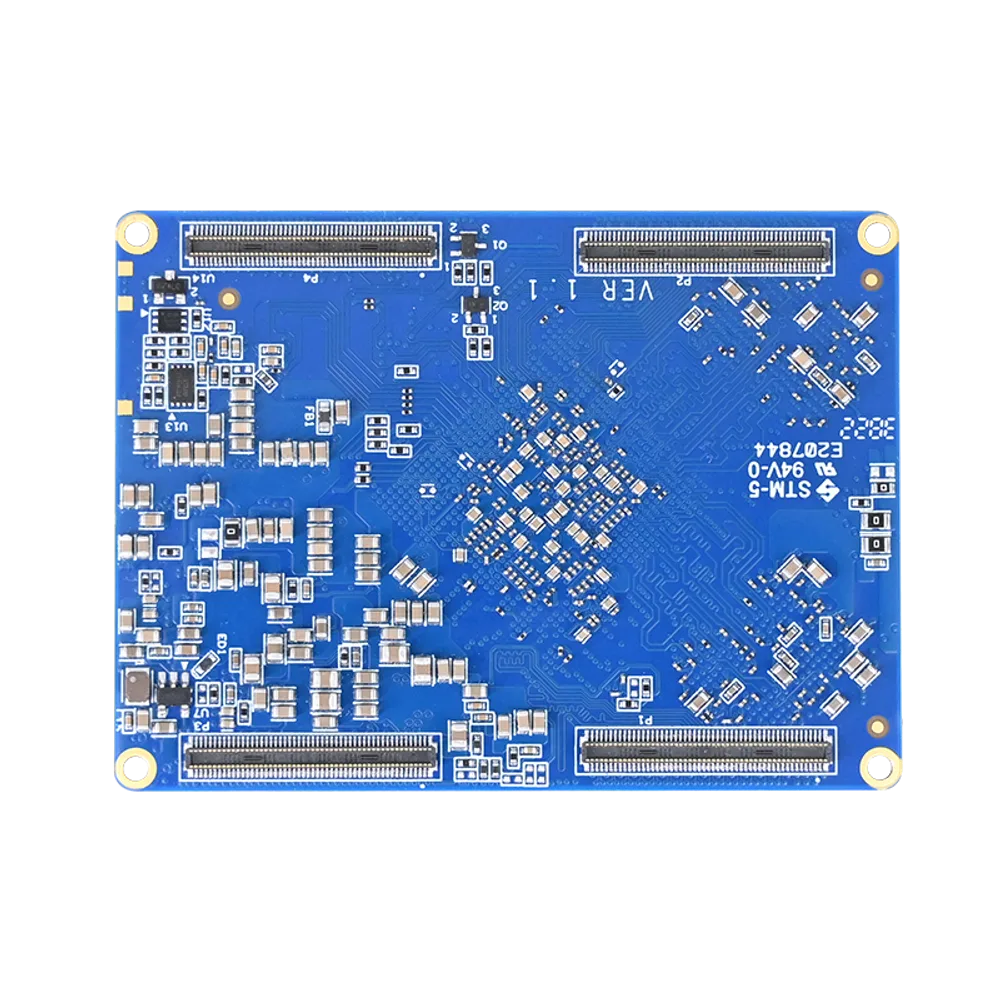
The Forlinx RK3588 board is available in multiple RAM / eMMC configurations, with optional 7-inch display and industrial-grade (-40°C to +85°C) variants. View all configurations and current pricing on OpenELAB →
Why Buy from OpenELAB?
- Germany-based warehouse — fast EU delivery, no import duties
- Ships within 72 hours — 200+ units in stock
- 24-month EU warranty
- 31-day returns
- EUR pricing — no currency conversion surprises